Korean Beef Rice Bowl with Carrot and Cucumber
A little note: this post contains affiliate links. If you buy through them, we may earn a small commission at no extra cost to you. As an Amazon Associate we earn from qualifying purchases. More about that.
There’s always that one night after a long shift where all I want is to come home, kick off my shoes, and curl up under a warm blanket on the sofa. As a nurse, those nights come around pretty often.
But since I can’t exactly let the family starve, this is the bowl I keep coming back to. It’s my little weeknight safety net.
Cozy, savory, ready in about 15 minutes, and somehow it makes everything feel okay again. This Korean beef bowl is simple, comforting, and hits every time.
Watch Our Korean Beef Bowl Video Recipe
Prefer to watch the recipe on YouTube instead or just want something to follow along to?
Here is our step-by-step video recipe:
Easy Korean Beef Bowl Recipe
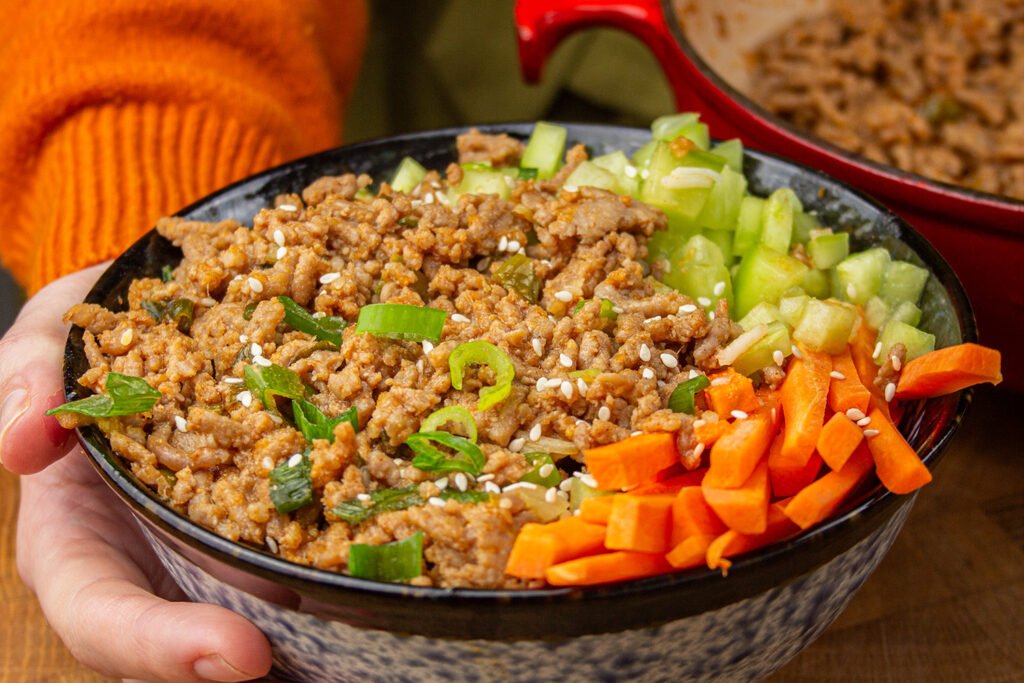
This cozy Korean beef rice bowl is surprisingly approachable and perfect for a tired weeknight when you want something warm without a lot of fuss. After whisking together a glossy gochujang-soy sauce, browning ground beef, and spooning everything over rice with fresh vegetables, the result is a saucy, savory bowl with soft rice, crisp toppings, and gentle heat that feels restaurant-quality but is made entirely at home.
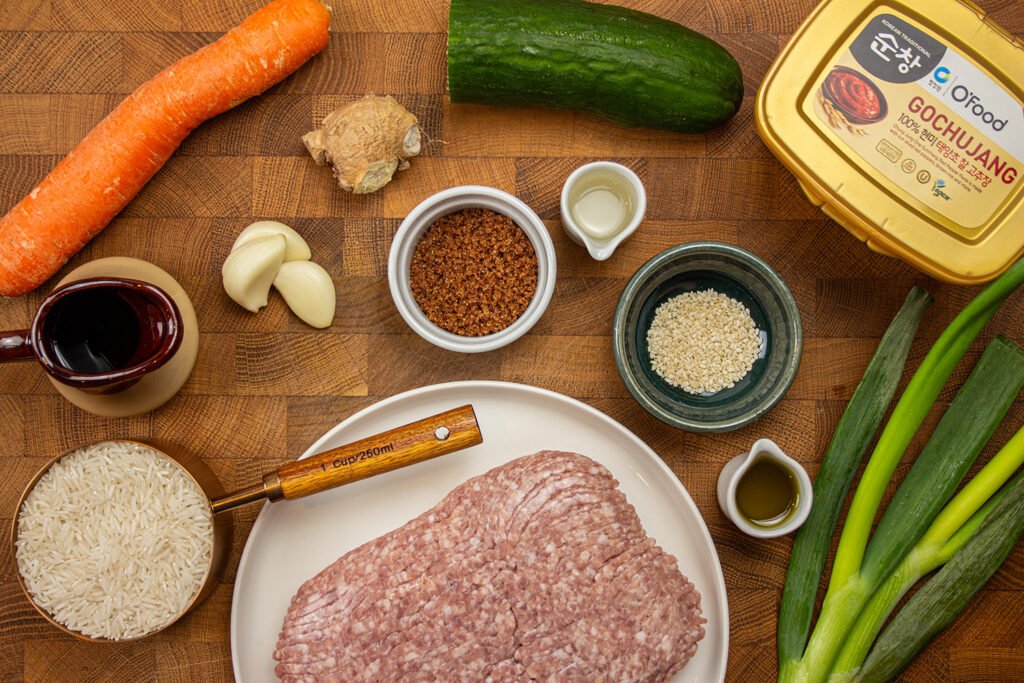
Ingredients for Korean Beef Bowl
- Garlic: Adds sharp, savory depth to the sauce and helps the beef taste fuller. You can substitute ½ teaspoon garlic powder if needed.
- Ginger: Brings warmth, brightness, and a little fresh bite to balance the richness of the beef.
- Light soy sauce: Adds saltiness, umami, and the main savory base of the sauce.
- Brown sugar: Adds gentle sweetness and helps the sauce turn glossy as it simmers. You can substitute honey because it brings sweetness and helps the sauce cling to the beef.
- Olive oil: Adds body to the sauce and helps carry the garlic, ginger, and gochujang.
- Gochujang: Adds savory heat, mild sweetness, and depth to the beef.
- Rice vinegar: Adds acidity that keeps the sauce from feeling too heavy. You can substitute apple cider vinegar or even lemon juice.
- Sesame seeds: Add a tiny nutty crunch and a simple finished look. You can substitute toasted sesame seeds for a deeper flavor.
- Olive oil: Helps brown the beef evenly in the pan. You can substitute avocado oil or beef tallow because they handle medium-high heat well.
- Ground beef: Creates the rich, saucy base of the bowl and cooks quickly for an easy dinner. You can substitute ground turkey for a lighter texture and milder flavor.
- Scallions: Add freshness, color, and a gentle onion flavor.
- Beef stock: Adds savory depth and moisture to the stir-fry. You can substitute chicken stock or even 1/2 stock cube + 200 ml water if that is what you have.
- Basmati or jasmine rice: Gives the bowl a soft, fragrant base that catches the sauce. You can substitute short-grain white rice for a stickier texture.
- Carrot: Adds crunch, sweetness, and color.
- Cucumber: Adds coolness and freshness against the warm beef. You can substitute thinly sliced radish for a peppery crunch.
How to Make Korean Beef Bowl
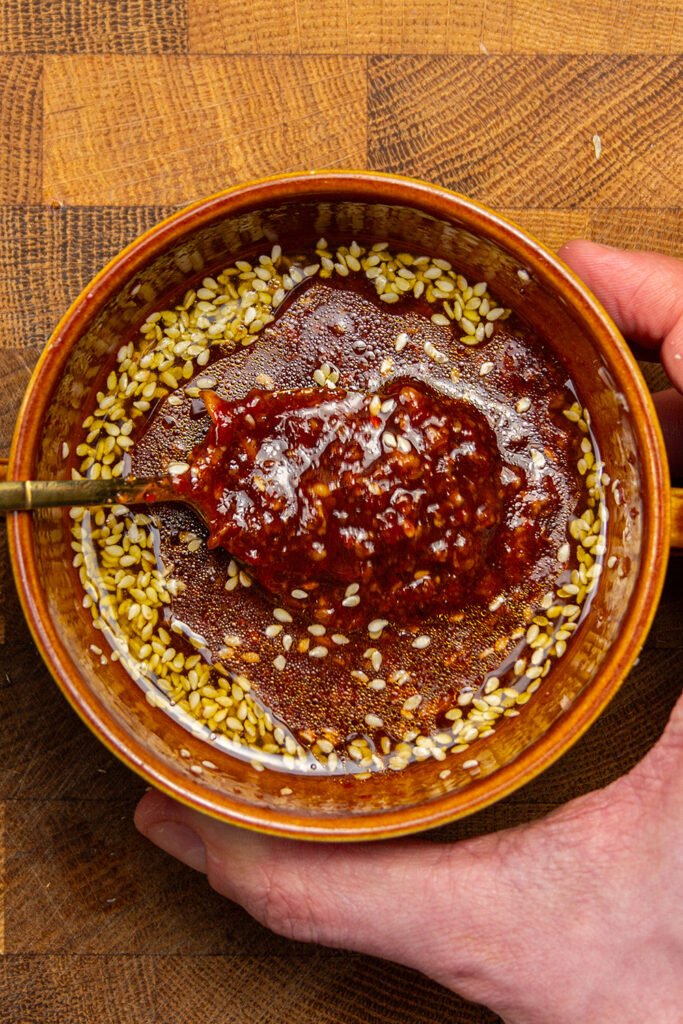
Step 1: In a small bowl, whisk the grated garlic, grated ginger, soy sauce, brown sugar, 1 tablespoon olive oil, gochujang, rice vinegar, and sesame seeds until the sugar begins to dissolve and the sauce looks smooth and glossy. Set it aside at room temperature while you cook.
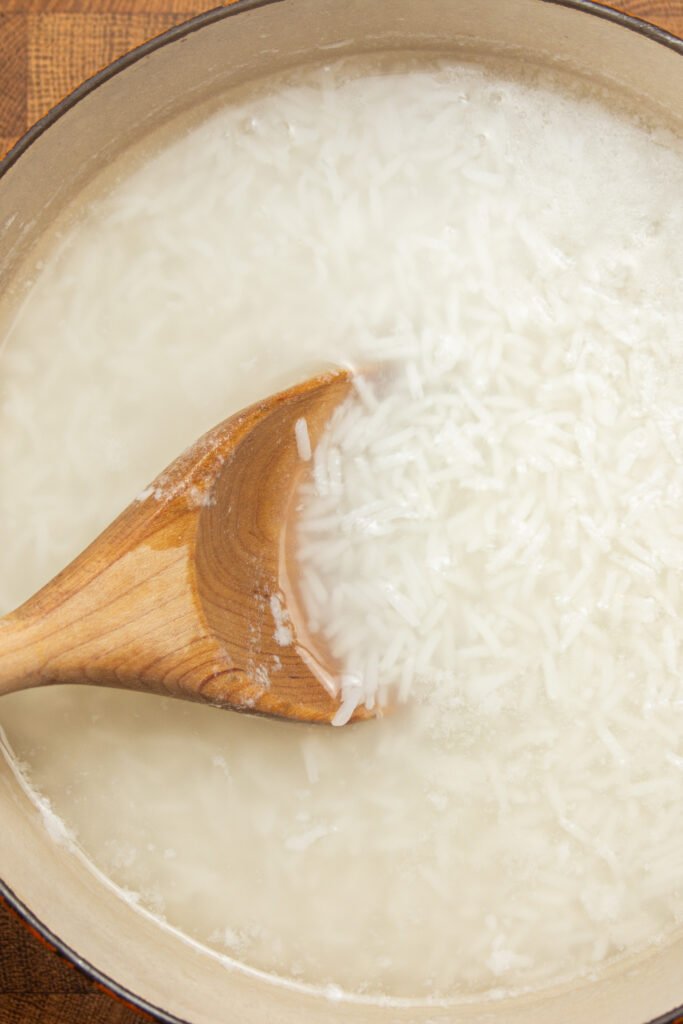
Step 2: Cook the rice according to the package instructions, usually over low heat after bringing it to a simmer. Cook until the grains are tender and the liquid has absorbed, then keep it warm while the beef finishes.
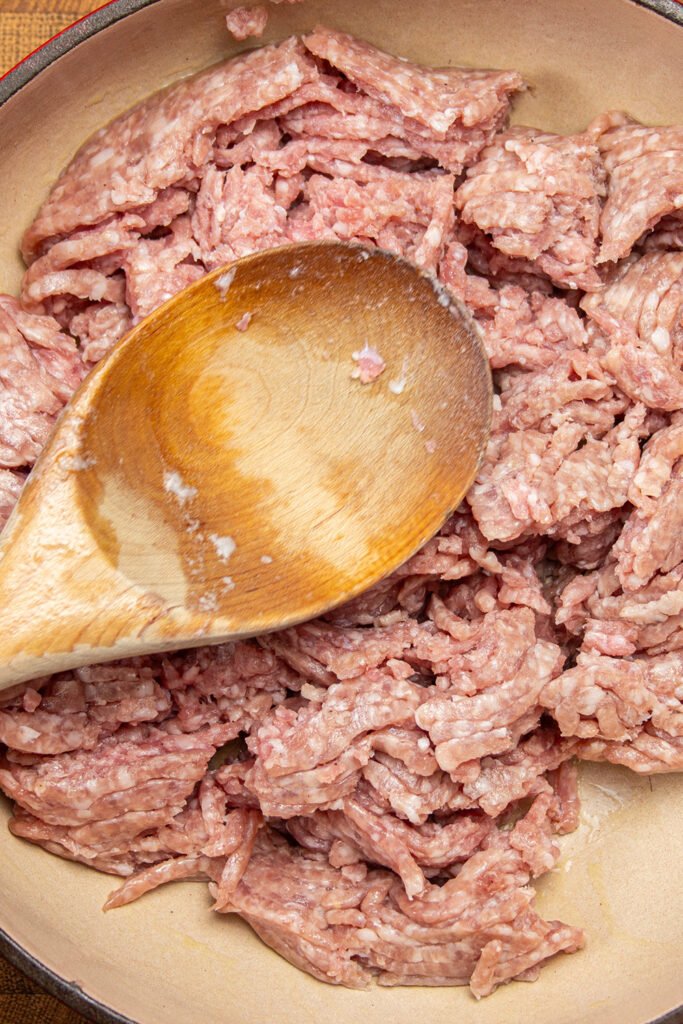
Step 3: Heat 2 tbsp olive oil in a large pan over medium-high heat. Once hot, add the ground beef and cook for 5 to 7 minutes, breaking it up as it browns, until no pink remains and the pieces are lightly browned.
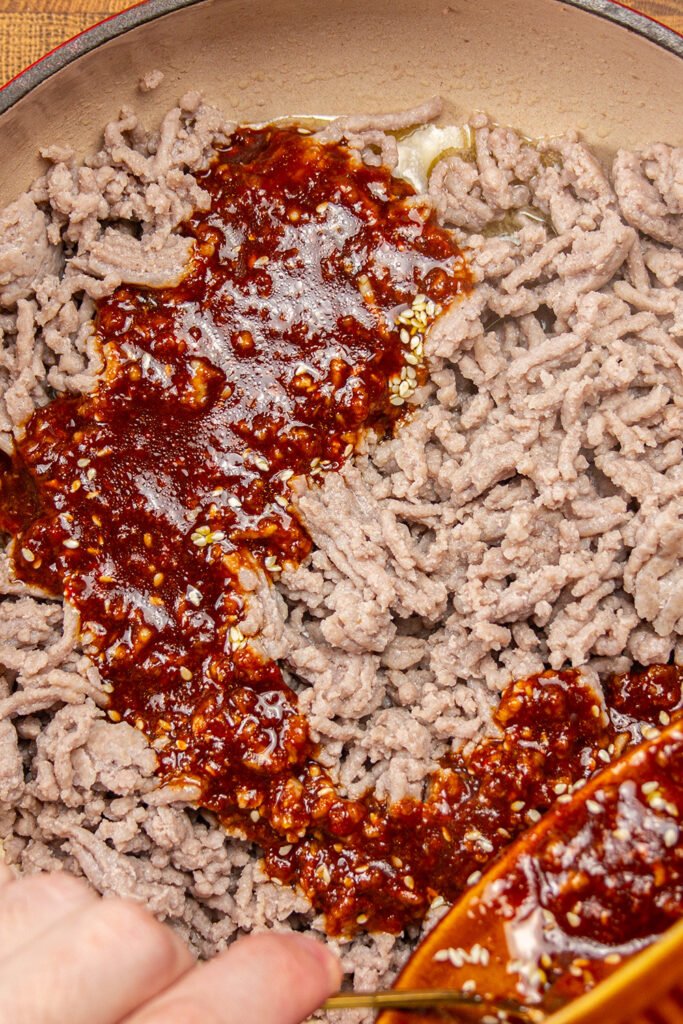
Step 4: Pour the sauce over the browned beef and stir well to coat. Add half of the sliced scallions and simmer over medium to medium-high heat for 2 to 3 minutes, until the sauce thickens slightly but still looks glossy and saucy.
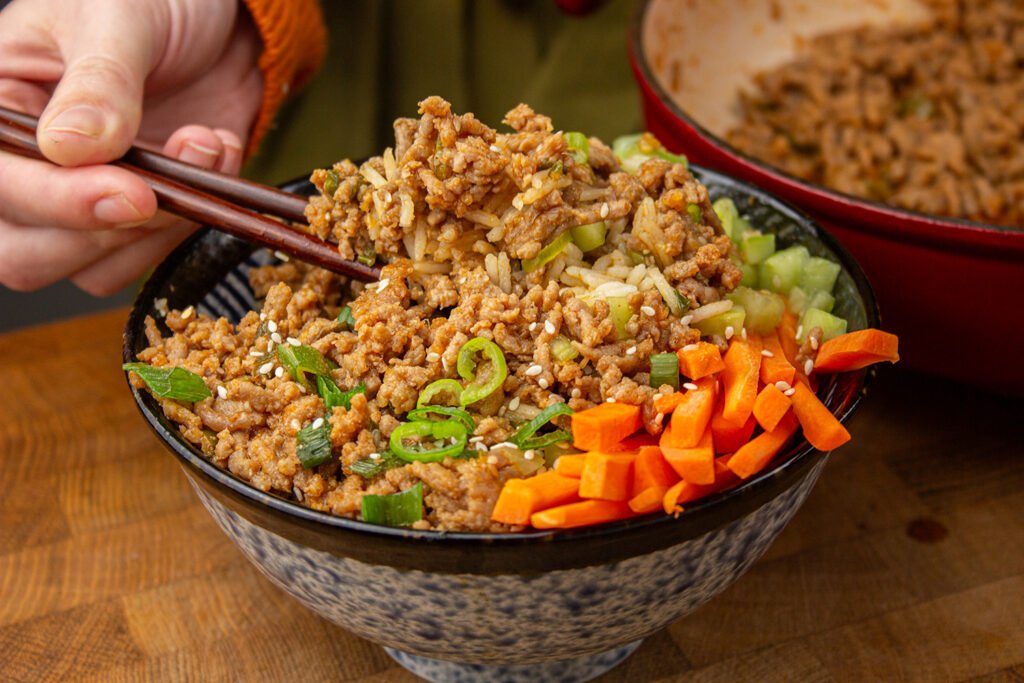
Step 5: Divide the warm rice between 2 bowls. Spoon the Korean beef over the rice, making sure to include the pan juices, then finish with the julienned carrot, diced cucumber, remaining scallions, and extra sesame seeds if you like. Serve warm while the beef is still saucy and the vegetables are crisp.
Substitute Ground Beef with Ground Turkey
Ground turkey works because it cooks quickly and takes on the gochujang-soy sauce well. Use the same amount, breaking it up in the pan just like the beef, and cook it until no pink remains and the pieces are lightly browned.
The texture will be a little leaner and softer, and the flavor will be less rich. Since turkey has less fat, the bowl may taste lighter, and the sauce may not feel quite as rounded but still delicious. Keep an eye on the pan as it cooks because lean turkey can dry out a little faster than beef.
Tips for Making Korean Beef Rice Bowl
Tip 1: Use freshly grated garlic and ginger if you can. They melt into the sauce more smoothly and give the bowl a cleaner, fresher flavor.
Tip 2: Let the beef actually brown before adding the sauce. A little color in the pan gives the finished bowl more depth.
Tip 3: Keep the carrot and cucumber raw and crisp. The contrast with the warm, saucy beef is what makes the bowl feel balanced.
Make-Ahead Instructions
You can make the beef mixture up to 2 days in advance and store it in an airtight container in the refrigerator. The sauce will settle into the beef as it sits, making the flavor a little deeper and more savory.
You can also prep the carrot and cucumber up to 2 days in advance, and even the cooked rice can be made ahead, but it is best stored on its own so it does not absorb too much sauce.
Storing Leftovers
Store leftovers in an airtight container in the refrigerator for up to 3 days. For best texture, keep the beef and rice together if already assembled, but store the cucumber and carrot separately when possible.
The beef will become a little thicker as it chills, and the rice may firm up. The cucumber will soften if stored with the warm beef, so fresh toppings are best added after reheating.
Freezing Instructions
Freezing is recommended for the beef mixture, but not for the fully assembled bowls with cucumber and carrot. Let the beef cool completely, then freeze it in an airtight freezer-safe container or freezer bag for up to 2 months.
After thawing, the sauce may look slightly separated at first, but it will come back together as it reheats. The texture of the beef should stay tender, though it may be a little less glossy than when freshly cooked.
Reheating Instructions
Reheat the beef gently in a skillet over medium-low heat, stirring often, until hot throughout. Add a small splash of water or stock if the sauce has thickened too much.
Rice reheats best covered in the microwave at a lower wattage. Warm it in short intervals, stirring every so often until soft again, then assemble with fresh carrot, cucumber, scallions, and sesame seeds.
Serving Suggestions
Serve these bowls with extra cucumber or freshly sliced radishes for a spicier crunch. A sprinkle of sesame seeds and fresh scallions keeps the bowl bright without making it complicated.
This is a good dinner for busy weeknights, meal prep lunches, or the kind of evening when you want something warm and grounding after a long day.
Print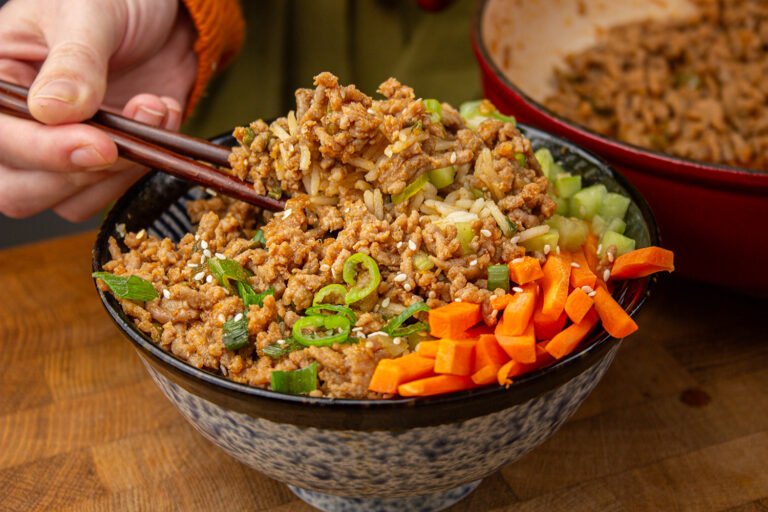
Korean Beef Bowl
There’s always that one night after a long shift where all I want is to come home, kick off my shoes, and curl up under a warm blanket on the sofa. As a nurse, those nights come around pretty often.
But since I can’t exactly let the family starve, this is the bowl I keep coming back to. It’s my little weeknight safety net.
- Total Time: 15 minutes
- Yield: 2 bowls 1x
Ingredients
For the Sauce:
- 3 garlic cloves, freshly grated
- 1 inch ginger, freshly grated
- 3 tbsp soy sauce
- 2 tbsp brown sugar
- 1 tbsp olive oil or sesame oil
- 1 tbsp gochujang, adjust to taste
- 1 tsp rice vinegar
- 1 tsp sesame seeds
For the Stir-Fry:
- 2 tbsp olive oil
- 500 g ground beef
- 2 scallions, green parts finely sliced, half reserved for garnish
- 200 ml beef stock
For Serving:
- 1 cup basmati or jasmine rice
- 1 carrot, julienned
- 1/2 cucumber, finely diced
Instructions
- In a small bowl, whisk together the garlic, ginger, soy sauce, brown sugar, oil, gochujang, rice vinegar, and sesame seeds until combined. Set aside.
- Cook the rice according to package instructions.
- Heat olive oil in a large pan over medium-high heat. Add the ground beef and cook until browned, breaking it up as it cooks.
- Pour the sauce over the beef and stir to coat well. Add half of the scallions and simmer for 2 to 3 minutes, until slightly thickened but still saucy.
- Divide rice between bowls. Top with the Korean beef and spoon over the juices. Finish with carrot, cucumber, remaining scallions, and extra sesame seeds if you like. Serve warm.
- Prep Time: 5 minutes
- Cook Time: 10 minutes