Japanese Pork Rice Bowl (Butadon)
A little note: this post contains affiliate links. If you buy through them, we may earn a small commission at no extra cost to you. As an Amazon Associate we earn from qualifying purchases. More about that.
This is literally my new favorite dish ever. Not even clickbait. It’s quick, unbelievably satisfying, and hits every craving: sweet, savory, rich, and comforting. Butadon is a Japanese pork bowl that takes just 15-20 minutes to make but tastes like something you’d get at a street-side diner in Tokyo.
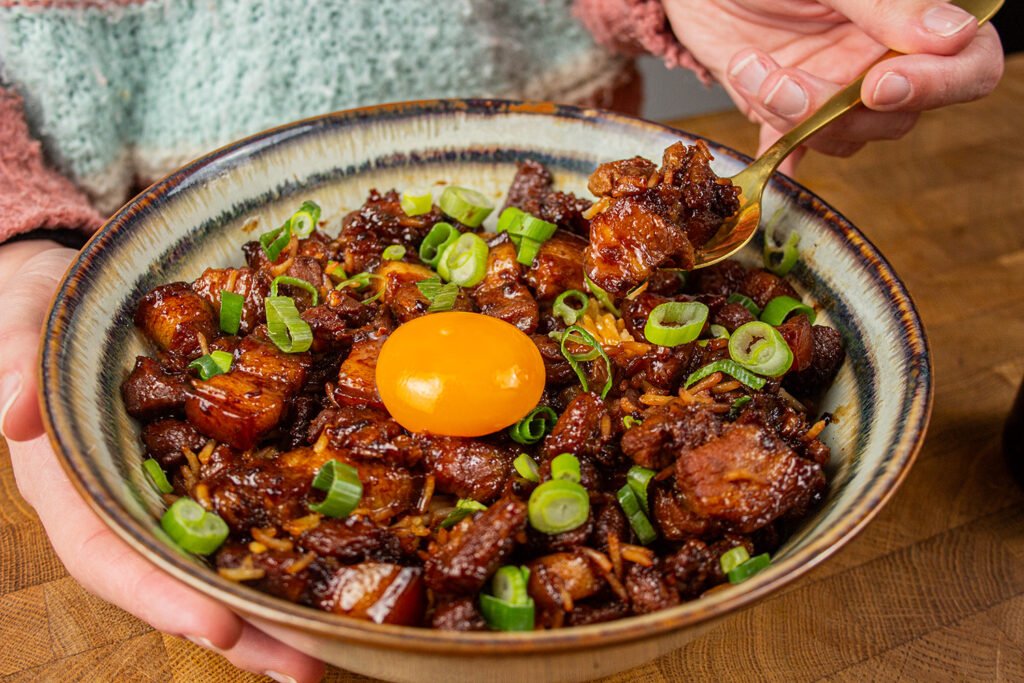
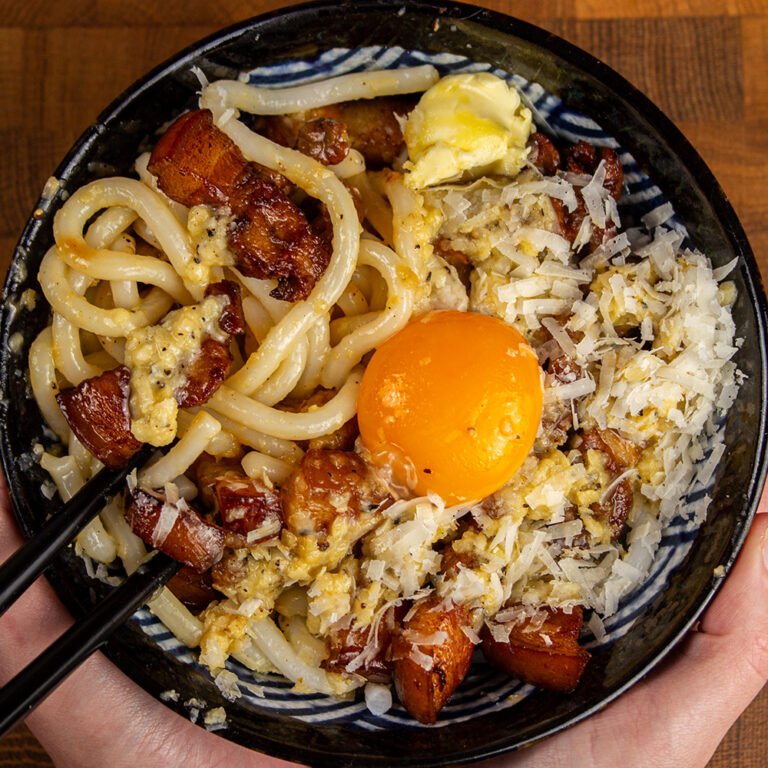
Juicy pork belly glazed in a soy-sake-honey sauce, served over fluffy rice and topped with egg yolk and chives… it’s dangerously good. If you’ve never tried Butadon before, this is your sign.
Watch Our Japanese Pork Rice Bowl Video Recipe
Prefer to watch the recipe on YouTube instead or just want something to follow along to?
Here is our step-by-step video recipe:
Easy Japanese Pork Rice Bowl Recipe
This glossy Japanese pork rice bowl butadon is surprisingly approachable and perfect for a cozy weeknight dinner. After searing pork belly, reducing a soy-sake-honey sauce, and spooning everything over warm rice, the result is a sticky, savory-sweet bowl with rich pork, fluffy rice, and a soft egg yolk that feels restaurant-quality but is made entirely at home.
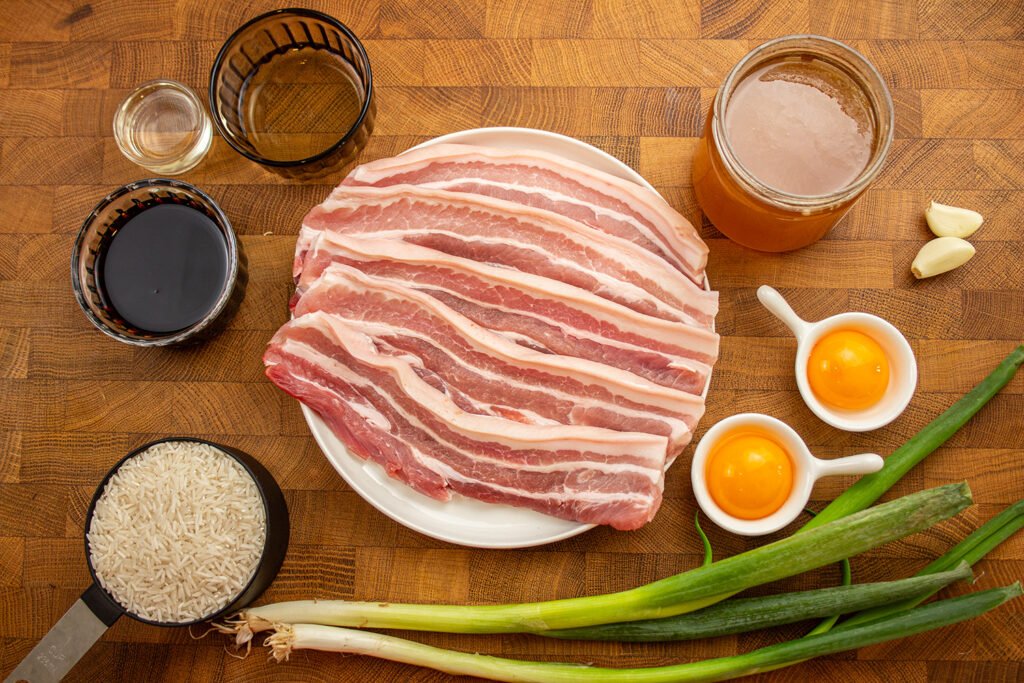
Ingredients for Japanese Pork Rice Bowl
- Pork belly: Adds rich, juicy texture and becomes golden around the edges when seared.
- Cooked basmati rice: Gives the sticky pork and sauce a soft, fluffy base to soak into. You can substitute short-grain sushi rice if you want a more traditional, slightly clingy texture.
- Egg yolks: Add a silky, rich finish that softens the salty-sweet sauce. You can substitute a soft-boiled egg if you prefer the yolk more gently set.
- Scallion greens: Bring a fresh, oniony bite that balances the richness of the pork belly. You can substitute chives if you prefer that.
- Light soy sauce: Builds the salty, savory base of the sauce without making it too heavy.
- Sake: Adds gentle depth and helps round out the sauce.
- Mirin: Adds sweetness and gloss while balancing the soy sauce. You can substitute a small splash of rice vinegar with a little extra honey, though the flavor will be less rounded.
- Honey: Gives the sauce sweetness and helps it reduce into a sticky glaze. You can substitute maple syrup or even dark brown sugar for a similar sweetness and glossy finish.
- Garlic: Adds warmth and savory depth to the sauce.
How to Make Japanese Pork Rice Bowl

Step 1: Slice the pork belly into 1 cm (0.5 inch) thick strips. Keep the pieces fairly even so they sear at the same pace later.
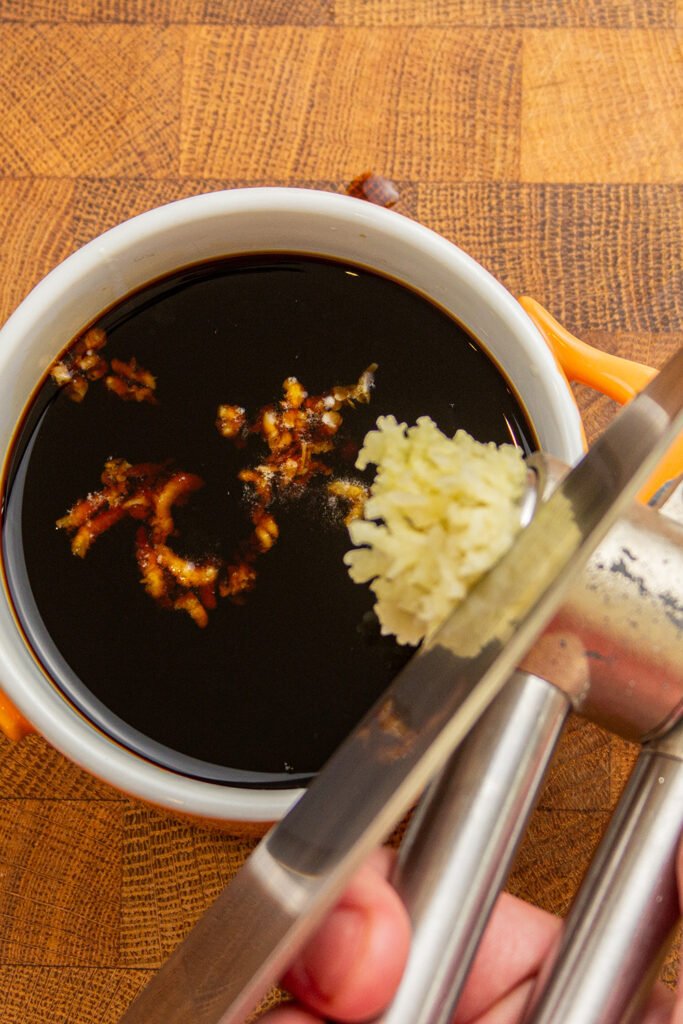
Step 2: In a small bowl, combine the light soy sauce, sake, mirin, honey, and minced garlic. Stir until the honey is mostly dissolved and the sauce looks smooth and loose.
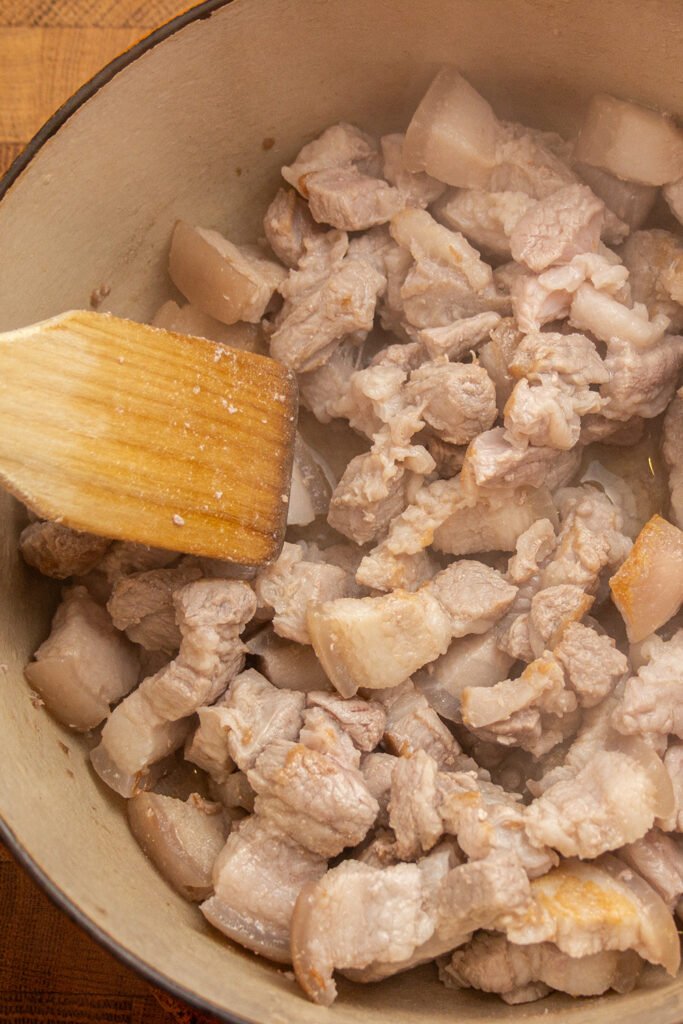
Step 3: Heat a pan over medium-high heat until hot. Add the pork belly and sear for a few minutes, turning as needed, until the pieces are golden and slightly browned. Remove the pork from the pan and set aside, then carefully remove any excess fat from the pan with a paper towel.
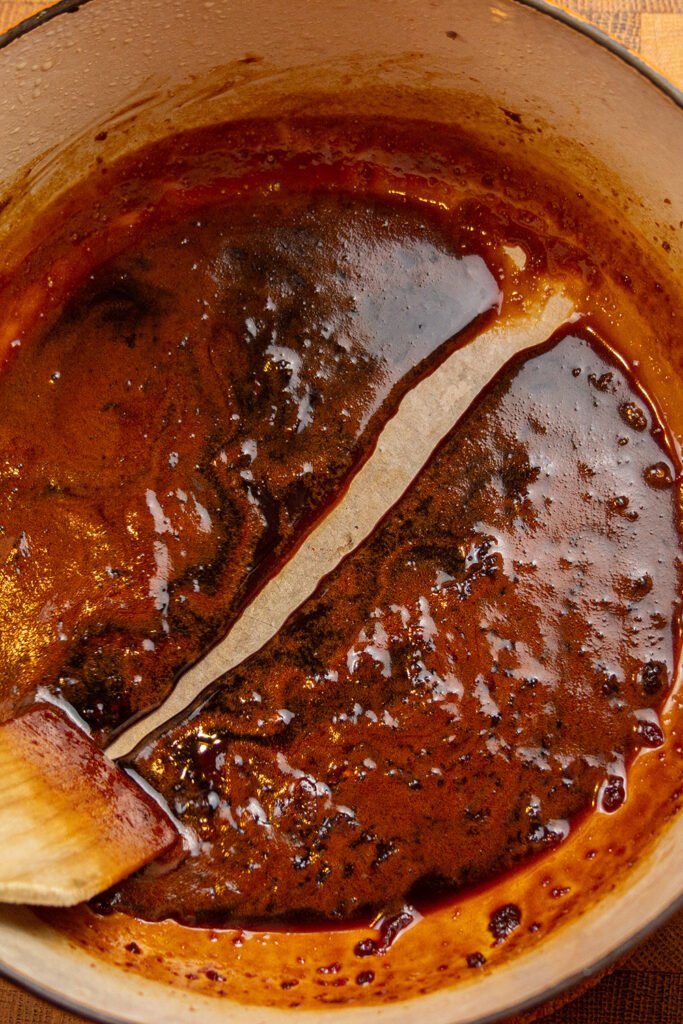
Step 4: Lower the heat to medium, pour in the sauce, and simmer for 5 to 10 minutes until thickened. To check the consistency, drag a wooden spoon or spatula across the pan. When the sauce is ready, it should take 1 to 2 seconds to fill the gap back in.
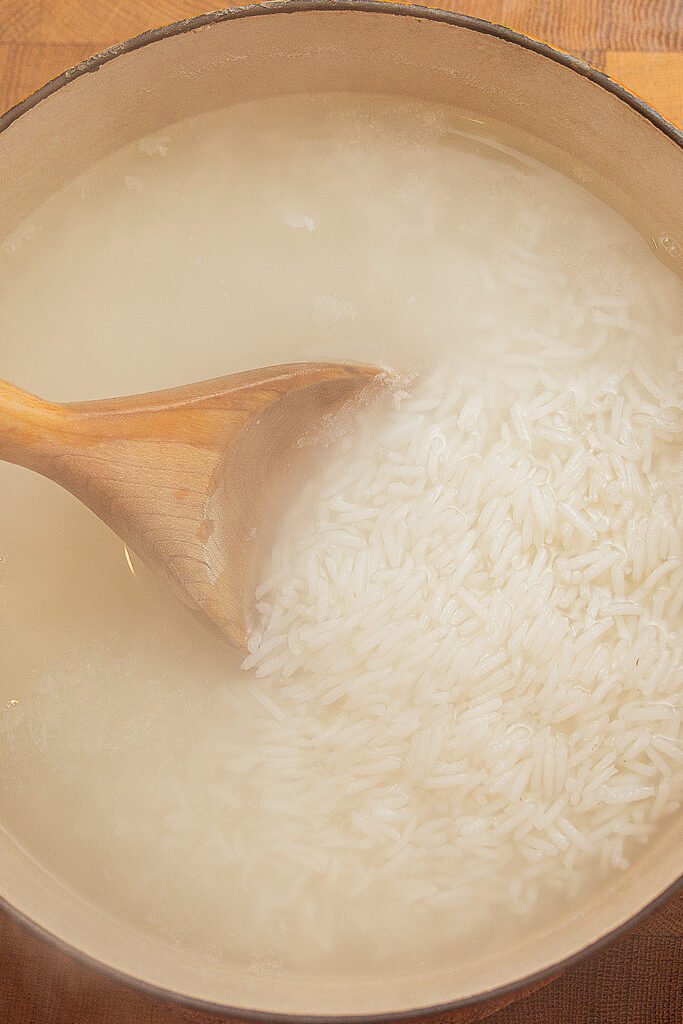
Step 5: Meanwhile, cook the rice over medium heat or according to your rice cooker or package directions until tender and fluffy. The rice should be warm and ready before the pork goes back into the sauce.
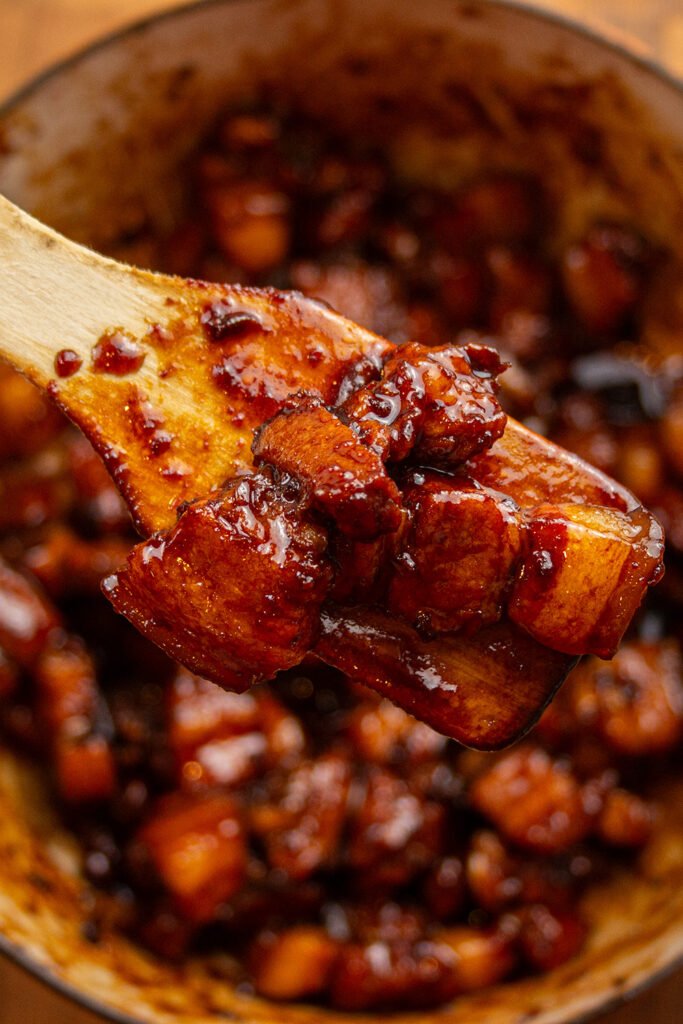
Step 6: Add the seared pork belly back into the pan over medium heat. Simmer for 1 more minute, stirring to coat the pork well. The sauce should look sticky and glossy. If it still looks thin, continue reducing for a few more minutes.
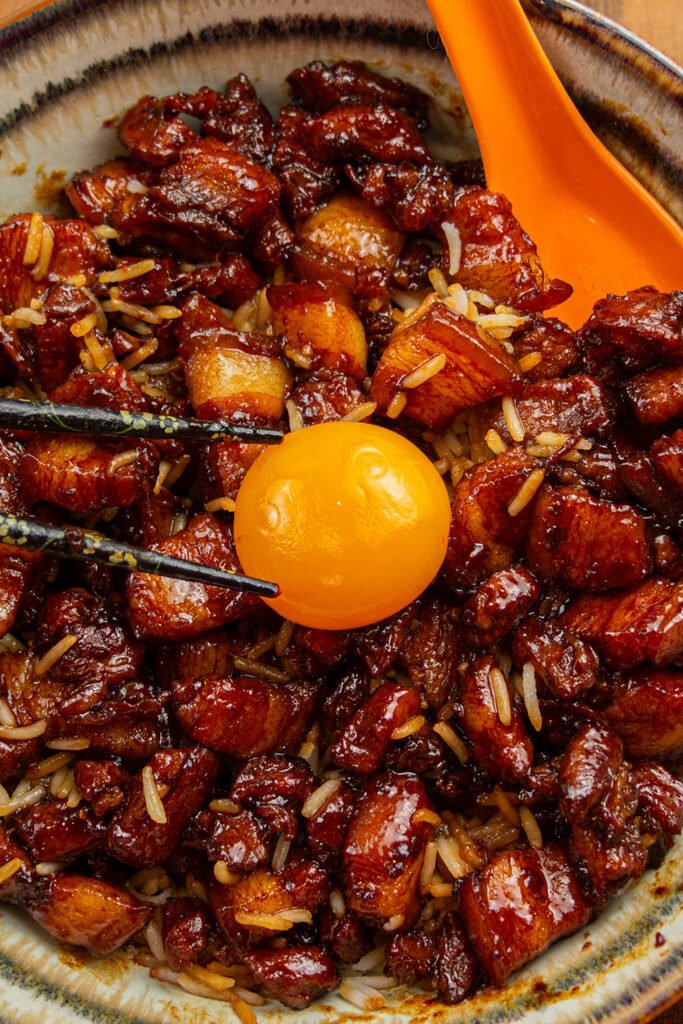
Step 7: Serve the sticky pork belly in bowls over the cooked rice. Top each bowl with sliced scallion greens if desired, sesame seeds and 1 egg yolk while the pork and rice are still warm.
Substitute Pork Belly with Pork Shoulder
Pork shoulder works because it still has enough fat to stay flavorful, but it is usually a little leaner and firmer than pork belly. Slice it into thin, small strips so it can sear quickly and soak up the sauce without needing a long braise.
The finished bowl will be slightly less rich and less melt-in-your-mouth, with more chew. It may also need a few extra minutes in the pan to become tender, so watch the texture closely before adding it back into the reduced sauce.
Tips for Making Japanese Pork Rice Bowl
Tip 1: Start the rice early if you are cooking it from dry. The pork moves quickly once the sauce has thickened, and warm rice makes the whole bowl feel softer and more balanced.
Tip 2: Do not rush the sauce reduction. The wooden spoon test is the best cue here because the glaze should cling to the pork instead of pooling like a thin liquid. This truly makes or breaks the dish.
Tip 3: Remove excess pork fat before adding the sauce. A little fat adds flavor, but too much can keep the glaze from turning sticky and glossy.
Tip 4: Do top with that egg yolk, even if you’re opposed to it 🙂 Mix it well with the rice to make everything creamier and more delicious.
Make-Ahead Instructions
You can make the pork and sauce up to 2 days in advance and store them together in an airtight container in the refrigerator. The sauce will settle into the pork as it rests, making the flavor a little deeper and more savory.
For the best texture, cook the rice fresh or make it the same day you plan to serve. Keep the egg yolks and scallions separate until serving.
Storing Leftovers
Store leftover pork and rice, only if no yolk was mixed into it, in separate airtight containers or together. Refrigerate for up to 3 days. The pork glaze will thicken as it chills, and the rice may firm up slightly in the fridge.
I don’t recommend storing egg yolks, even if they are unused and still safely handled. Just crack it fresh. Once the yolk has been added to a bowl, leftovers are best eaten the same day.
Freezing Instructions
Freezing is recommended for the pork and sauce, but not for the assembled bowl with rice, egg yolk, and scallions. Freeze the cooled pork in an airtight freezer-safe container for up to 2 months.
After thawing, the pork may be slightly softer and the sauce may separate a bit. Reheat gently and stir until the glaze comes back together.
Reheating Instructions
Reheat the pork in a pan over medium-low heat until warmed through and glossy again. Add a small splash of water if the sauce is too thick, then simmer briefly until it coats the pork.
Reheat rice separately with a splash of water, covered, until soft and steamy. Add fresh scallion greens and egg yolk only after reheating.
Serving Suggestions
Serve butadon as is, no sides required. Extra sliced scallions make a fresh garnish, and a sprinkle of sesame seeds would also fit the bowl’s savory-sweet flavor.
This is especially nice for a quick dinner, a cozy solo bowl, or a low-effort meal that still feels intentional.
Print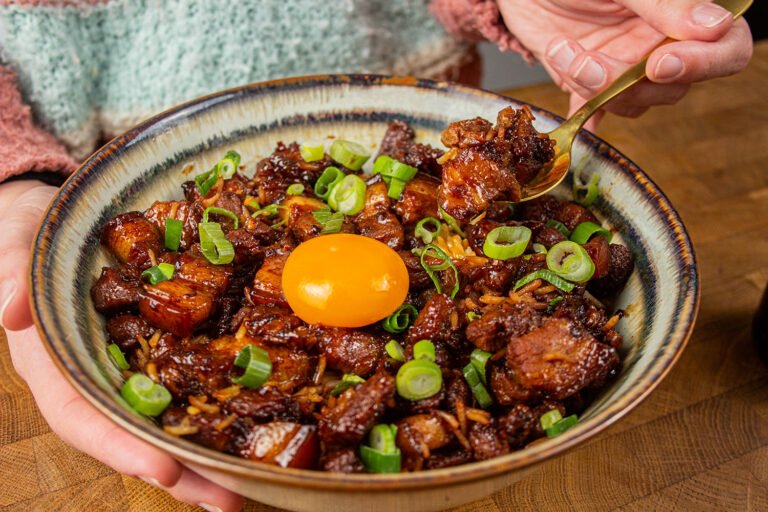
Japanese Pork Rice Bowl (Butadon)
This is literally my new favorite dish ever. Not even clickbait. It’s quick, unbelievably satisfying, and hits every craving: sweet, savory, rich, and comforting. Butadon is a Japanese pork bowl that takes just 15-20 minutes to make but tastes like something you’d get at a street-side diner in Tokyo.
Juicy pork belly glazed in a soy-sake-honey sauce, served over fluffy rice and topped with egg yolk and chives… it’s dangerously good. If you’ve never tried Butadon before, this is your sign.
- Total Time: 20 minutes
- Yield: 2 bowls 1x
Ingredients
For the pork bowl and toppings:
- 400g pork belly, sliced into 1 cm strips
- 1 cup cooked rice
- 2 egg yolks
- 1 scallion, green parts sliced
For the sauce:
- 100ml light soy sauce
- 50ml sake
- 2 tbsp mirin
- 1 tbsp honey
- 2 garlic cloves, minced
Instructions
- Slice pork belly into 1 cm thick strips.
- Combine light soy sauce, sake, mirin, honey, and minced garlic.
- Heat a pan over medium-high heat. Once hot, sear pork belly until golden and slightly browned for a few minutes. Remove pork from the pan and set aside, then remove excess fat from the pan.
- Over medium heat, pour in the sauce and simmer for 5 to 10 minutes until thickened. Drag a wooden spoon or spatula across the pan. Once thickened, the sauce should take 1 to 2 seconds to fill the gap back in. In the meantime, cook the rice.
- Add the seared pork belly back into the pan. Simmer for 1 more minute to coat well. The sauce should be sticky and glossy. If not, reduce for a few more minutes.
- Serve sticky pork belly over cooked rice and top with sliced scallion greens and an egg yolk.
- Prep Time: 5 minutes
- Cook Time: 15 minutes