Easy Chili Garlic Pork Belly Ramen Recipe
A little note: this post contains affiliate links. If you buy through them, we may earn a small commission at no extra cost to you. As an Amazon Associate we earn from qualifying purchases. More about that.
This is one of those ramen bowls I make when I want something brothy and comforting but still a little bold. Clear, aromatic, lightly spicy, and heavy on the garlic.
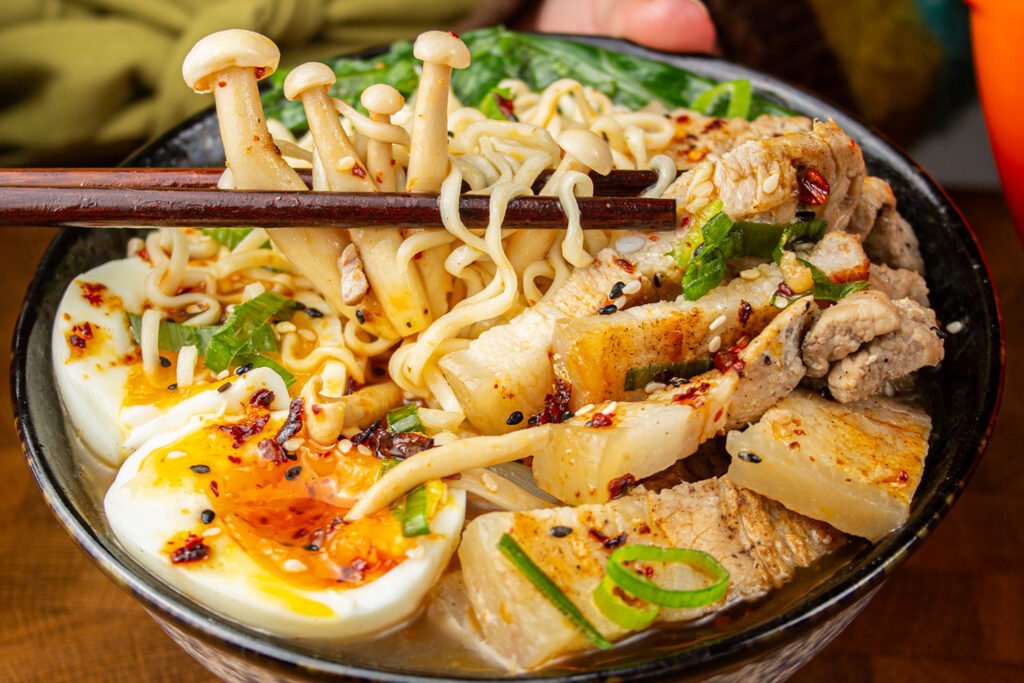
It’s the kind of soup you put on the stove and then forget about for a while, letting the pot quietly do its thing while you clean, read, or just exist around your home.
The pork belly slowly turns tender, the broth stays clean but punchy, and everything comes together without much effort. If you’re craving something cozy but fresh, this one really hits.
Watch Our Chili Garlic Pork Belly Ramen Video Recipe
Prefer to watch the recipe on YouTube instead or just want something to follow along to?
Here is our step-by-step video recipe:
Easy Chili Garlic Pork Belly Ramen Recipe
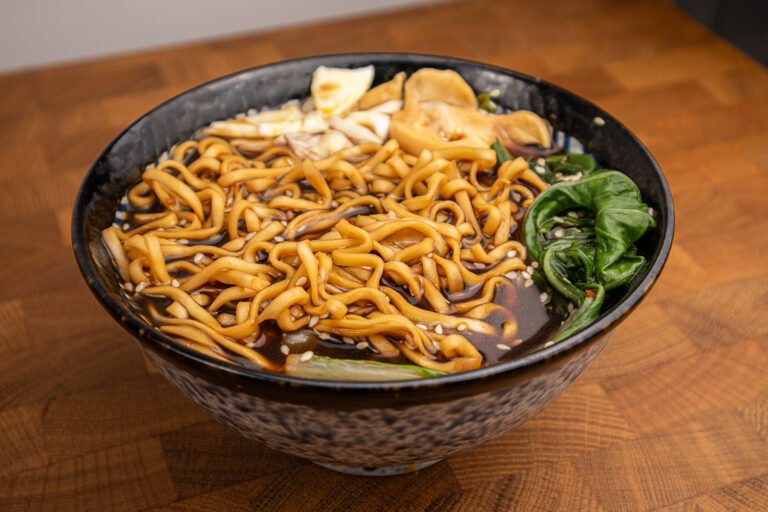
This cozy chili garlic pork belly ramen is surprisingly approachable and perfect for a slow evening at home. After rendering the pork belly, simmering it gently in a clean garlic-chili broth, and layering it with noodles, mushrooms, greens, and soft-boiled eggs, the result is a tender, brothy, lightly spicy dish that feels restaurant-quality but is made entirely at home.
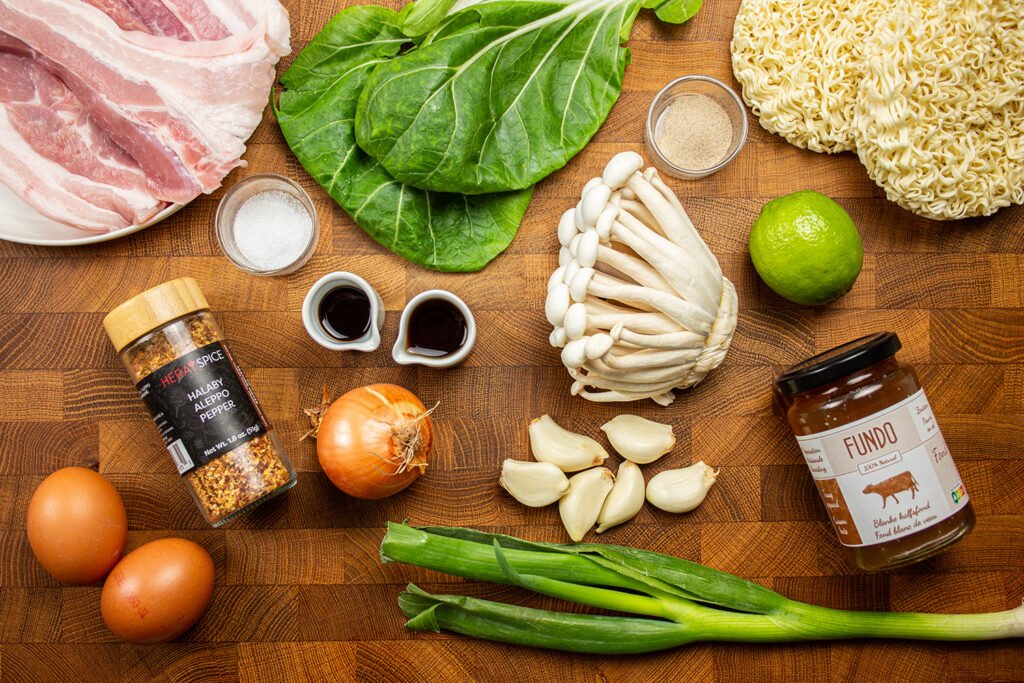
Ingredients for Chili Garlic Pork Belly Ramen
- Pork belly: Adds rich, tender bites and slowly seasons the broth as it simmers.
- Salt: Seasons the pork belly before rendering and helps bring out its savory flavor.
- Black pepper: Gives the pork a warm, simple seasoning before it goes into the pot. You can substitute white pepper for a softer peppery flavor.
- Olive oil: Helps cook the garlic and chili flakes if the pork belly does not release enough fat.
- Garlic: Builds the main aromatic flavor of the broth and gives it that cozy, savory depth.
- Chili flakes or Halaby pepper: Adds a light, warm spice without making the broth feel heavy. You can substitute a fresh red chili pepper if you prefer.
- Yellow onion: Sweetens the broth as it simmers and keeps the flavor rounded. You can substitute shallot if you want a softer, slightly sweeter base.
- Beef broth: Creates the savory liquid base for the ramen and helps the pork belly taste fuller. You can substitute chicken broth if you want a lighter bowl.
- Fish sauce: Adds salty depth and a subtle savory edge to the broth. You can substitute a little extra soy sauce, though the flavor will be less rounded.
- Soy sauce: Adds saltiness, color, and gentle umami.
- White pepper: Gives the broth a clean, aromatic heat that feels very ramen-friendly. You can substitute black pepper if needed, though the flavor will be a little sharper.
- Sugar: Balances the salt, spice, and garlic so the broth tastes smooth. You can substitute honey, but don’t overdo it because it brings its own flavor.
- Ramen noodles: Make the bowl filling and give the broth something springy to cling to. You can substitute wet udon noodles if you want more chewiness, adjusting the cooking time as needed.
- Enoki mushrooms: Add delicate texture and a mild, earthy flavor. You can substitute thinly sliced shiitake mushrooms, though they will taste deeper and need a little more time to soften.
- Bok choy: Adds freshness, color, and a tender-crisp bite. You can substitute spinach if you want something softer and quicker.
- Soft-boiled eggs: Add creamy richness and make the bowl feel complete.
- Spring onion greens: Add a fresh, sharp finish that lifts the rich pork and broth.
- Black and white sesame seeds: Add a light nutty finish and a little texture on top.
- Chili oil: Adds glossy heat and a final layer of chili flavor.
- Lime juice: Brightens the broth and cuts through the richness of the pork belly. You can substitute rice vinegar or lemon juice for a similar lift.
How to Make Chili Garlic Pork Belly Ramen
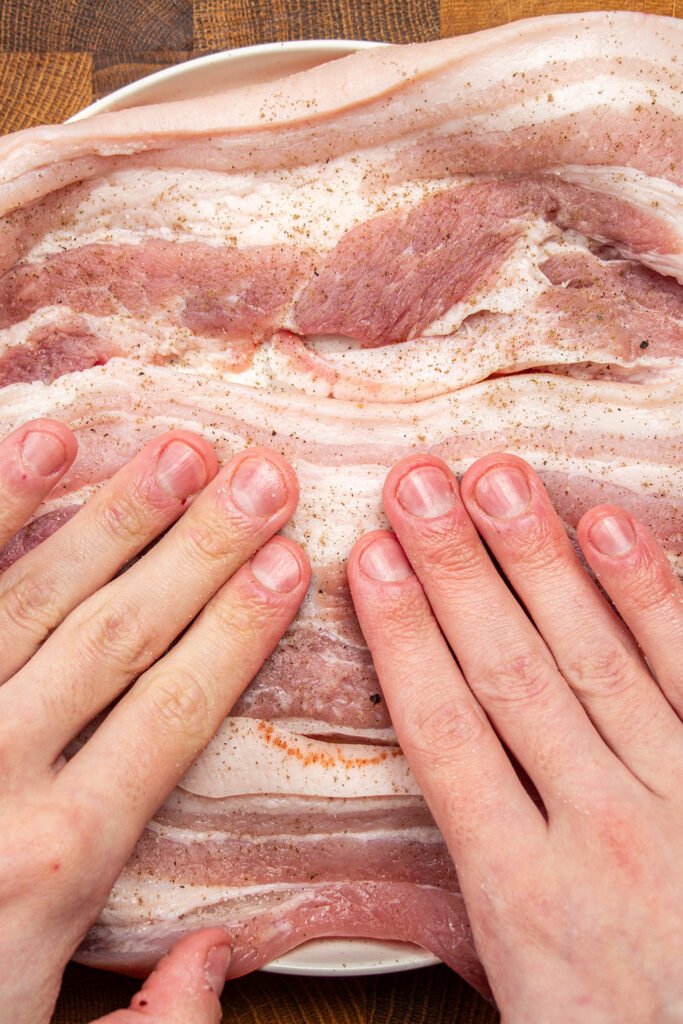
Step 1: Cut the pork belly into thick slices, then pat it dry with paper towels. Season both sides with salt and black pepper, making sure the surface looks evenly coated before it goes into the pot.
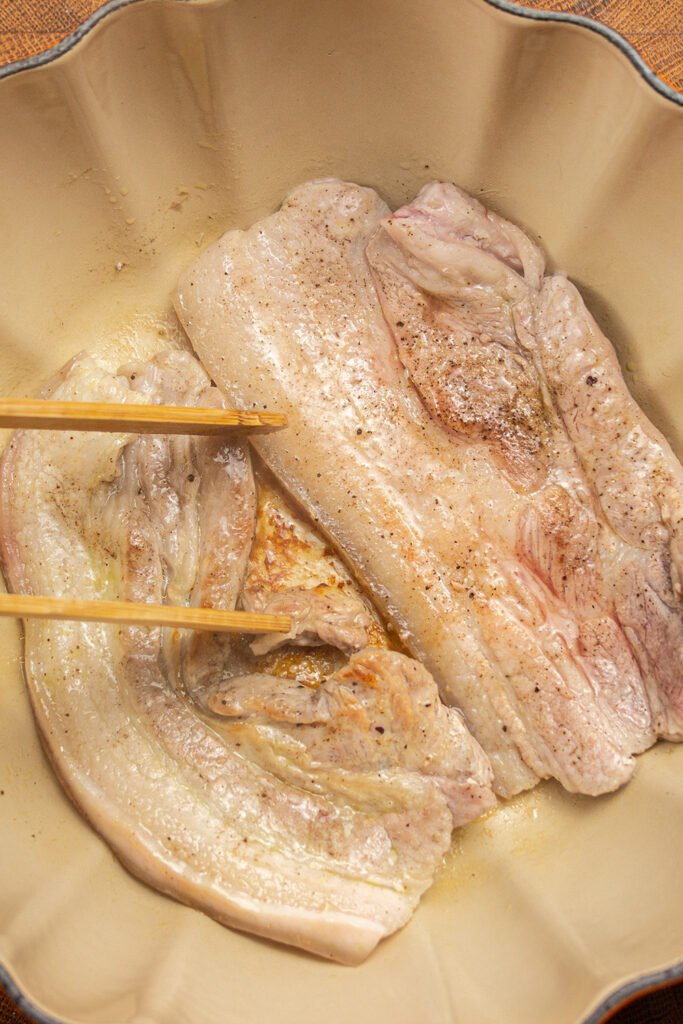
Step 2: Place the pork belly in a pot over medium heat. Let the fat render slowly for about 8-12 minutes, turning as needed, until the pork is lightly golden and there is fat in the bottom of the pot. Remove the pork and set it aside, keeping the rendered fat in the pot.
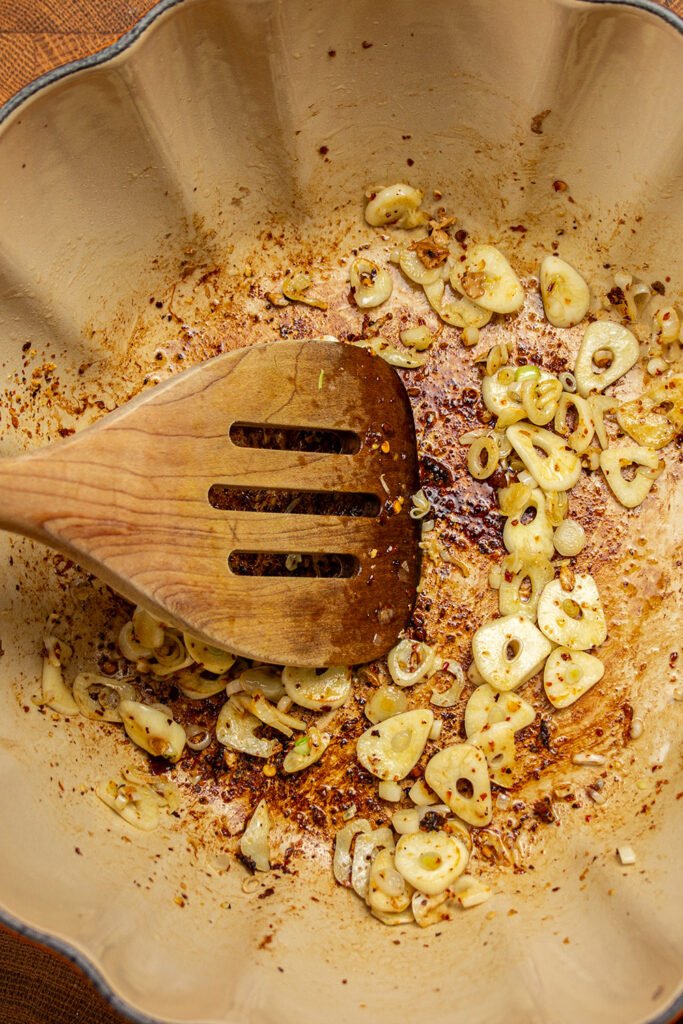
Step 3: Lower the heat to low. Add the olive oil only if the pot looks dry, then add the sliced garlic and chili flakes. Cook gently for about 1-2 minutes, stirring often, until fragrant. Do not let the garlic brown, since it can turn bitter.
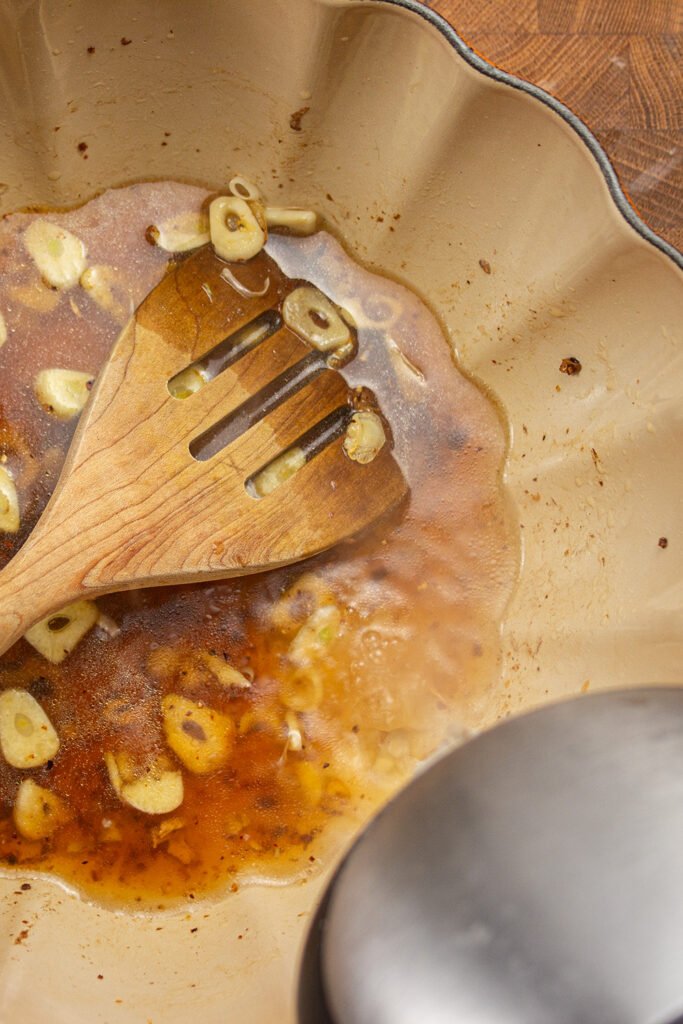
Step 4: Add the broth and bring it to a boil over medium-high heat. Once bubbling, reduce the heat to a bare simmer, then add the quartered onion and return the pork belly to the pot.
Simmer the broth partially covered over low heat for 90 minutes. Stir every 20-25 minutes, keeping the liquid at a quiet bubble, until the pork belly is tender and easy to pierce.
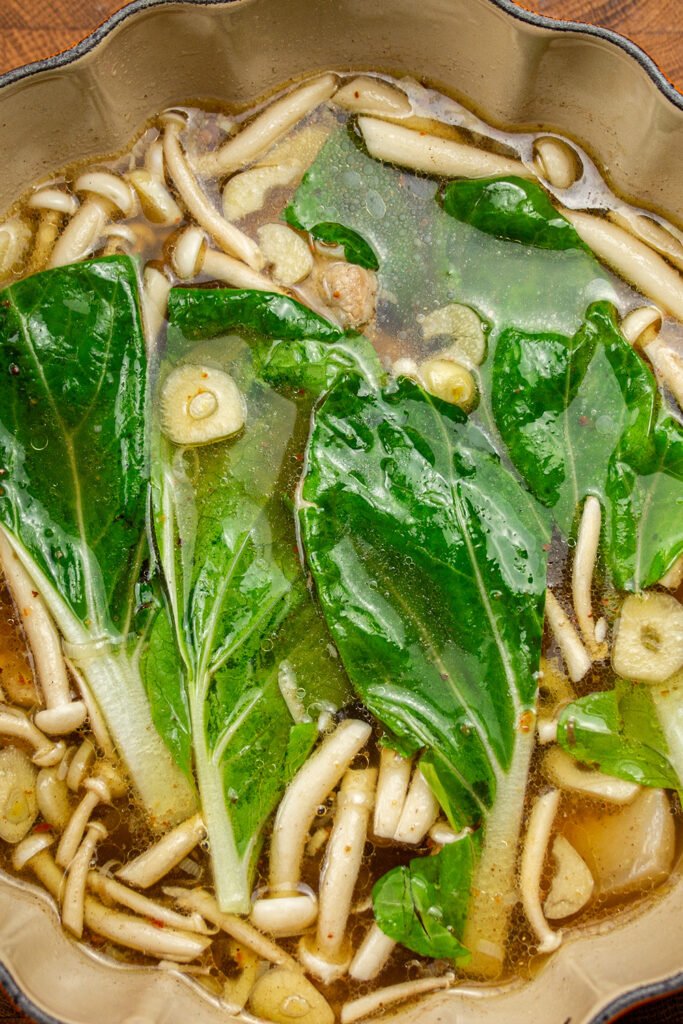
Step 5: Add the fish sauce, soy sauce, white pepper, and sugar. Stir and taste the broth over low heat. It should taste savory, clean, lightly spicy, and balanced.
Add the enoki mushrooms and simmer for 4 minutes over low heat, until softened but still delicate. Add the bok choy during the last minute, just until the leaves look bright and tender, then remove the pot from the heat to avoid overcooking.
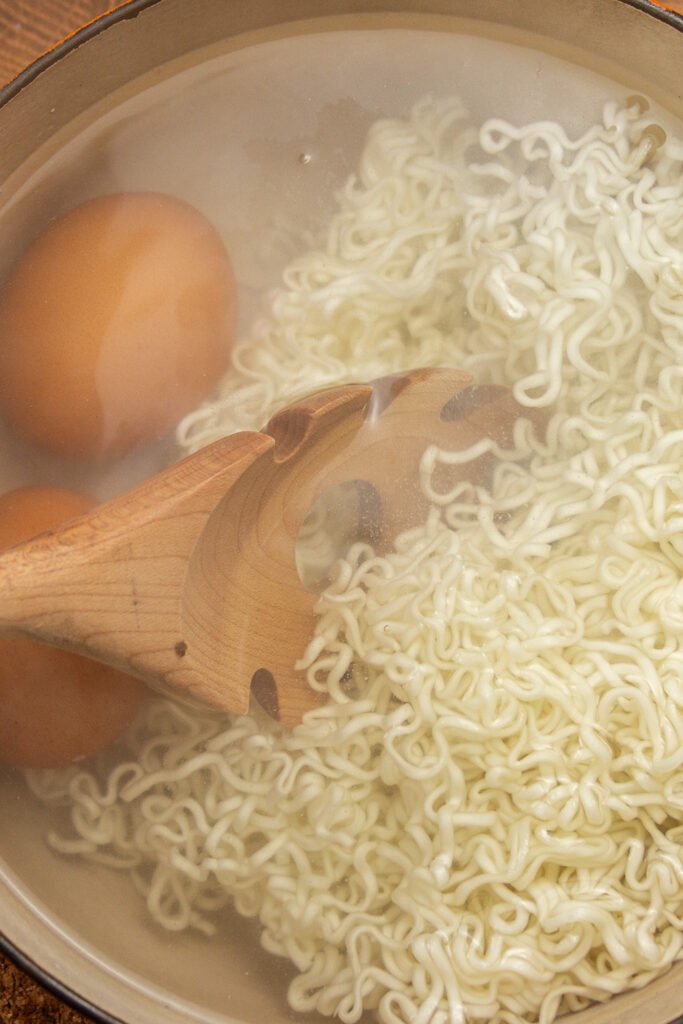
Step 6: Cook the ramen noodles separately according to the package directions, usually in boiling water over high heat until just tender. If using eggs, soft-boil them for 6 minutes, then cool slightly before peeling.
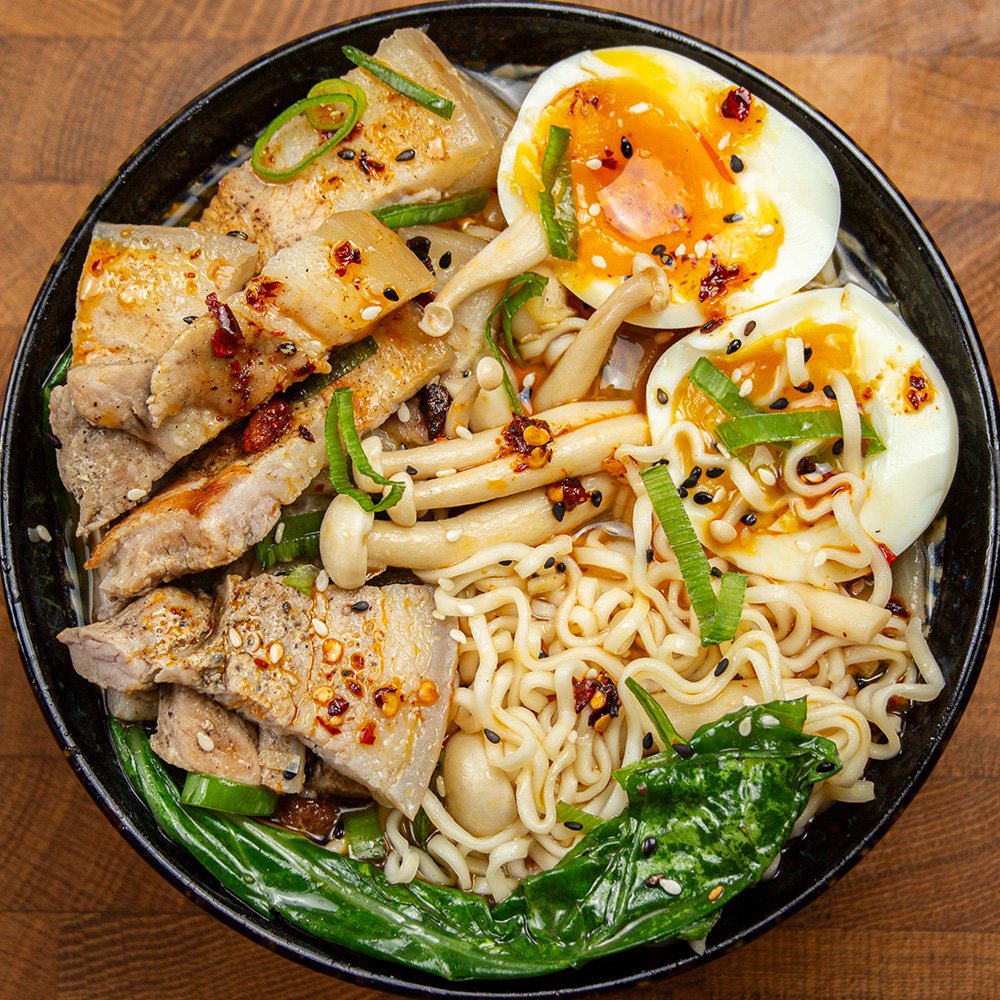
Step 7: Slice the tender pork belly into bite-sized pieces. It should look juicy and soft, with rendered edges and enough structure to sit on top of the noodles.
Assemble the bowls while everything is hot. Divide the noodles between 2 bowls, then ladle in the broth and add with pork belly, enoki mushrooms, bok choy, and soft-boiled eggs.
Top with sesame seeds, sliced spring onion greens, chili oil, and a splash of lime juice.
Substitute Pork Belly with Pork Shoulder
Pork shoulder works because it has enough fat and connective tissue to become tender during a long simmer, while still giving the broth a savory pork flavor. Cut it into thick slices or large chunks, pat it dry, and season it the same way as the pork belly.
The texture will be a little meatier and less silky than pork belly, with less rendered fat in the broth. Because pork shoulder is leaner, you may need the full tablespoon of olive oil when cooking the garlic and chili flakes. Keep the simmer low and gentle so the pork has time to soften without drying out.
Tips for Making Chili Garlic Pork Belly Ramen
Tip 1: Keep the garlic pale and fragrant. A little patience here makes the broth taste clean instead of bitter.
Tip 2: Cook the noodles separately so they stay springy and do not soak up too much broth before serving.
Tip 3: Taste the broth after the fish sauce and soy sauce go in. The pork, stock, and chili oil all add flavor, so small adjustments are better than big ones.
Make-Ahead Instructions
You can make the pork belly and broth up to 2 days in advance. Let the broth cool, then store it with the pork in an airtight container in the refrigerator. The flavor becomes a little deeper as the garlic, onion, chili, and pork settle into the broth.
For the best texture, cook the ramen noodles, bok choy, eggs, and final toppings fresh before serving.
Storing Leftovers
Store leftover broth, pork belly, mushrooms, and greens in an airtight container in the refrigerator for up to 3 days. Keep cooked noodles separate if possible, since they soften quickly and absorb broth as they sit.
The pork belly will firm up when chilled, and the broth may look slightly cloudy or set from the rendered fat. It will loosen again once warmed.
Freezing Instructions
Freezing is recommended for the broth and pork belly, but not for the noodles, bok choy, eggs, or fresh toppings. Let the broth and pork cool completely, then freeze in separate airtight freezer-safe containers for up to 2 months.
After thawing, the pork belly may be slightly softer and the broth may separate a bit. Warm it gently and stir well before assembling fresh bowls.
Reheating Instructions
Reheat the broth and pork belly in a pot over medium-low heat until steaming, about 8-10 minutes. Keep the heat gentle so the pork stays tender and the broth does not reduce too much.
If the broth tastes too concentrated after reheating, add a splash of water. Cook fresh noodles separately, then assemble the bowls just before serving to keep the texture bouncy.
Serving Suggestions
Serve this ramen with extra lime wedges, more sliced spring onion greens, and chili oil at the table so each bowl can be adjusted. Some gochugaru on top or even raw sliced radishes work well to add extra punch.
It is especially nice for a slow dinner, a rainy day lunch, or any night when you want something brothy, garlicky, and grounding without making the kitchen feel chaotic.
Print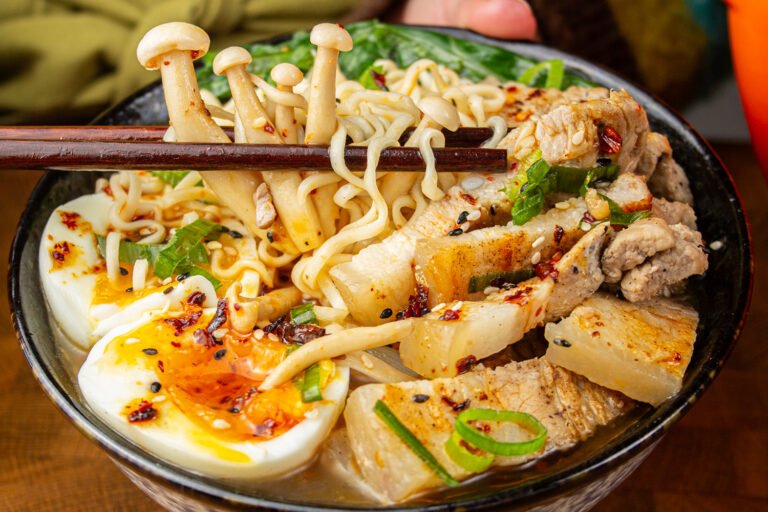
Chili Garlic Pork Belly Ramen
This is one of those ramen bowls I make when I want something brothy and comforting but still a little bold. Clear, aromatic, lightly spicy, and heavy on the garlic.
It’s the kind of soup you put on the stove and then forget about for a while, letting the pot quietly do its thing while you clean, journal, or just exist around your home. The pork belly slowly turns tender, the broth stays clean but punchy, and everything comes together without much effort. If you’re craving something cozy but fresh, this one really hits.
- Total Time: 2 hours 10 minutes
- Yield: 2 bowls 1x
Ingredients
For the pork:
- 250–300 g pork belly
- Salt
- Black pepper
For the broth base:
- 1 tbsp olive oil
- 5–6 garlic cloves, thinly sliced
- 1/2–1 tsp chili flakes or Halaby, Aleppo-style pepper
- 1 small onion, quartered
- 1.2 L beef broth: 200 ml beef stock + 1 L water, or water + stock cube
- 1.5 tbsp fish sauce
- 1 tsp soy sauce
- 1/2 tsp white pepper
- 1/2 tsp sugar
For the noodles and toppings:
- 2 packs ramen noodles
- 1/2 bunch enoki mushrooms
- 2 bok choy leaves
- 2 soft-boiled eggs, optional but great
- 1 spring onion green, sliced
- Black and white sesame seeds
- Chili oil
- Lime juice, optional but great
Instructions
- Cut pork belly into thick slices. Pat dry and season with salt and black pepper.
- Place pork belly in a pot over medium heat and render until lightly golden. Remove pork and keep the fat in the pot.
- Lower heat. Add olive oil if needed, then cook garlic and chili flakes gently until fragrant, without browning.
- Add broth and bring to a boil. Reduce to a bare simmer, then add onion and pork belly.
- Simmer partially covered for 90 minutes, stirring every 20-25 minutes, until the pork is tender.
- Add fish sauce, soy sauce, white pepper, and sugar. Taste and adjust.
- Add enoki mushrooms and simmer 4 minutes. Add bok choy in the last minute, then remove from heat.
- Cook ramen noodles separately. Soft-boil eggs for 6 minutes if using.
- Slice pork belly into bite-sized pieces.
- Assemble bowls with noodles, broth, pork belly, mushrooms, greens, and eggs.
- Finish with sesame seeds, spring onion greens, chili oil, and lime juice if using.
- Prep Time: 15 minutes
- Cook Time: 1 hour 55 minutes