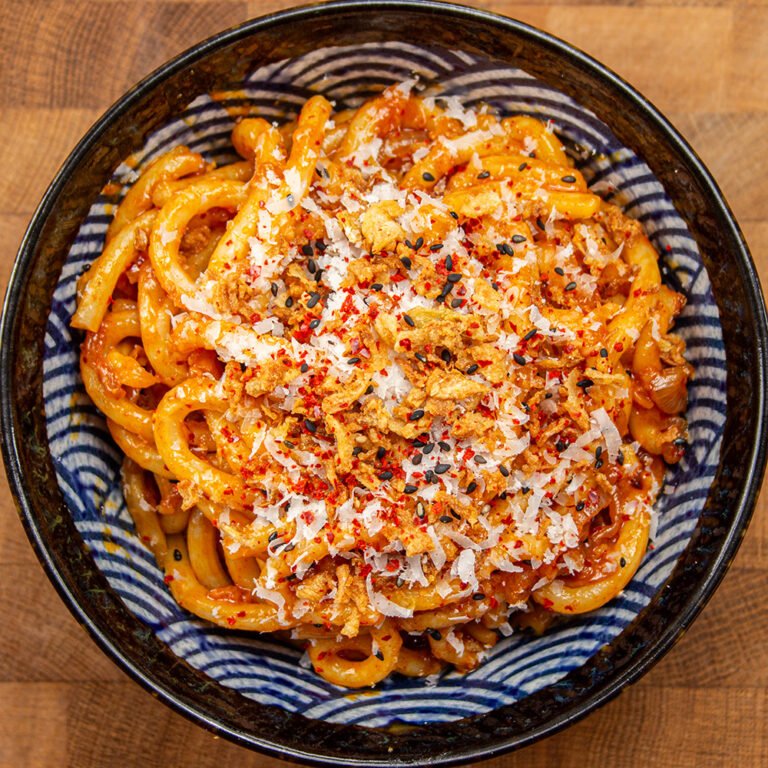
Indian-Style Gochujang Halloumi Noodles
A little note: this post contains affiliate links. If you buy through them, we may earn a small commission at no extra cost to you. As an Amazon Associate we earn from qualifying purchases. More about that.
Lately we’ve been cooking our way through a little Indian food phase, making things like palak paneer, chickpea masala, and dal makhani. At some point I started wondering what would happen if I mixed those warm, spiced flavors with the Asian flavors I usually reach for.

So one evening, with a cupboard full of ingredients and no real plan, I just went for it. The result is a little funky, a little spicy, super creamy, and honestly kind of addictive.
The garam masala and cumin work surprisingly well with gochujang, while the halloumi bring that cheesy, creamy bite to the whole bowl. It’s one of those recipes that feels like it shouldn’t work on paper, but somehow really does.
Watch Our Indian-Style Gochujang Halloumi Noodles Video Recipe
Prefer to watch the recipe on YouTube instead or just want something to follow along to?
Here is our step-by-step video recipe:
Easy Indian-Style Gochujang Halloumi Noodles Recipe
These Indian-style gochujang halloumi noodles are surprisingly approachable and perfect for an easy weeknight dinner. After crisping the halloumi, building an Indian spiced tomato and cream sauce, and tossing it with udon noodles, the result is a creamy, spicy, savory dish with crispy bites of halloumi that feels restaurant-quality but is made entirely at home.

Ingredients for Indian-Style Gochujang Halloumi Noodles
- Halloumi: Adds a salty, chewy center with a golden, crispy exterior when fried. You can substitute paneer if you prefer, although it will be less salty and slightly different in texture.
- Avocado oil: Provides a neutral, high-heat frying oil with a high smoke-point so it doesn’t burn easily for crisping the halloumi.
- Mushroom soy sauce: Adds savory depth and umami to both the halloumi and sauce. You can substitute regular light soy sauce, but I just felt it fit the funky, earthy vibe of this dish.
- Wet udon noodles: Bring a soft, springy texture that holds onto the creamy sauce. You can substitute your favorite noodles, we just love wet udon 🙂
- Yellow onions: Create a sweet, savory base for the sauce as they soften and lightly caramelize. You can substitute other onions you have at home.
- Scallion: The scallion greens used as a topping add freshness and contrast to the bowl. Since it would be a waste to throw out the whites, I add them to the sauce to build more oniony flavor.
- Garlic: Adds warm, savory depth to the sauce, but you can also use garlic powder.
- Ginger: Brings fresh warmth and a gentle sharpness to balance the creamy sauce.
- Butter: Adds richness and helps soften the onions and aromatics. You can substitute ghee for even more Indian vibes.
- Cumin powder: Adds earthy, warm spice to the sauce. You can substitute cumin seeds for a similarly warm flavor.
- Garam masala: Brings a layered blend of warm spices and gives the sauce its Indian-inspired character.
- Green coriander seeds: Add a fragrant, citrusy spice note and a little texture. You can substitute ground coriander, though the sauce will have less texture from the seeds.
- Smoked paprika powder: Adds gentle smokiness and warm pepper flavor. You can substitute normal paprika powder if you’re not a fan of the smokiness.
- Turmeric powder: Adds earthy spice and a golden color to the sauce. You can substitute fresh turmeric, but chop it finely.
- Tomato puree: Provides acidity, body, and a rich tomato base for the sauce. You can substitute passata if you prefer a smoother, less concentrated tomato flavor.
- BOMBOM gochujang: Adds gentle fermented chili heat, sweetness (they use plum syrup in their recipe), and savory depth. You can substitute your favorite gochujang, though the sweetness and heat can vary between brands.
- Cream: Makes the sauce smooth, rich, and velvety while softening the spice. You can substitute coconut milk, but it’ll take this dish into a different, but great flavor profile.
- Honey: Adds a small amount of sweetness to balance the chili, tomato, and savory flavors. You can substitute maple syrup or dark brown sugar for a similar sweetness.
- White miso: Adds fermented umami and rounds out the sauce. You can substitute red miso, although the flavor may be slightly stronger.
- Lime juice: Adds a bright, fresh acidity that cuts through the creamy sauce. You can substitute lemon juice if that’s what you have, though the flavor will be slightly different.
- White sesame seeds: Add a light nutty flavor and visual contrast to the finished noodles.
- Chili oil: Adds extra chili flavor, richness, and a glossy finish. You can totally leave this out if you prefer.
How to Make Indian-Style Gochujang Halloumi Noodles

Step 1: Cut the halloumi into thinner halves. Heat the avocado oil in a large wok or frying pan over medium-high heat. Fry the halloumi for 2 minutes on each side, until golden and crispy on the outside. Remove from the pan and let it cool while preparing the rest.

Step 2: Melt the butter in the same wok over medium heat. Fry the onions for about 5 minutes, stirring as needed, until they are soft and lightly golden. Add the garlic and ginger and fry for another 1 minute, until fragrant.

Step 3: Add the cumin, coriander seeds, turmeric, smoked paprika, and garam masala. Stir-fry over medium heat for about 30 seconds, until the spices are fragrant.

Step 4: Add the tomato puree and stir-fry over medium heat for 2 minutes. The tomato should be cooked into the spice mixture and its sharper acidity softened.

Step 5: Add the gochujang, white miso, mushroom soy sauce, and honey. Stir to combine, then add the cream. Lower the heat and simmer for 8 to 10 minutes, until the sauce is thick and velvety.

Step 6: Meanwhile, cook the wet udon noodles according to the package instructions. Drain and set aside.

Step 7: Add the cooked udon noodles to the sauce and toss everything together until the noodles are completely coated.
Turn off the heat, and finish with the lime juice. The noodles should be evenly covered in the creamy sauce.

Step 8: Cut the slightly cooled halloumi into smaller, bite-sized cubes.

Step 9: Divide the noodles between two bowls and top with the crispy halloumi, scallion greens, sesame seeds, and a drizzle of chili oil.
Substitute Halloumi with Paneer
Paneer works as a natural substitute because it has a firm, cheese-like texture that can be fried until lightly golden and pairs especially well with the Indian-inspired spices in the sauce. Cut the paneer into thinner halves in the same way as the halloumi and fry it according to the same step in the recipe.
The main difference is that paneer is much less salty than halloumi and tends to have a softer, more delicate texture. The finished dish will therefore taste less salty and the fried pieces may not become quite as crisp.
Tips for Making Indian-Style Gochujang Halloumi Noodles
Tip 1: Let the halloumi brown properly. Give each side the full 2 minutes uninterrupted, so the outside has time to develop that golden, crispy surface before removing it from the pan.
Tip 2: Use avocado oil for frying the halloumi. Its high smoke point means it handles the heat without burning, unlike butter or olive oil, and it’s a healthy option overall. If you want a substitute, beef tallow or lard both work well too.
Tip 3: Keep an eye on the sauce as it simmers. The goal is thick and velvety, so use lower heat and let the sauce reduce gradually rather than rushing it.
Make-Ahead Instructions
The sauce can be prepared ahead of time and stored in an airtight container in the refrigerator.
For the best texture, cook the udon and fry the halloumi close to serving time. The halloumi is crispest when freshly fried, while the noodles are at their best when freshly tossed through the sauce.
Storing Leftovers
Store leftover noodles and halloumi in an airtight container in the refrigerator for up to 3 days.
The sauce may thicken further in the refrigerator, and the udon will become softer. Additionally, the halloumi will also lose some of its crispness.
Freezing Instructions
Freezing is not recommended for the finished dish because the udon, and halloumi can all change texture after freezing and thawing. The sauce can be frozen, but it may change texture because the cream may separate.
Reheating Instructions
Reheat leftovers gently in a wok or frying pan over low to medium heat, stirring until warmed through. If the sauce has thickened too much, adding a splash of water can help loosen it gradually while reheating as needed.
For the best texture, the halloumi can be reheated separately so it has a better chance of regaining some of its crisp exterior.
Serving Suggestions
Serve the noodles immediately in bowls while the sauce is warm and glossy. Keep the crispy halloumi on top so its texture contrasts with the soft udon and creamy sauce.
The scallion greens, white sesame seeds, and chili oil give the finished bowls a simple mix of freshness, crunch, and extra heat. This works especially well as an easy weeknight dinner when you want something comforting but a little outside the usual noodle rotation.
Print
Indian-Style Gochujang Halloumi Noodles
Lately we’ve been cooking our way through a little Indian food phase, making things like palak paneer, chickpea masala, and dal makhani. At some point I started wondering what would happen if I mixed those warm, spiced flavors with the Asian flavors I usually reach for.
So one evening, with a cupboard full of ingredients and no real plan, I just went for it. The result is a little funky, a little spicy, super creamy, and honestly kind of addictive. The garam masala and cumin work surprisingly well with gochujang, while the halloumi bring that cheesy, creamy bite to the whole bowl.
It’s one of those recipes that feels like it shouldn’t work on paper, but somehow really does.
- Total Time: 30 minutes
- Yield: 2 bowls 1x
Ingredients
For the halloumi and noodles
- 250 g halloumi
- 2 tbsp avocado oil, for frying the halloumi
- 2 packs wet udon noodles
For the sauce
- 2 small yellow onions, finely chopped
- 1 scallion, whites only, finely chopped
- 5 garlic cloves, sliced
- 1 inch piece ginger, grated
- 1.5 tbsp butter
- 1 tsp cumin powder
- 1 tsp garam masala
- 2 tsp green coriander seeds
- 1 tsp smoked paprika powder
- 1 tsp turmeric powder
- 1 can (70 g) tomato puree
- 2 tbsp BOMBOM gochujang
- 200 ml cream
- 2 tsp mushroom soy sauce
- 1 tsp honey
- 1 tsp white miso
- 1 tsp lime juice
For topping
- 1 scallion, greens only, sliced
- White sesame seeds
- Chili oil
Instructions
- Cut the halloumi into thinner halves. Fry in avocado oil over medium-high heat for 2 minutes per side, until golden and crispy. Remove and let cool.
- Melt the butter in another pan. Fry the onions over medium heat for about 5 minutes, until soft and lightly golden. Add garlic and ginger and fry for 1 minute.
- Add cumin, coriander seeds, turmeric, smoked paprika, and garam masala. Stir-fry for 30 seconds, until fragrant.
- Add tomato puree and stir-fry for 2 minutes.
- Add gochujang, miso, mushroom soy sauce, and honey. Stir, add cream, lower the heat, and simmer for 8 to 10 minutes until thick and velvety.
- Cook the wet udon according to the package instructions. Drain.
- Toss the udon through the sauce until completely coated. Finish with lime juice.
- Cut the cooled halloumi into bite-sized cubes.
- Divide the noodles between two bowls. Top with halloumi, scallion greens, sesame seeds, and chili oil.
- Prep Time: 10 minutes
- Cook Time: 20 minutes