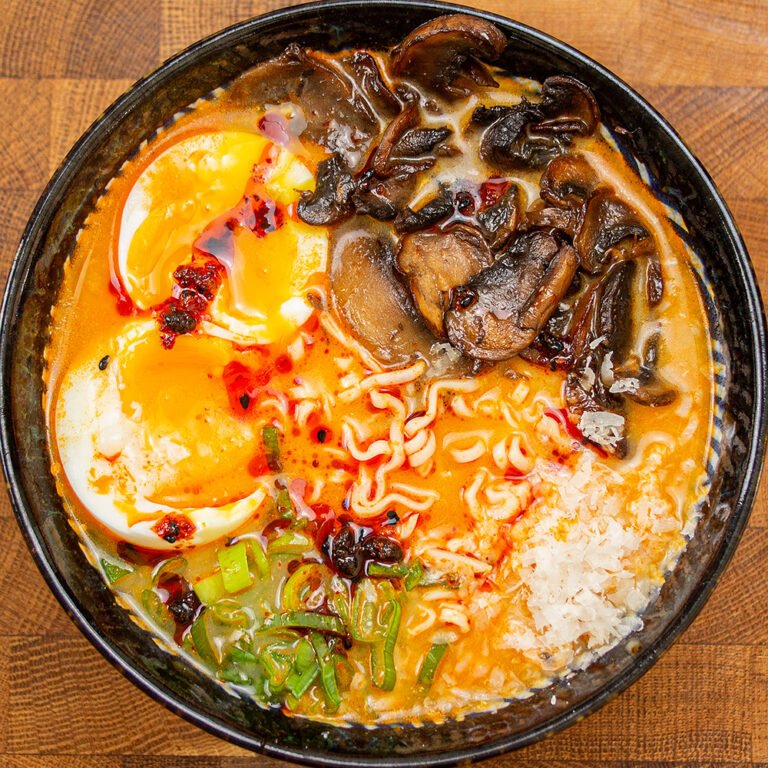
Creamy Doenjang Ramen with Coconut Broth and Crispy Pork Mince
A little note: this post contains affiliate links. If you buy through them, we may earn a small commission at no extra cost to you. As an Amazon Associate we earn from qualifying purchases. More about that.
Ad: this recipe is sponsored by Reclamation Foods. Their support helps keep Dishcovery cooking; the recipe and all opinions are our own.
This is our very first doenjang recipe. In the store, doenjang always looks just like miso, and look it up and everyone tells you it’s very similar, so for the longest time we never bought it.
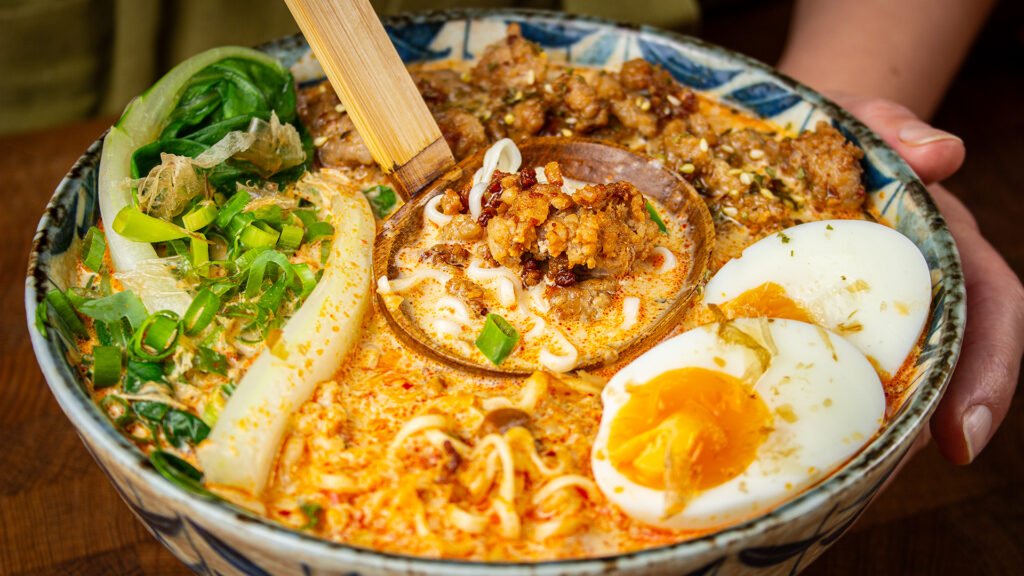
When we finally took a tub home to test it, it tasted quite different: saltier, earthier, almost cheesy, and it doesn’t mind a good simmer. So we put it front and center in a creamy bowl, and this doenjang ramen goes all in.
The pork mince gets crispy first, in big chunks so it sits on top of the bowl, and then it’s glazed in doenjang and soy. The rest of the doenjang gets toasted in the pork fat with garlic, ginger and gochugaru before the broth goes in. A can of coconut milk makes it creamy without drowning the funk, and a splash of rice vinegar at the end keeps it bright. If you loved our creamy curry ramen with pork mince, this is its funkier sibling.
For the broth we used a jar of Reclamation Foods’ pasture-raised pork bone broth. We love it because it’s just bones and filtered water, completely unseasoned (not even salt!), which is important when using salty fermented pastes like this, because then doenjang can bring all the flavor without everything turning overly salty. This bowl is creamy, savory, gently spicy and seriously cozy.
Watch Our Creamy Doenjang Ramen Video Recipe
Prefer to watch the recipe on YouTube instead or just want something to follow along to?
Here is our step-by-step video recipe:
Easy Creamy Doenjang Ramen Recipe
This creamy doenjang coconut ramen is surprisingly easy and perfect for cozy weeknights. After crisping pork mince and toasting doenjang in its fat, the result is a rich, savory, gently spicy bowl that feels restaurant-quality but is made entirely at home.

Ingredients for Creamy Doenjang Ramen
Noodles, eggs and greens
- Instant ramen noodles: Give the bowl its quick, springy base. We use 1 instant ramen cake per bowl and skip the seasoning packets, because the broth brings all the flavor. You can substitute 2 packs of wet udon.
- Soft-boiled eggs: Add richness and a jammy yolk.
- Bok choy: Adds a fresh, juicy crunch next to the rich broth. You can leave it out or substitute a handful of spinach (eat your greens!!). Just let it wilt in the hot broth instead of blanching it.
For the doenjang pork mince
- Avocado oil: Helps the pork mince brown and crisp. You can substitute ghee.
- Pork mince: The star topping, crispy at the edges and glazed in doenjang. You can substitute ground beef, though the topping will be a little leaner and less packed with flavor.
- Doenjang: Korean fermented soybean paste. It glazes the crispy mince with a salty, funky, almost cheesy depth. Contrary to popular belief, we find it to be quite different from miso paste!
- Soy sauce: Adds salty umami and helps the glaze caramelize. You can substitute fish sauce for even more umami.
For the creamy doenjang broth
- Garlic: Builds the savory base of the broth. You can substitute 1/2 tsp garlic powder, but fresh garlic gives the best flavor if you have the time.
- Ginger: Brings fresh warmth. Ginger paste works too if you’re lazy (:
- Scallion whites: Add a soft, oniony sweetness. Keep the greens for topping. You can substitute a small shallot.
- Doenjang: The heart of the broth. Toasted in the pork fat and avocado oil, it turns deep, nutty and savory. Go for a good one (I used Sempio), because it really is the flavor of the whole bowl.
- Gochugaru: Korean chili flakes that bring a gentle, smoky warmth. You can double the amount or substitute regular chili flakes if want it spicier.
- Pork bone broth: Gives the broth a rich, silky body. We love Reclamation Foods’ pasture-raised pork bone broth for this, because it’s completely unseasoned, so you control the salt. Use code DISHCOVERY15 for 15% off. You can substitute any unsalted pork or chicken stock.
- Coconut milk: Makes the broth creamy and rounds off the funk without drowning it.
- Rice vinegar: Keeps the rich broth bright. Lime juice at the end works too.
- Maple syrup: Brings out more flavor, because doenjang on its own without sweetness can taste a little flat. You can substitute honey.
Toppings
- Scallion greens: Bring a fresh, sharp bite.
- Sesame seeds: Add a nutty crunch.
- Bonito flakes: Add a smoky, salty & savory note, and they dance on the hot broth. You can omit them if you don’t like them.
- Furikake: Adds a salty, toasty crunch. I’m using the Bonite furikake by FURIFURI, a sesame and algae blend. Your favorite furikake works too, or a little crumbled toasted nori.
- Chili oil (optional): Brings extra heat at the table. I left it out completely because I wanted the doenjang to carry most of the flavor.
How to Make Creamy Doenjang Ramen
Heat level: very mild. The gochugaru brings a gentle, sweet, warm heat that the coconut milk softens. Want it even milder? Leave it out completely. Want more? Substitute the gochugaru for regular chili flakes, or spoon over your favorite chili crunch on top.
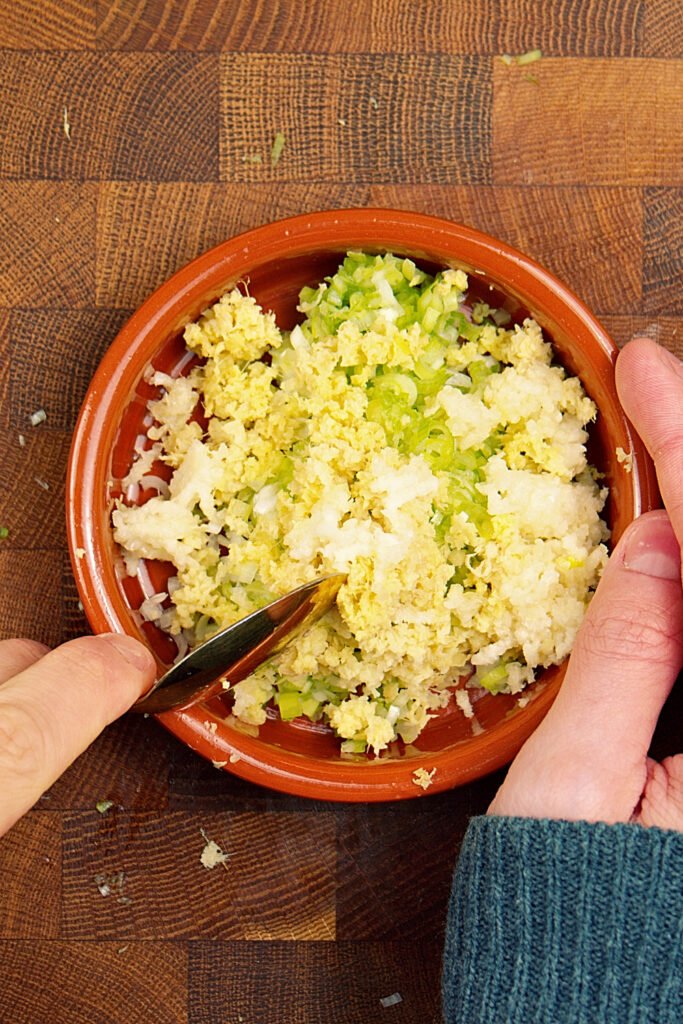
Step 1: Separate the white and green parts of 2 scallions. Thinly slice the whites, mince them finely and scrape them into a small bowl. Press in 4 garlic cloves and grate in a thumb-sized piece of ginger (a spoon is the easiest way to peel it).
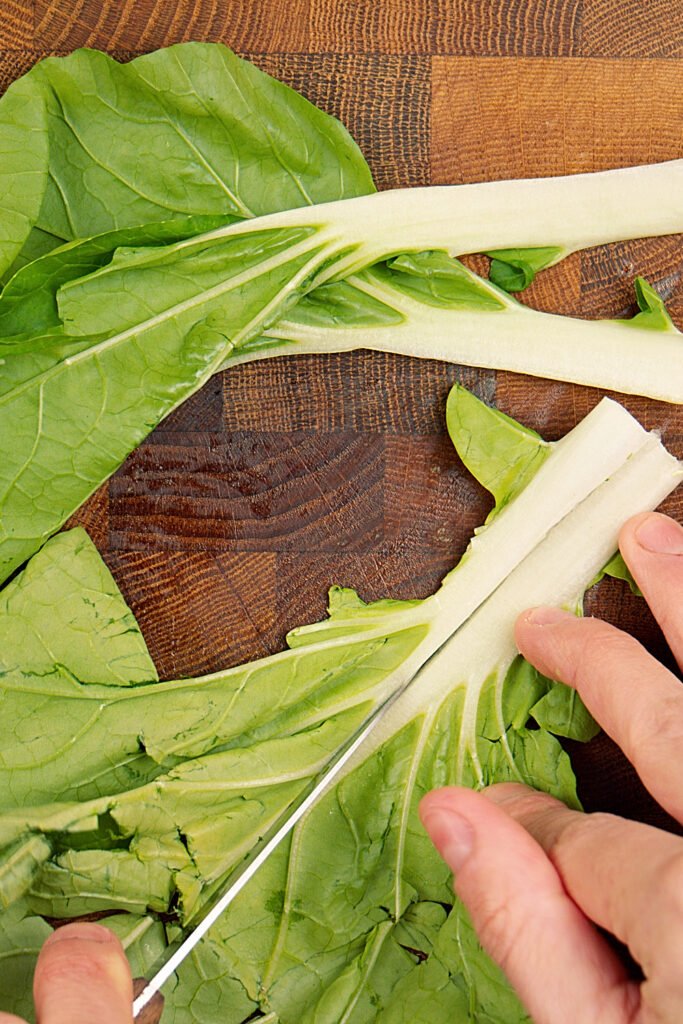
Step 2: Thinly slice the scallion greens and set them aside for topping. Trim the base of 2 bok choy leaves and halve them lengthwise.
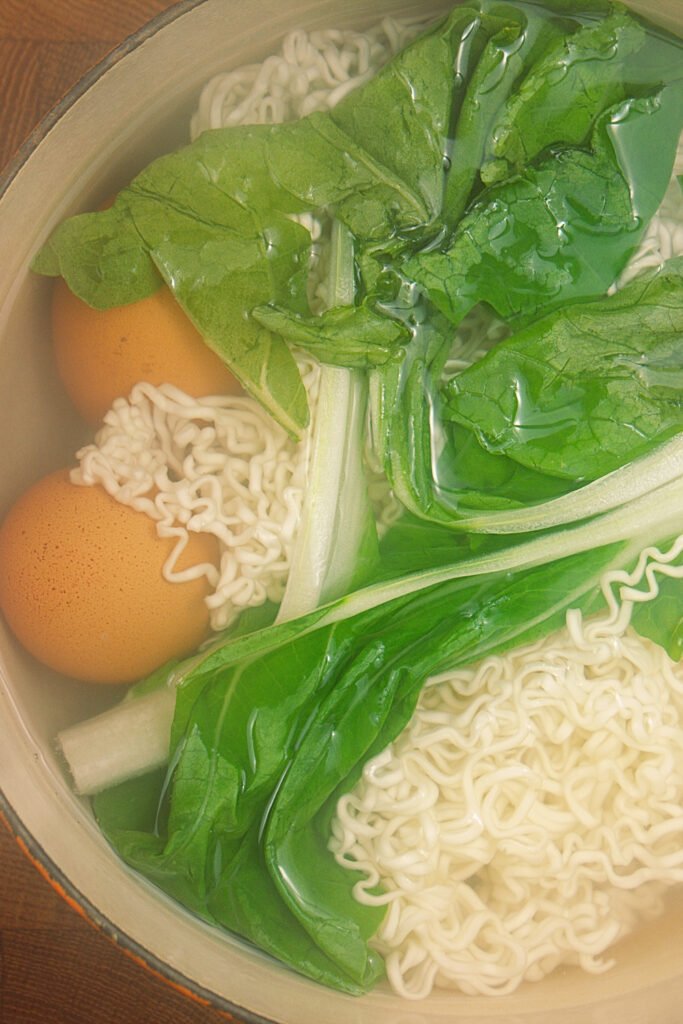
Step 3: Bring a pot of water to a boil over high heat (9 of 9 on our stove) and gently lower in 2 eggs so they don’t crack. They need 6 minutes in total.
Add 2 instant ramen cakes (noodles only) to the same pot and cook them according to the package, so they’re done at the same time as the eggs. Loosen them with chopsticks as they soften, and add the bok choy for the last 30 seconds.
Drain the noodles and bok choy, and move the eggs to an ice bath so they stop cooking. Peel them once cool.
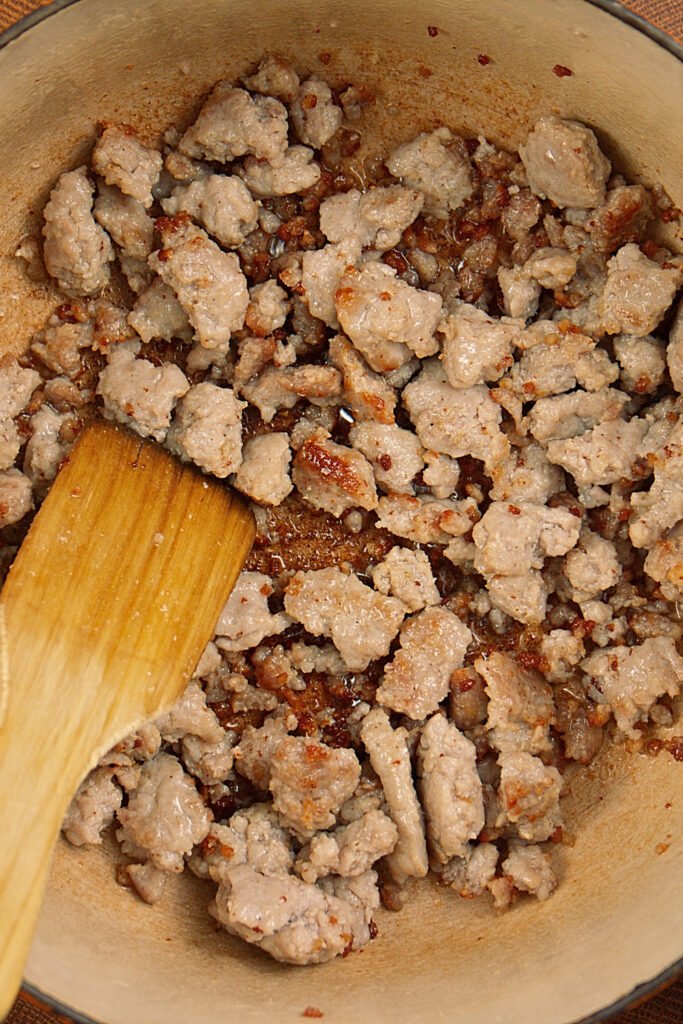
Step 4: Heat 1 tbsp avocado oil in a pot over medium-high heat (7 of 9 on our stove). Add 1 cup pork mince, break it into large bits and let it brown undisturbed.
Then stir gently until it’s crispy and a dark fond builds on the bottom of the pot, 6 to 8 minutes. Keep the pieces fairly big: mince that’s broken up too small sinks to the bottom of the bowl instead of sitting on top.
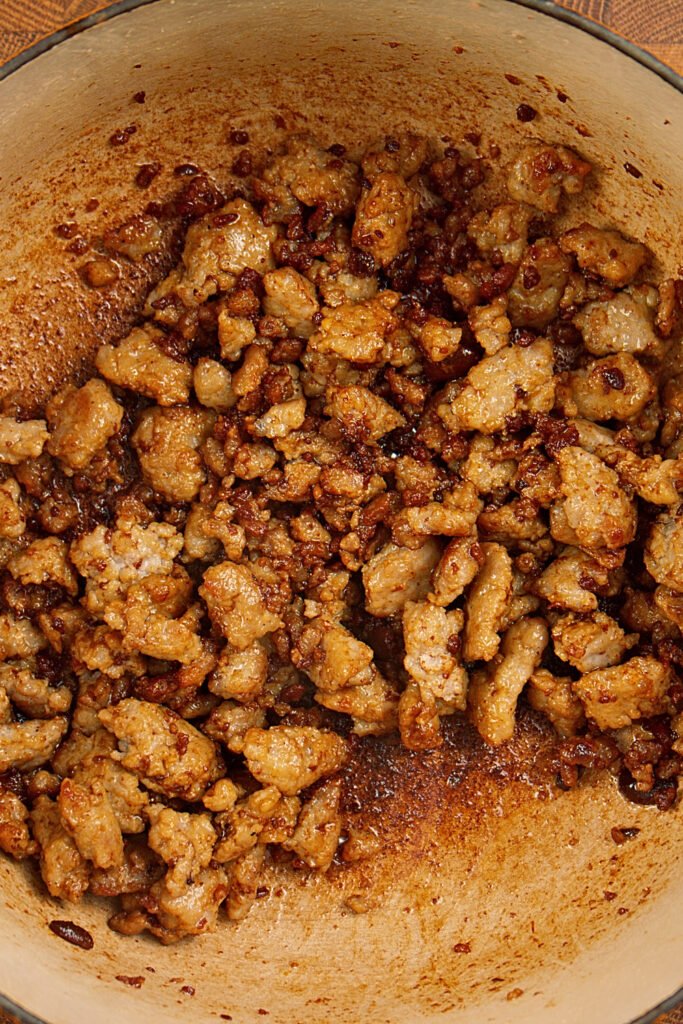
Step 5: Turn the heat down to medium (5 of 9). Stir in 1 tbsp doenjang and 1 tsp soy sauce and toss for about 1 minute until it caramelizes onto the mince into a nice glaze.
Doenjang burns fast on high heat, so don’t skip turning it down. Take the mince out and leave the fat and fond in the pot.
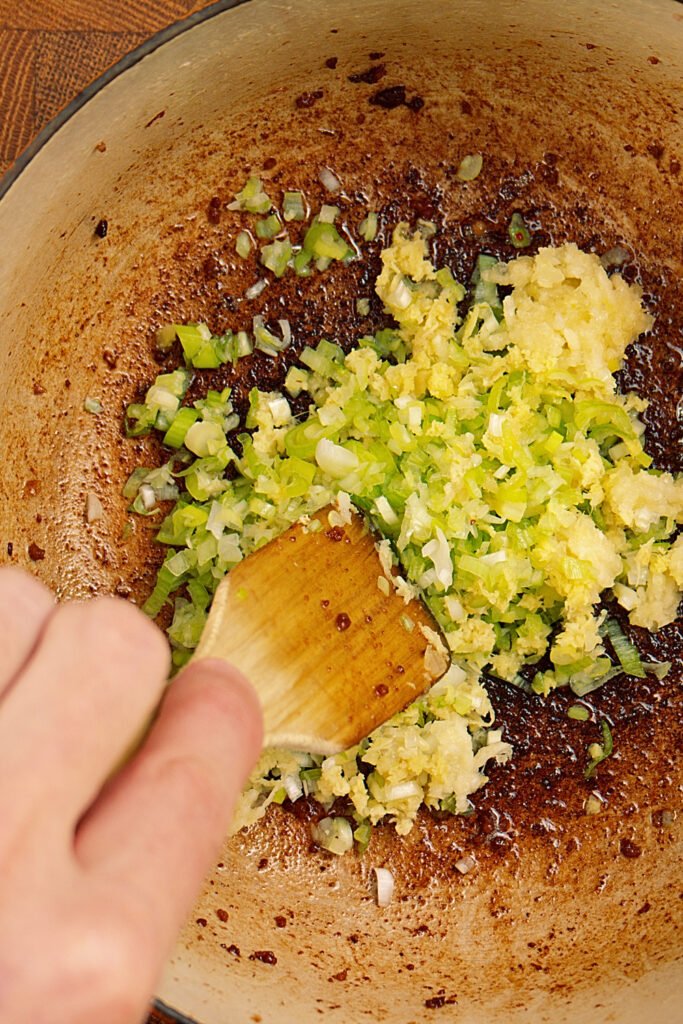
Step 6: Still on medium (5 of 9), fry the garlic, ginger and scallion whites in the pork fat for 1 minute, until fragrant. Add a splash of avocado oil if the pot looks dry.
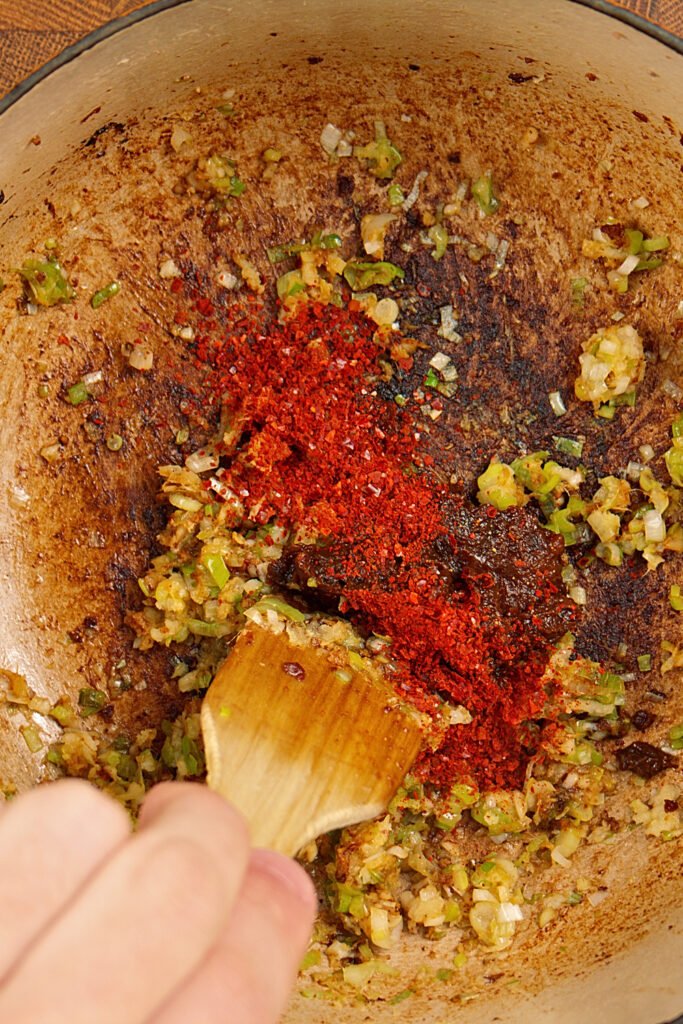
Step 7: Add 2 tbsp doenjang and 2 tsp gochugaru and fry for another minute on medium (5 of 9), until it smells toasty and nutty. Blooming the doenjang in fat is what takes it from just salty to deep and savory.
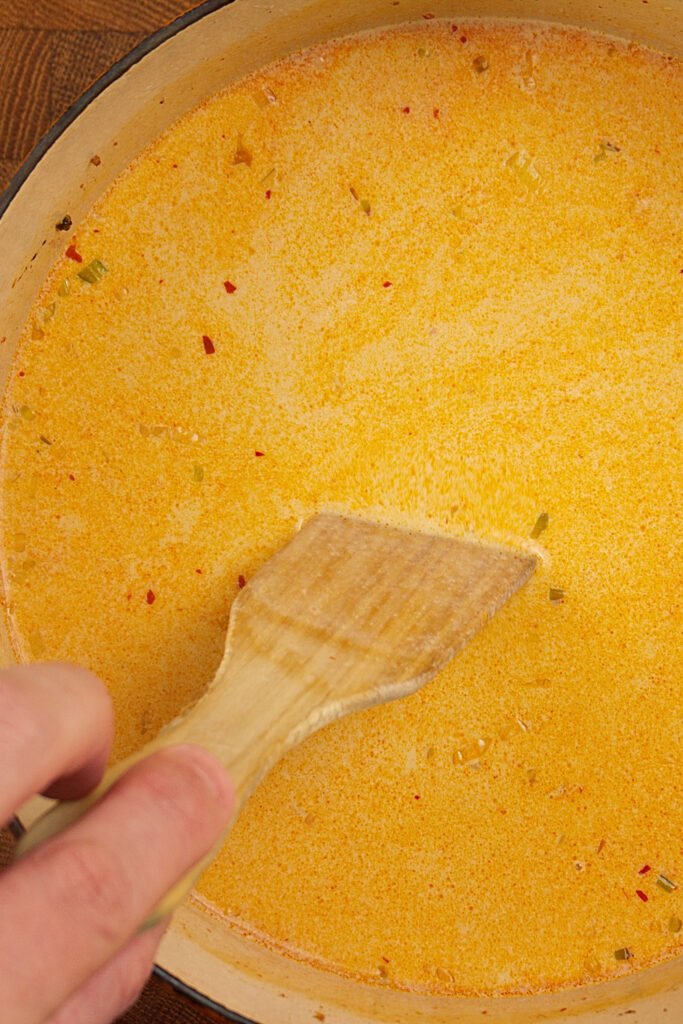
Step 8: Pour in 1 jar (14 oz) pork bone broth and scrape up the fond to deglaze the pot. Whisk until the doenjang dissolves, then simmer on medium (5.5 of 9) with the lid half-open for 5 minutes.
Stir in 1 can (400 ml) full-fat coconut milk and let it heat through, lid off, for 3 to 4 minutes. Keep it at a gentle simmer: a hard boil can split the coconut milk.
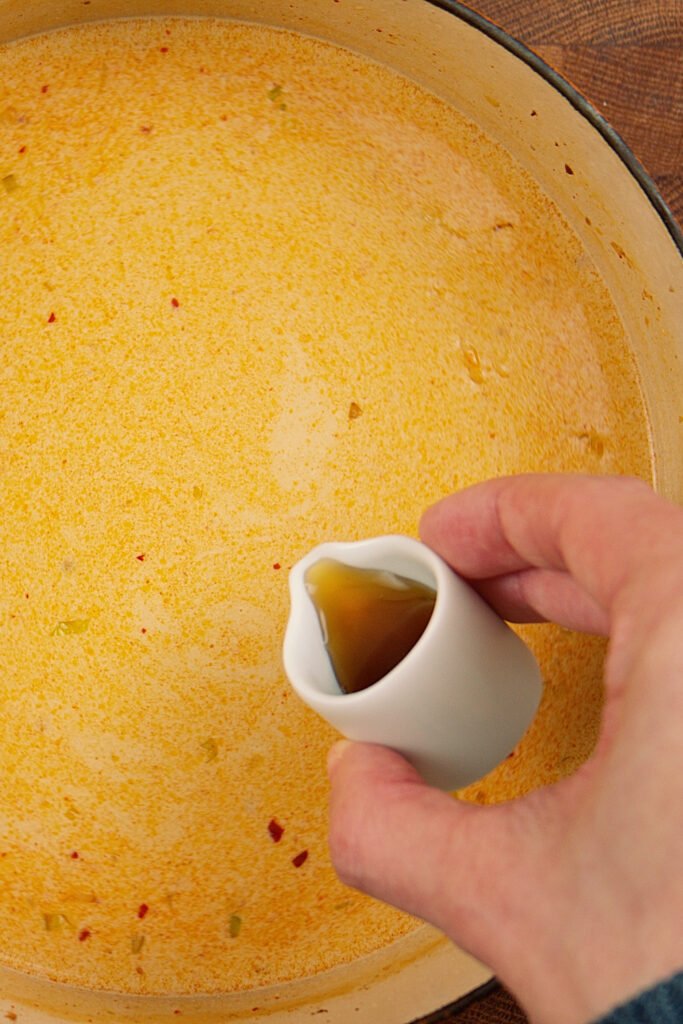
Step 9: Turn off the heat and stir in 1 tsp rice vinegar and 1 tsp maple syrup while the broth is still lightly bubbling. Taste: doenjang varies a lot in saltiness from brand to brand.
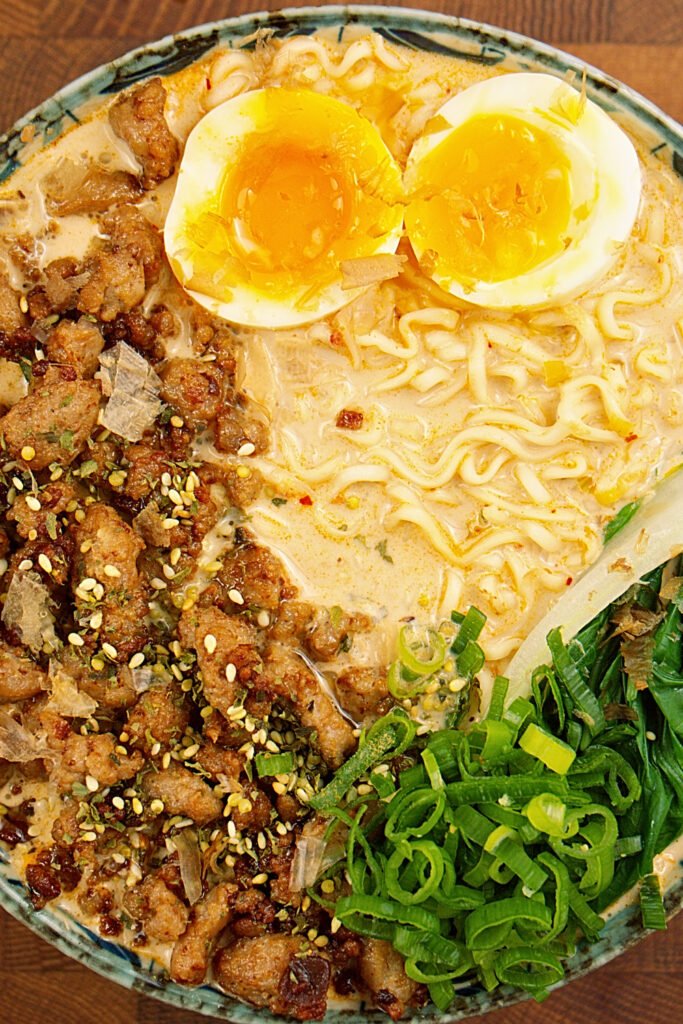
Step 10: Divide the noodles between 2 bowls and pour over the broth. Don’t cook the noodles in the broth, or it throws off the liquid amounts.
Top each bowl with the doenjang pork mince, bok choy and a halved soft-boiled egg. Finish with the scallion greens, a small handful of bonito flakes, 1 tsp furikake and 1 tsp sesame seeds, split between the bowls. And if you like it hotter, add a drizzle of your favorite chili oil (:
Substitute Pork Mince with Ground Beef
No pork mince at home? Ground beef works well here. It’s leaner, so add an extra splash of avocado oil and give it a minute or two longer to crisp up. The glaze and the broth stay exactly the same; the bowl just gets a little lighter.
Tips for Making Creamy Doenjang Ramen
Tip 1: Keep the pork mince in big pieces. Small crumbs sink to the bottom of the bowl, and we want the crispy bits sitting on top.
Tip 2: Turn the heat down before the doenjang goes in. It burns fast on high heat and turns bitter, so we always drop to medium first.
Tip 3: Don’t skip the fond. That dark layer from the pork is where the extra umami comes from, and the bone broth deglazes it all.
Tip 4: Keep it at a gentle simmer once the coconut milk is in. A hard boil can split it.
Tip 5: Add the rice vinegar and maple syrup at the very end, with the heat off, so the vinegar stays bright. Then taste: doenjang varies a lot in saltiness from brand to brand.
Make-Ahead Instructions
You can make the broth (up to step 8, without the rice vinegar and maple syrup) and the doenjang pork mince a day ahead. Stir in the vinegar and maple after reheating, and cook the noodles and eggs fresh.
Storing Leftovers
Store the broth, pork mince and noodles separately in airtight containers in the fridge for up to 3 days. Stored together, the noodles soak up the broth and go soft.
Freezing Instructions
The broth and the pork mince both freeze well for up to 2 months. Coconut broth can look a little grainy after thawing; a good whisk while reheating brings it back. We don’t freeze the noodles, eggs or bok choy.
Reheating Instructions
Reheat the broth gently on the stove without boiling, and whisk it once or twice. Crisp the pork mince up again in the air fryer for a few minutes, spread out in a thin layer (a hot pan works too, or the microwave). Dip the noodles in hot water for a few seconds, then add fresh toppings when serving.
Serving Suggestions
This bowl is a full meal on its own. A few chili flakes or a drizzle of your favorite chili oil on top is our favorite extra, and a simple side of fresh greens (cucumber salad, or arugula with a little sesame oil) makes you feel less guilty (though I skipped it here because we added the bok choy).
Hooked on creamy bowls? Try our creamy tom yum ramen with pork mince next, or our creamy tantanmen with a coconut broth.
Creamy Doenjang Ramen FAQ
What does doenjang ramen taste like?
Savory, earthy and a little funky, like a deeper, saltier miso ramen. The coconut milk makes it creamy and mellow, and the gochugaru gives it a gentle kick.
What is the difference between doenjang and miso?
Both are fermented soybean pastes. Doenjang is saltier, chunkier and funkier, and it holds up to simmering, while miso is milder and sweeter.
Can I use miso instead of doenjang?
Yes, red miso is the closest. It’s milder and sweeter, so the bowl will taste softer and less funky, more like a creamy miso ramen.
Is doenjang ramen spicy?
This one is very mild. Use 1 tsp gochugaru for an even milder bowl, or add chili oil at the table if you like it hotter.
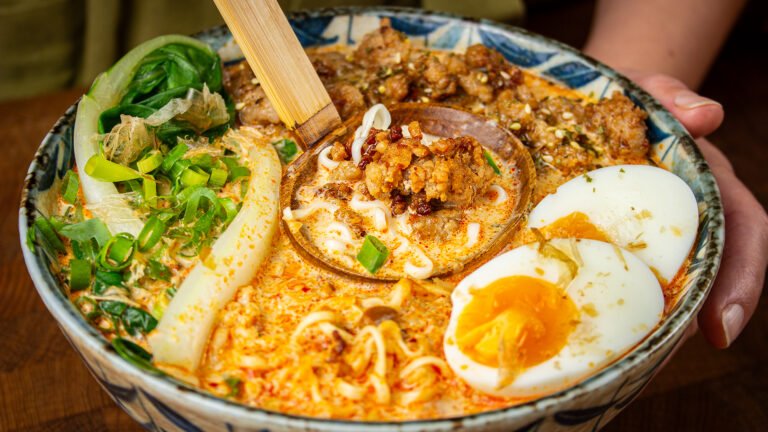
Creamy Doenjang Ramen with Crispy Pork Mince
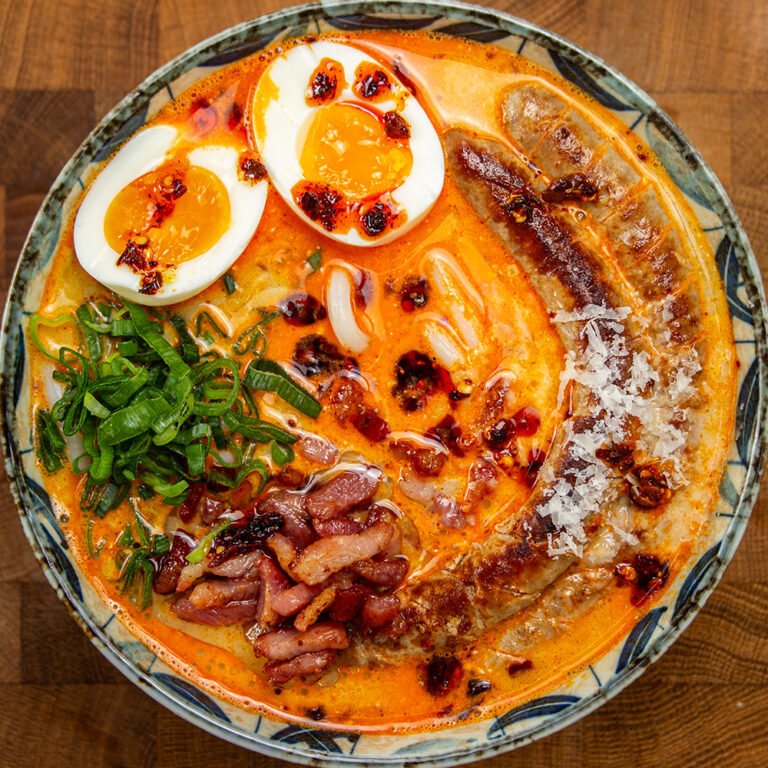
This is our very first doenjang recipe. It looks just like miso in the store, but it tastes saltier, earthier and almost cheesy, and it doesn’t mind a good simmer. In this creamy doenjang ramen, crispy pork mince gets glazed in doenjang and soy, and the rest of the doenjang is toasted in the pork fat before the bone broth and coconut milk go in.
Creamy, savory, gently spicy and seriously cozy, and ready in about 35 minutes.
- Total Time: 25 minutes
- Yield: 2 bowls 1x
Ingredients
For the noodles, eggs and greens:
- 2 cakes instant ramen noodles (noodles only, skip the seasoning packets)
- 2 eggs
- 2 bok choy leaves, halved lengthwise
For the doenjang pork mince:
- 1 tbsp avocado oil
- 1 cup pork mince
- 1 tbsp doenjang
- 1 tsp soy sauce
For the creamy doenjang broth:
- 2 scallion whites, finely minced (keep the greens for topping)
- 4 garlic cloves, pressed
- 1 thumb-sized piece of ginger, grated
- 2 tbsp doenjang
- 2 tsp gochugaru (1 tsp for a milder bowl)
- 1 jar (14 oz) unseasoned pork bone broth
- 1 can (400 ml) full-fat coconut milk
- 1 tsp rice vinegar
- 1 tsp maple syrup
For the toppings:
- 2 scallion greens, thinly sliced
- 1 small handful bonito flakes
- 1 tsp furikake
- 1 tsp sesame seeds
- Chili oil (optional)
Instructions
- Separate the white and green parts of the scallions. Finely mince the whites and put them in a small bowl with the pressed garlic and grated ginger. Thinly slice the greens and set them aside for topping. Trim and halve the bok choy.
- Bring a pot of water to a boil over high heat. Gently lower in the eggs and cook them for 6 minutes in total. Add the ramen noodles to the same pot and cook them according to the package so they finish with the eggs, adding the bok choy for the last 30 seconds. Drain the noodles and bok choy, move the eggs to an ice bath, and peel them once cool.
- Heat the avocado oil in a pot over medium-high heat (7 of 9). Add the pork mince, break it into large pieces and let it brown undisturbed, then stir until crispy and a dark fond builds on the bottom, 6 to 8 minutes.
- Turn the heat down to medium (5 of 9). Stir in 1 tbsp doenjang and the soy sauce and toss for about 1 minute until it glazes the mince. Take the mince out and leave the fat and fond in the pot.
- Still on medium (5 of 9), fry the garlic, ginger and scallion whites for 1 minute until fragrant. Add a splash of avocado oil if the pot looks dry.
- Add 2 tbsp doenjang and the gochugaru and fry for another minute on medium (5 of 9), until toasty and nutty.
- Pour in the bone broth and scrape up the fond. Whisk until the doenjang dissolves, then simmer on medium (5.5 of 9) with the lid half-open for 5 minutes. Stir in the coconut milk and heat it through with the lid off for 3 to 4 minutes, at a gentle simmer so it doesn’t split.
- Turn off the heat and stir in the rice vinegar and maple syrup. Taste, because doenjang varies a lot in saltiness between brands.
- Divide the noodles between 2 bowls and pour over the broth. Top with the doenjang pork mince, bok choy, a halved soft-boiled egg, scallion greens, bonito flakes, furikake and sesame seeds. Add a drizzle of chili oil if you like it hotter.
Notes
- Heat level: very mild. Use 1 tsp gochugaru for an even milder bowl, or add chili oil at the table for more heat.
- Keep the pork mince in big pieces: small crumbs sink to the bottom of the bowl.
- No pork mince? Ground beef works; add an extra splash of oil and give it a minute or two longer to crisp up.
- Prep Time: 5 minutes
- Cook Time: 20 minutes