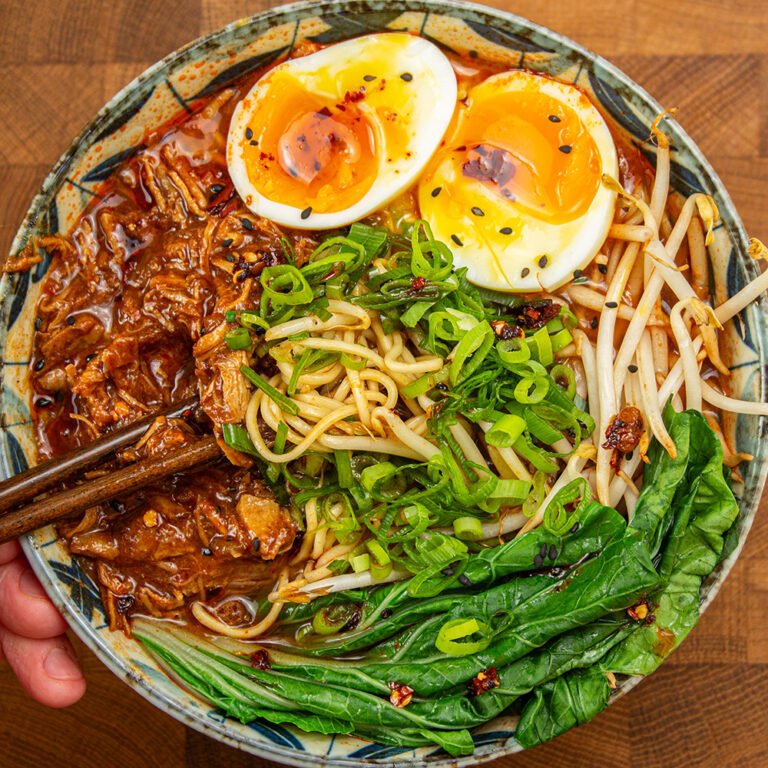
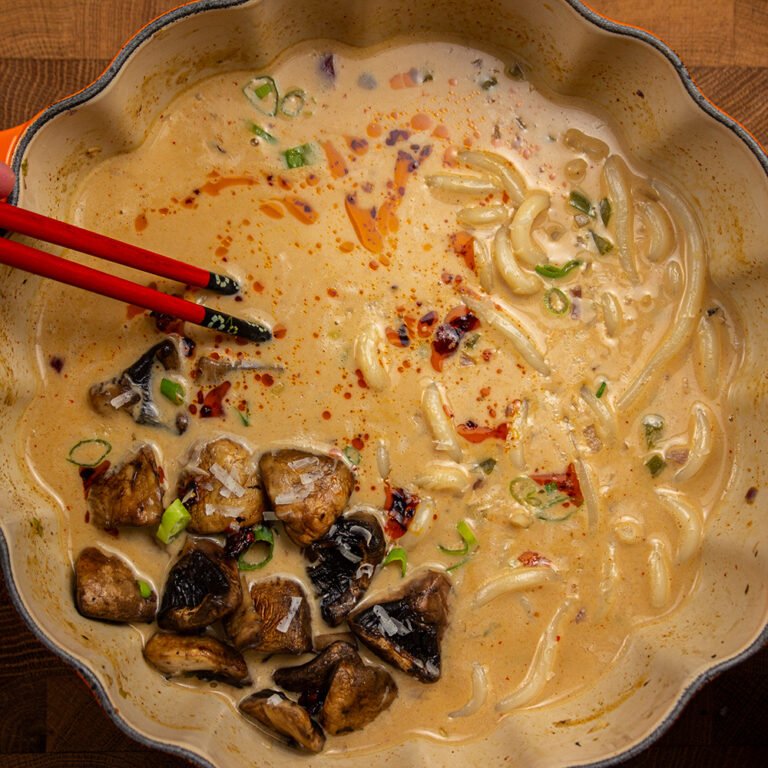
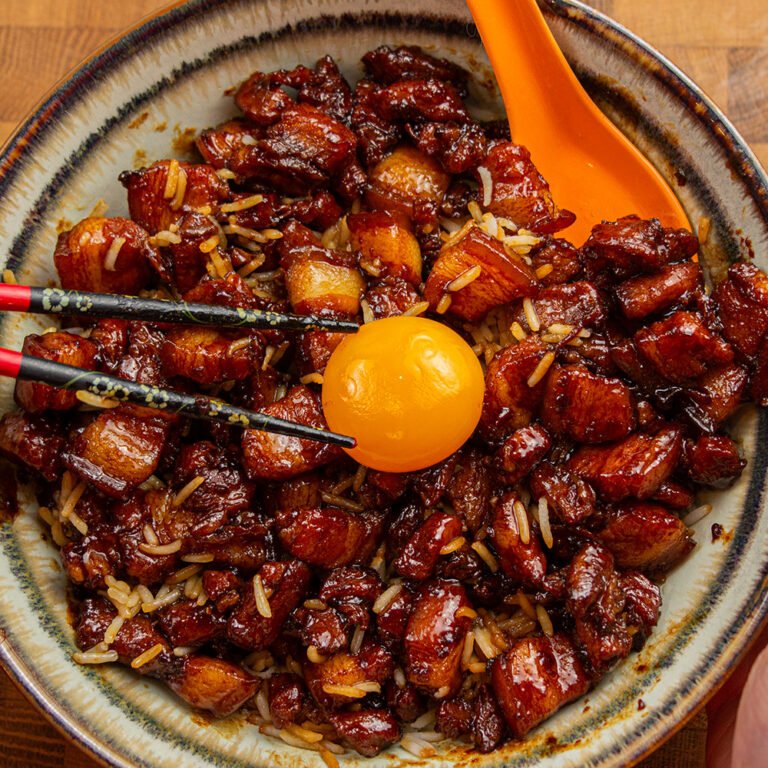
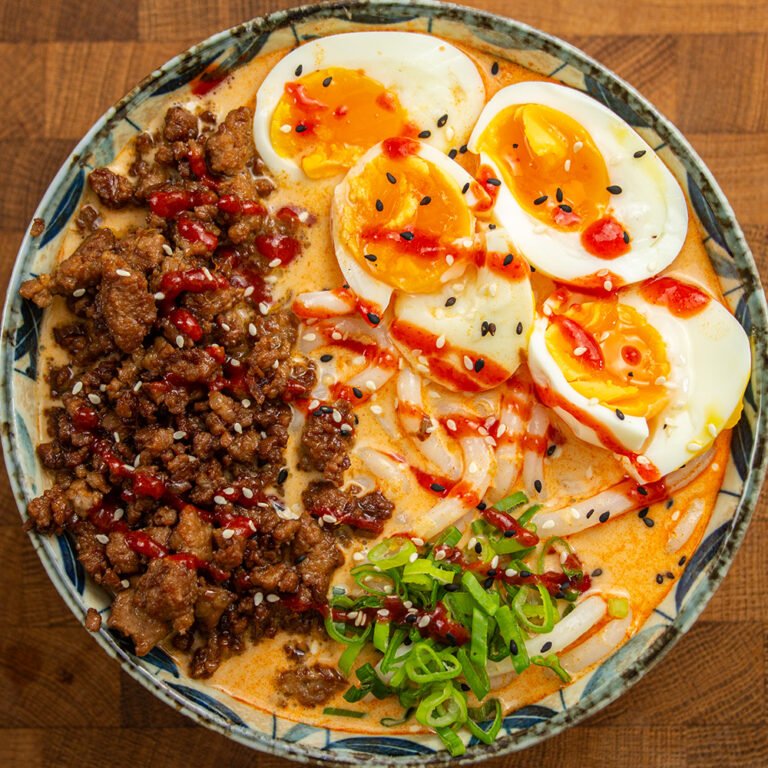
Spicy Pork Belly Noodles
A little note: this post contains affiliate links. If you buy through them, we may earn a small commission at no extra cost to you. As an Amazon Associate we earn from qualifying purchases. More about that.
This bowl started the way a lot of my favorite meals do. Standing in the kitchen, fridge door open, just trying to make something comforting out of whatever was left: Pork belly, a few sad vegetables, noodles hiding in the back of the pantry. Nothing fancy, no big plan.
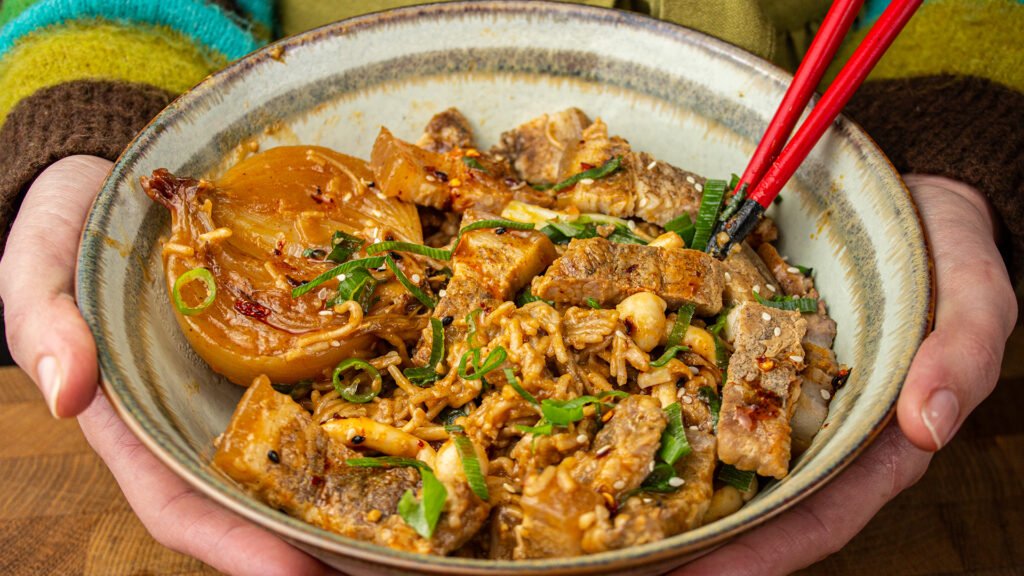
But once it was done, we knew this was one of those recipes you don’t forget. The pork belly turns tender, the broth gets rich and spicy without being heavy, and the noodles soak up everything you worked so patiently for.
It’s the kind of dinner you start early, let simmer while life happens, and come back to when you’re starving and grateful.
Watch Our Spicy Pork Belly Noodles Video Recipe
Prefer to watch the recipe on YouTube instead or just want something to follow along to?
Here is our step-by-step video recipe:
Easy Spicy Pork Belly Noodles Recipe
This cozy spicy pork belly noodles recipe is surprisingly approachable and perfect for a slow, comforting dinner at home. After searing the pork, building a soy-gochujang broth, and letting everything simmer until tender, the result is a rich, spicy, noodle-filled bowl with soft vegetables, savory pork belly, and a little glossy heat from chili oil.
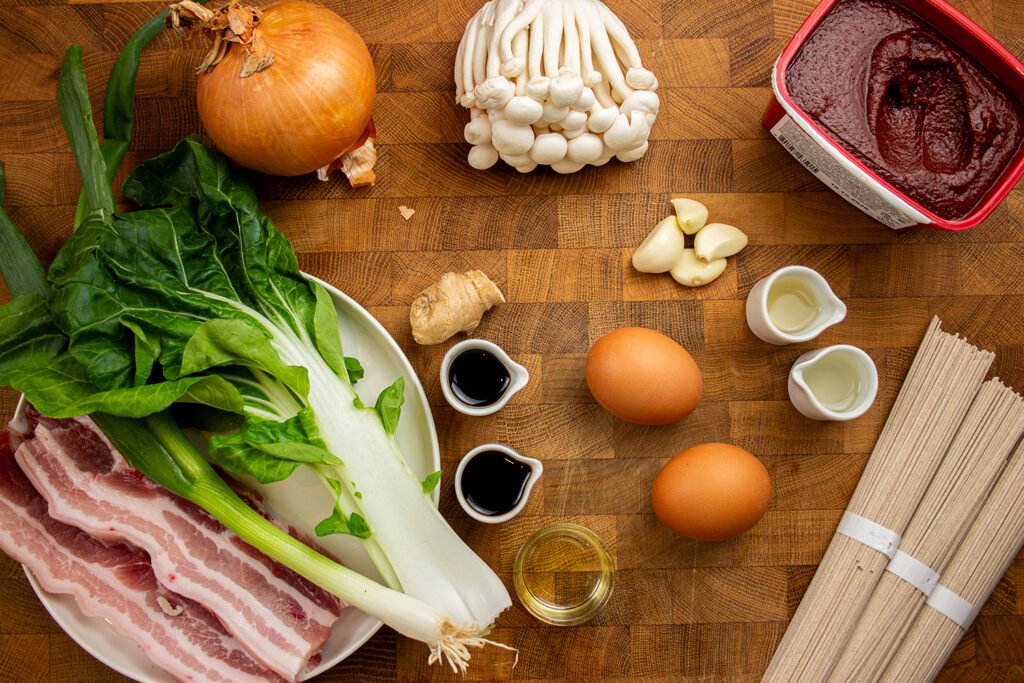
Ingredients for Spicy Pork Belly Noodles
- Pork belly: Adds rich, tender meat and enough rendered fat to flavor the broth. You can substitute thick-cut pork shoulder if you want a leaner but still tender option.
- Salt: Seasons the pork before searing and helps bring out its savory flavor.
- Black pepper: Adds gentle warmth to the pork belly before it browns. You can substitute white pepper for a softer, more earthy heat.
- Avocado oil: Helps the pork belly sear evenly without adding a strong flavor.
- Onion: Adds sweetness and body to the broth as it simmers. You can substitute shallots for a slightly softer, sweeter flavor.
- Garlic: Builds a savory base and gives the broth depth.
- Ginger: Adds warmth, freshness, and a little sharpness to balance the pork belly.
- Light soy sauce: Adds saltiness and savory depth to the broth.
- Dark soy sauce: Adds deeper color, slight sweetness, and a richer look to the broth. You can substitute extra regular soy sauce + some honey, though the broth will be lighter.
- Mirin: Adds gentle sweetness that rounds out the spice and salt. You can substitute a small splash of rice vinegar with a pinch of sugar for a similar balance.
- Rice vinegar: Brightens the broth so it does not feel too heavy. You can substitute apple cider vinegar or lemon juice for a similar mild acidity.
- Gochujang: Adds spicy, slightly sweet, fermented depth. You can substitute a little doubanjiang for an equally tasty, but different flavor.
- Chicken stock: Gives the broth body and a savory base. You can substitute water plus a stock cube, as listed, for a practical pantry version.
- Soba noodles: Soak up the spicy broth and bring a tender, slightly nutty bite. You can substitute ramen noodles or Chinese egg noodles for a springier texture.
- Soft-boiled eggs: Add richness and a soft, creamy texture to the bowl.
- Scallion: Adds fresh onion flavor and a little brightness at the end. You can substitute chives if you prefer that.
- Enoki mushrooms: Add delicate texture and a soft, earthy flavor. You can substitute sliced shiitake mushrooms or even sliced oyster mushrooms if you want something meatier.
- Bok choy leaves: Add a tender green element and a clean, fresh bite. You can substitute spinach if you want.
- Chili oil: Adds glossy heat and a finishing layer of spice.
- Black sesame seeds: Add a beautiful contrast over the finished bowl.
- White sesame seeds: Add a beautiful contrast over the finished bowl.
How to Make Spicy Pork Belly Noodles
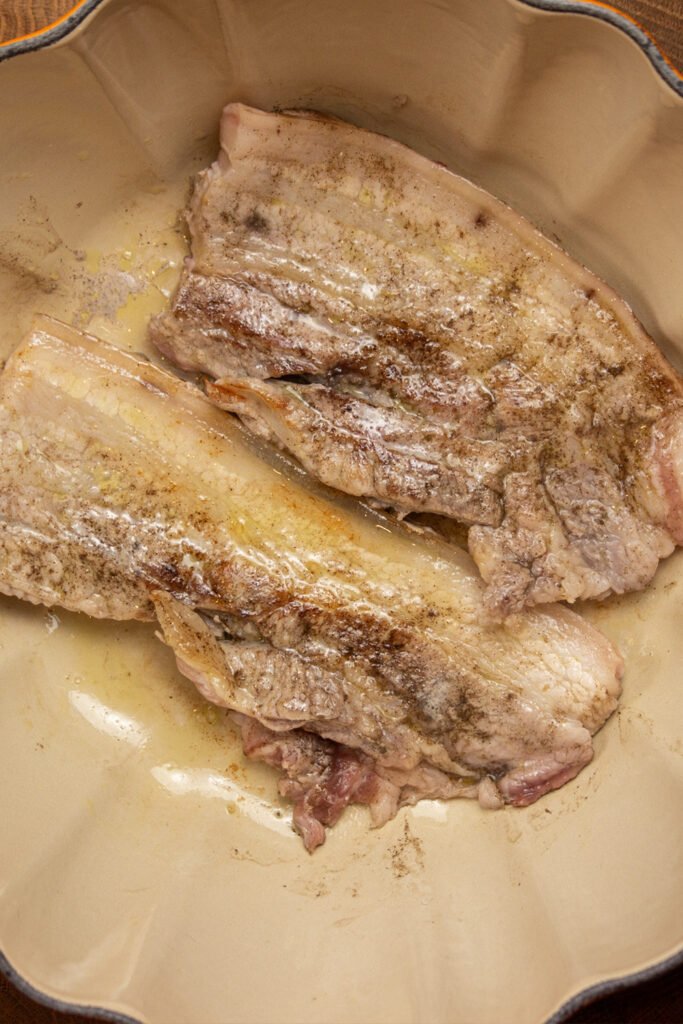
Step 1: Pat the pork belly dry, then season it generously with salt and pepper. Heat a pot over medium-high heat with avocado oil for about 1 minute, then sear the pork belly for 3 to 5 minutes per side, until both sides are deeply browned and the fat has started to render. Remove the pork belly and set it aside.
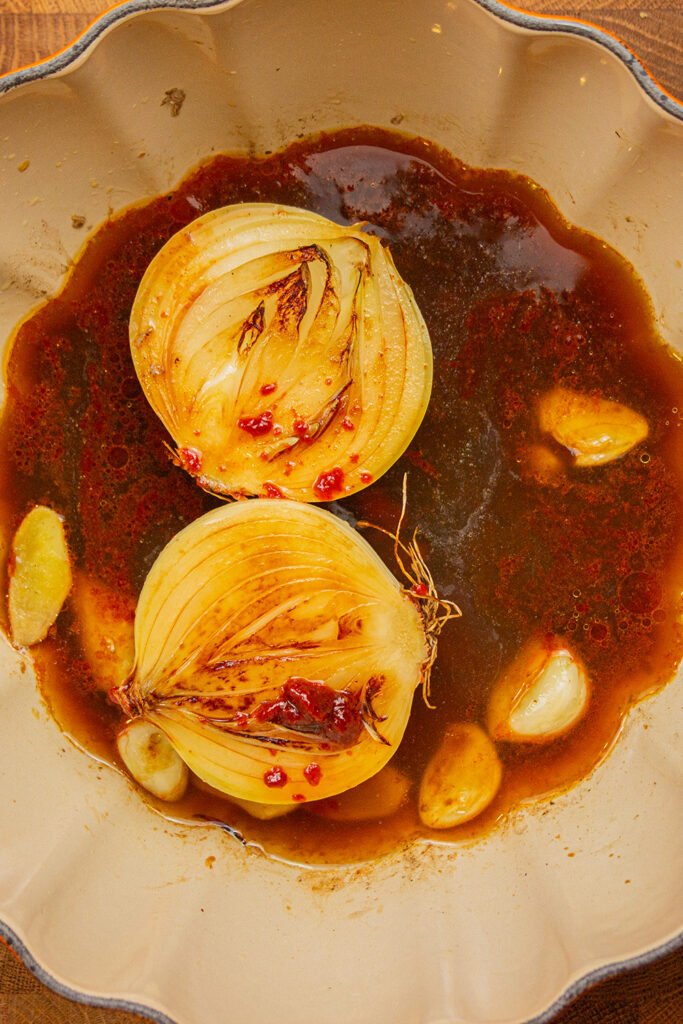
Step 2: Keep the pork fat in the pot and lower the heat slightly if the bottom is getting too dark. Add the halved onion, smashed garlic, and sliced ginger, then sauté over medium-high heat for 2 to 3 minutes, until fragrant and lightly golden in spots. Add the soy sauce, dark soy sauce, gochujang, mirin, and rice vinegar, then pour in the chicken stock and boiling water, scraping the bottom gently so the broth picks up the browned bits.
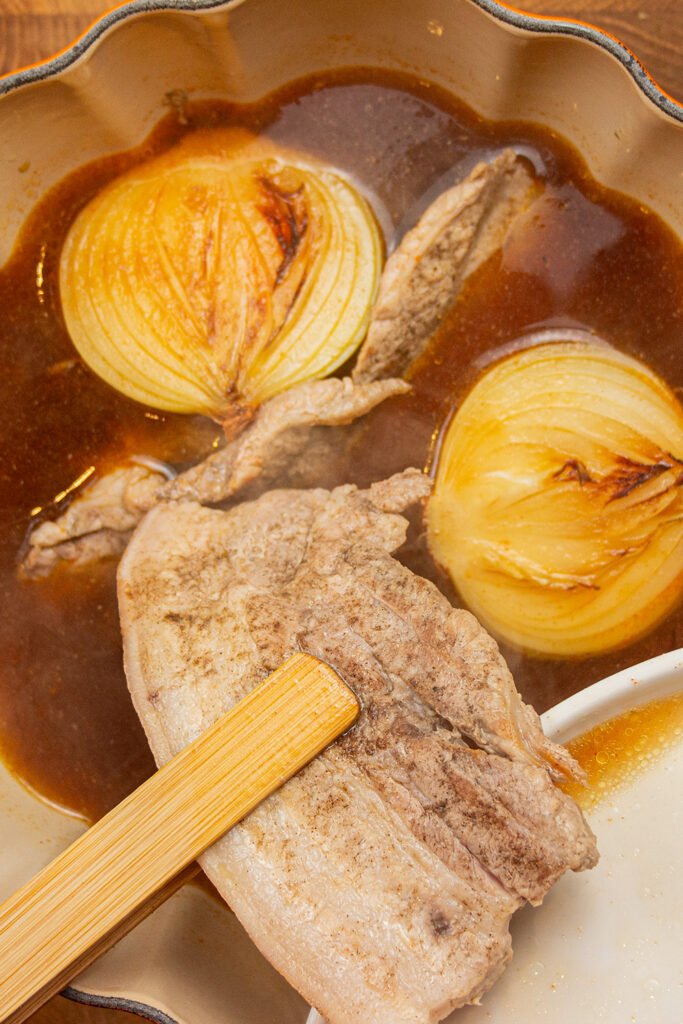
Step 3: Return the pork belly to the pot. Lower the heat to a gentle simmer, where small bubbles rise slowly around the edges, and cook for about 80 minutes. Stir every 20 minutes, until the pork is tender and the broth looks darker, richer, and slightly glossy.
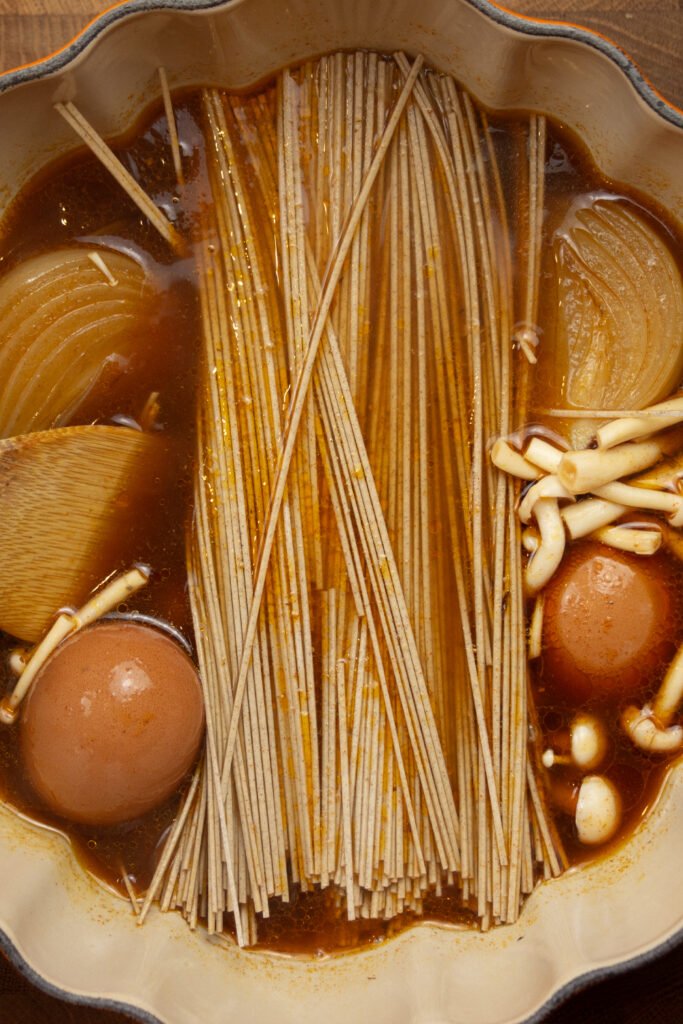
Step 4: Add the noodles directly to the simmering broth and cook according to the package instructions. Soft-boil the eggs for about 6 minutes in the broth as well, keeping the heat at a steady simmer so the eggs cook gently and the noodles turn tender.
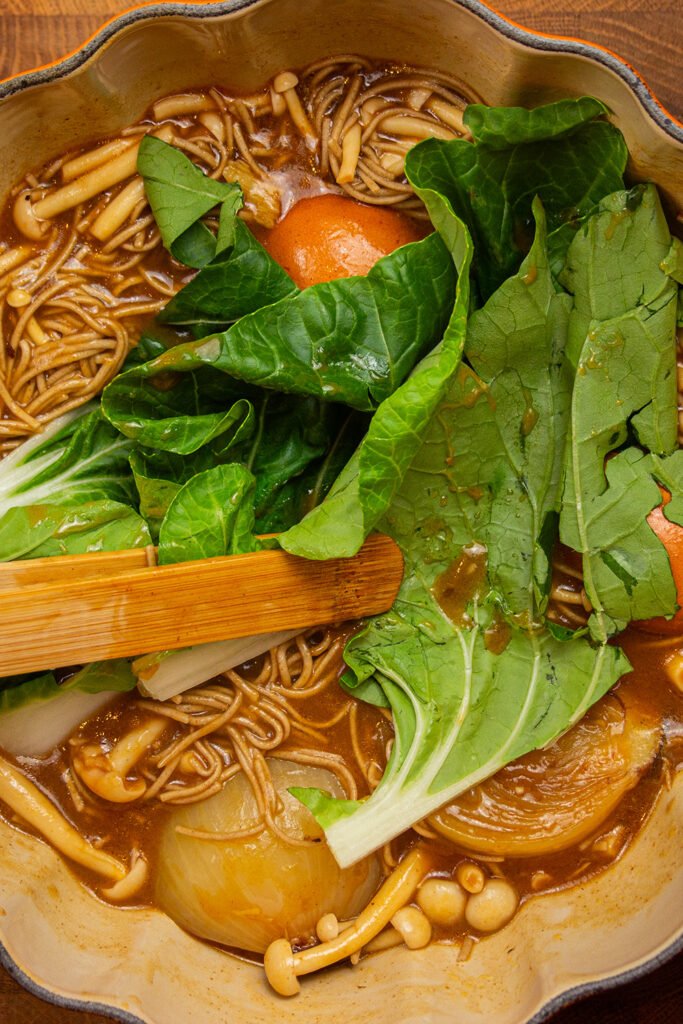
Step 5: Add the enoki mushrooms during the last 5 minutes of cooking, letting them soften but stay delicate. Add the blanched bok choy leaves during the last 2 minutes, just until they are tender, green, and warmed through.

Step 6: Remove the pork belly from the pot and let it rest for about 2 minutes so it is easier to slice. Cut it into thick pieces, then return it to the broth so the slices warm through and get coated in the spicy sauce.
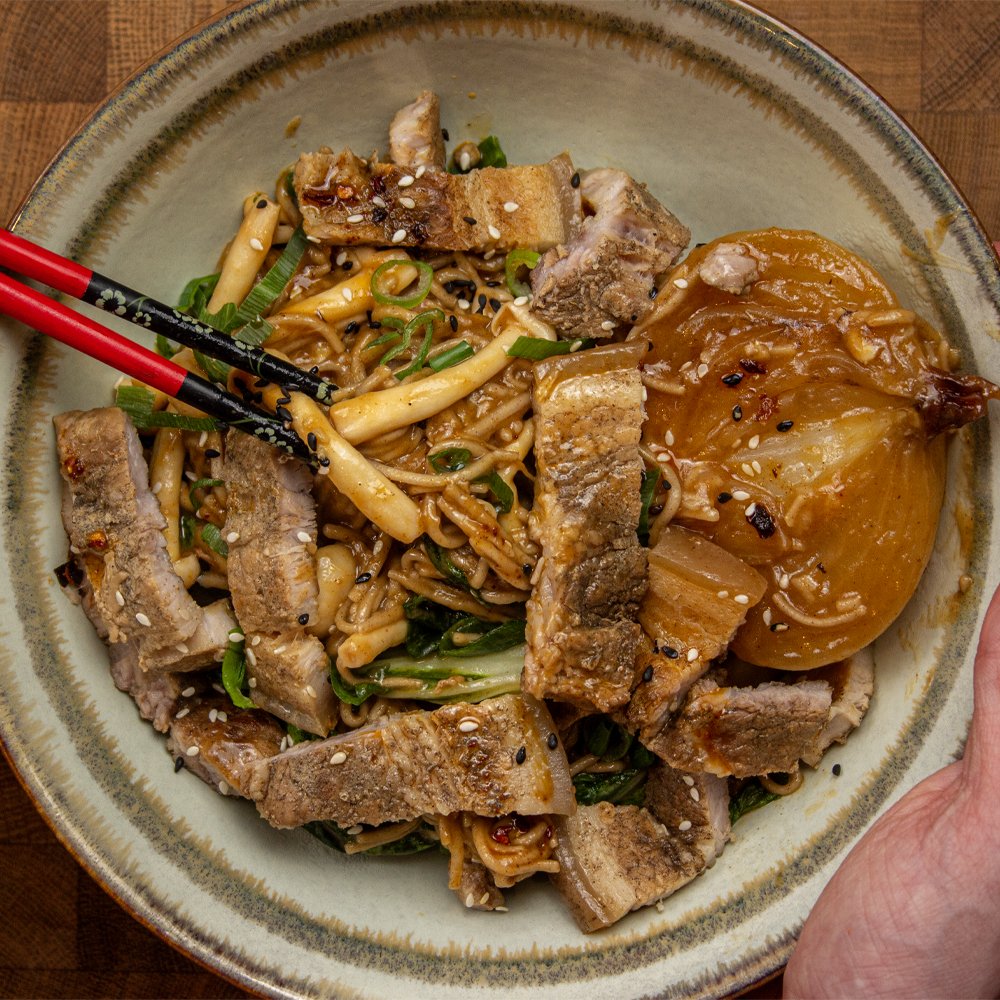
Step 7: Divide the noodles into 3 bowls while everything is hot. Add the pork belly, eggs, vegetables, and sliced scallion greens, then finish with chili oil, and black and white sesame seeds if you like.
Substitute Pork Belly with Pork Shoulder
Pork shoulder works because it has enough fat and connective tissue to become tender during a longer simmer, but it is usually a little leaner than pork belly. Cut it into thick slices or large pieces so it can sear well and hold up in the broth. The texture will be meatier and less silky, and it may need a little extra simmering time to become fully tender, so check it with a fork before slicing or serving.
Tips for Making Spicy Pork Belly Noodles
Tip 1: Let the pork belly get properly browned before you build the broth. That deep color is what makes the final bowl taste more layered.
Tip 2: Keep the simmer gentle once the pork goes back in. A soft bubble helps the meat turn tender without making the broth reduce too aggressively.
Tip 3: Add the delicate vegetables near the end so they stay fresh and tender instead of fading into the broth.
Make-Ahead Instructions
You can make the pork belly and broth up to 2 days in advance. Store them together in an airtight container in the refrigerator, then cook the noodles, eggs, mushrooms, and bok choy when you are ready to serve. The broth will taste deeper after resting because the ginger, garlic, soy sauce, gochujang, and pork fat have more time to settle into each other.
Storing Leftovers
Store leftovers in an airtight container in the refrigerator for up to 2 days. The noodles will continue absorbing the broth as they sit, so they may become softer and mushier. Therefore, store the noodles separately from the broth when possible.
Freezing Instructions
Freezing is best for the pork belly and broth only, not the cooked noodles, eggs, bok choy, or enoki mushrooms. Freeze the cooled pork and broth in an airtight freezer-safe container for up to 2 months. After thawing, the broth may look slightly separated from the pork fat, but it will come back together as it reheats.
Reheating Instructions
Reheat the pork belly and broth gently in a pot over medium-low heat until hot and steamy, about 8 to 10 minutes. Add a splash of water or stock if the broth has thickened. For the best texture, cook fresh noodles in the reheated broth, then add the vegetables near the end.
Serving Suggestions
Serve these spicy pork belly noodles with extra scallion greens, a small spoonful of chili oil, and a few more sesame seeds. A simple cucumber salad, quick pickled vegetables, or raw thinly sliced radishes would keep the meal balanced. This is a good weekend dinner, cold-night bowl, or make-ahead broth situation for when you want something cozy but still a little intentional.
Print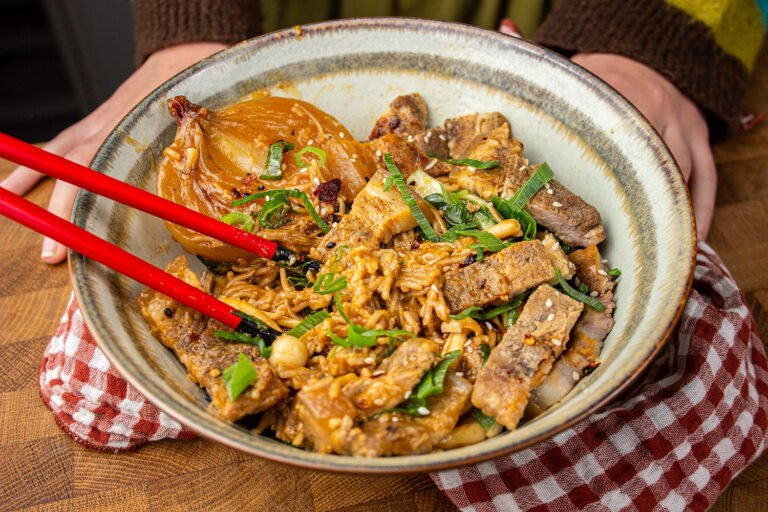
Spicy Pork Belly Noodles
This bowl started the way a lot of my favorite meals do. Standing in the kitchen, fridge door open, just trying to make something comforting out of whatever was left. Pork belly, a few sad vegetables, noodles hiding in the back of the pantry. Nothing fancy, no big plan.
But once it was done, we knew this was one of those recipes you don’t forget. The pork belly turns tender, the broth gets rich and spicy without being heavy, and the noodles soak up everything you worked so patiently for. It’s the kind of dinner you start early, let simmer while life happens, and come back to when you’re starving and grateful.
- Total Time: 1 hour 55 minutes
- Yield: 3 bowls 1x
Ingredients
For the pork belly:
- 300 g pork belly, slab or thick slices
- Salt and pepper
- 1 tbsp avocado oil
For the broth:
- 1 medium onion, halved
- 4 garlic cloves, smashed
- 1 thumb-sized piece of ginger, sliced
- 2 tbsp soy sauce
- 1 tbsp dark soy sauce
- 1 tbsp mirin
- 1 tbsp rice vinegar
- 1 tbsp gochujang
- 1 tsp avocado oil, or olive oil
- 200 ml chicken stock, or water plus stock cube
- 800 ml boiling water
For the noodles and toppings:
- 270 g soba noodles, or ramen
- 2 soft-boiled eggs
- 1 scallion, greens sliced
- 100 g enoki mushrooms
- 2 bok choy leaves, blanched
- Chili oil
- Black sesame seeds
- White sesame seeds
Instructions
- Pat pork belly dry and season generously with salt and pepper. Heat avocado oil in a pot over medium-high heat and sear pork belly until deeply browned on both sides. Remove and set aside.
- In the same pot, keeping the pork fat, add onion, garlic, and ginger. Sauté for 2 to 3 minutes until fragrant.
- Add soy sauce, dark soy sauce, gochujang, mirin, and rice vinegar. Pour in chicken stock and boiling water.
- Return pork belly to the pot. Lower heat and simmer gently for about 80 minutes, stirring every 20 minutes.
- Cook noodles directly in the broth according to package instructions. Soft-boil the eggs for about 6 minutes in the broth as well.
- Add mushrooms in the last 5 minutes and bok choy in the last 2 minutes.
- Remove pork belly, slice into thick pieces, then return it to the broth.
- Divide noodles into bowls. Add pork belly, eggs, vegetables, scallion greens, chili oil, and sesame seeds.
- Prep Time: 15 minutes
- Cook Time: 1 hour 40 minutes