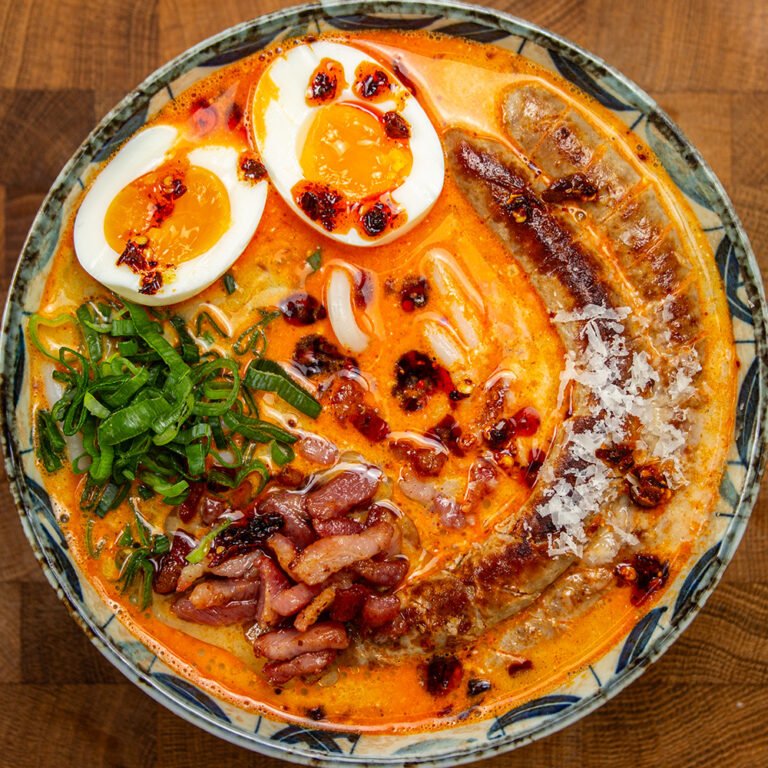
Easy Korean-Style Steak Ramen
A little note: this post contains affiliate links. If you buy through them, we may earn a small commission at no extra cost to you. As an Amazon Associate we earn from qualifying purchases. More about that.
There was a solid month where buldak steak ramen was everywhere on my feed. Every scroll, another glossy, spicy, buttery bowl. I loved the idea of it. The richness, the heat, the silky noodles. But every time I looked at the seasoning packet, I just knew I wanted something a little more balanced. Something I could feel good about eating on a random Tuesday night.
So I started testing… I tweaked the sauce. I adjusting the salt. Playing with the ratios until it hit that perfect cozy, spicy, umami moment without being overwhelming. It took a few tries, but this version is the one! It’s creamy from the egg yolks and mayo, spicy from the chili oil and gochujang, savory from the beef stock and parmesan, and finished with buttery steak and jammy eggs. Honestly… I think I like it even more than the original.
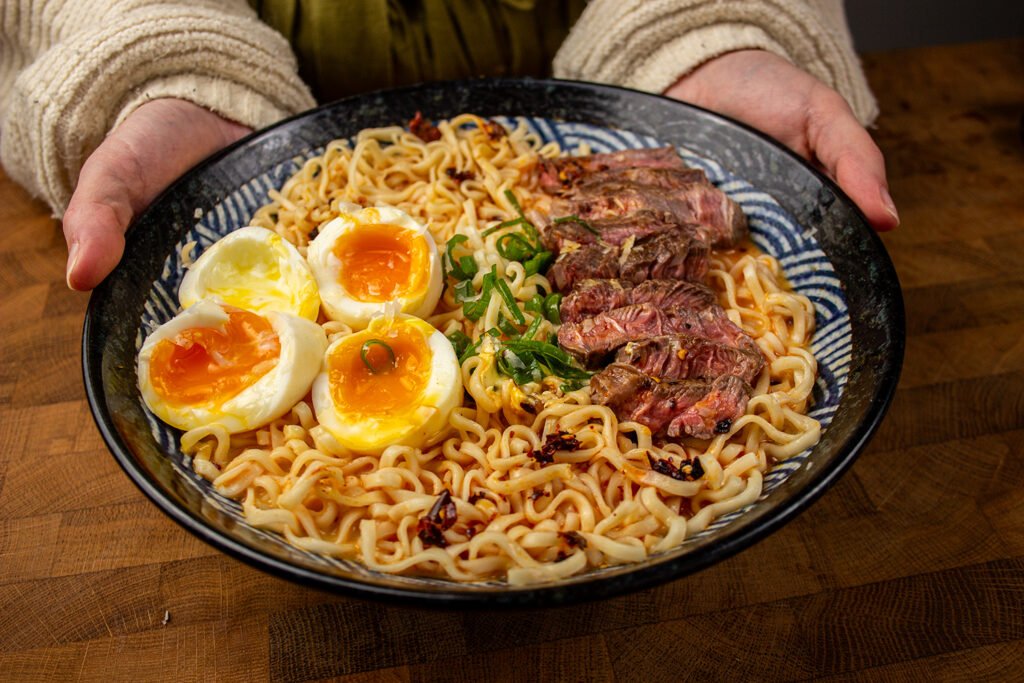
Watch Our Korean-Style Steak Ramen Video Recipe
Prefer to watch the recipe on YouTube instead or just want something to follow along to?
Here is our step-by-step video recipe:
Easy Korean-Style Steak Ramen Recipe
This cozy Korean-Style Steak Ramen is surprisingly approachable and perfect for a random weeknight dinner when you want something comforting but still balanced. After whisking together a rich sauce base, searing buttery steak, and finishing everything with noodles, broth, and toppings, the result is a silky, spicy, umami-packed bowl that feels restaurant-quality but is made entirely at home.
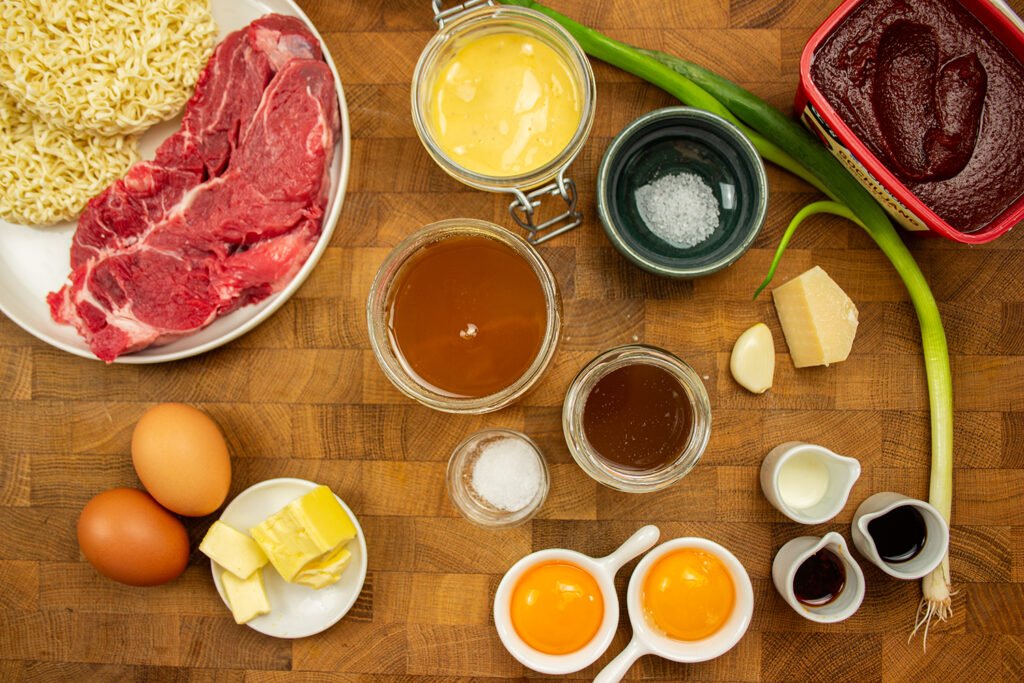
Ingredients for Korean-Style Steak Ramen
- Instant Ramen Cakes: These make up the heart of the bowl and give the soup something substantial and comforting to cling to.
- Dark unsalted beef stock: Adds deep savory flavor and gives the broth a richer, meatier finish. You can substitute salted beef stock, but omit the added salt so the bowl does not become overly salty.
- Egg yolks: Make the sauce glossy and creamy while helping it cling to the noodles.
- Salt: Sharpens all the savory flavors and balances the richness in the sauce. You can reduce or omit it if using salted stock, since the broth will already bring extra seasoning.
- Mayonnaise: Gives the sauce body and a soft creamy texture that rounds out the heat. You can substitute plain Greek yogurt for a tangier finish, though it will taste a little lighter.
- Soy sauce: Brings salt, color, and a deep umami note to the broth base. You can substitute tamari if needed for a similar savory flavor.
- Chili oil: Adds heat and a layered richness that makes the broth feel warm and cozy. You can substitute a neutral oil plus a pinch of red pepper flakes for a gentler heat.
- Gochujang: Adds fermented chili depth and a subtle sweetness that gives the sauce its Korean-style flavor. You can substitute sambal oelek plus a small pinch of sugar for heat with a similar balance.
- Honey: Softens the heat and rounds out the sharper salty and spicy notes. You can substitute brown sugar if needed for the same touch of sweetness.
- Cream: Gives the sauce a smoother, softer texture and helps mellow the spice. You can substitute half-and-half for a similar effect.
- MSG: Boosts savory flavor and helps the broth taste fuller and more balanced. You can leave it out if preferred, though the final bowl may taste a little less punchy.
- Garlic: Adds sharp aromatic flavor and gives the sauce more depth. You can substitute garlic paste for a smoother texture and similar flavor.
- Parmesan: Adds salty, nutty richness and melts into the broth for extra body. You can substitute finely grated Pecorino Romano for a slightly sharper finish.
- Instant ramen cakes: Bring chew, comfort, and that classic ramen texture. You can substitute fresh ramen noodles, though the cooking time may change.
- Ribeye or short loin steak: Adds richness, texture, and that buttery seared bite that makes the bowl feel especially satisfying. You can substitute sirloin for a leaner option that still cooks quickly.
- Butter: Helps sear the steak and adds extra richness both in the pan and on top of the finished bowl. You can substitute olive oil for searing, though the flavor will be less rich.
- Eggs: Add softness and richness, especially when the yolks stay jammy. You can substitute a soft-fried egg for a similar creamy finish.
- Chili crunch: Adds texture and a deeper savory spice on top. You can substitute crushed chili crisp for a very similar crunch and heat.
- Green onion: Brings freshness and a light sharpness that cuts through the richness. You can substitute chives for a softer onion flavor.
- Sesame seeds: Add a subtle nutty finish and a little texture. You can leave them out if you do not have any on hand.
How to Make Korean-Style Steak Ramen
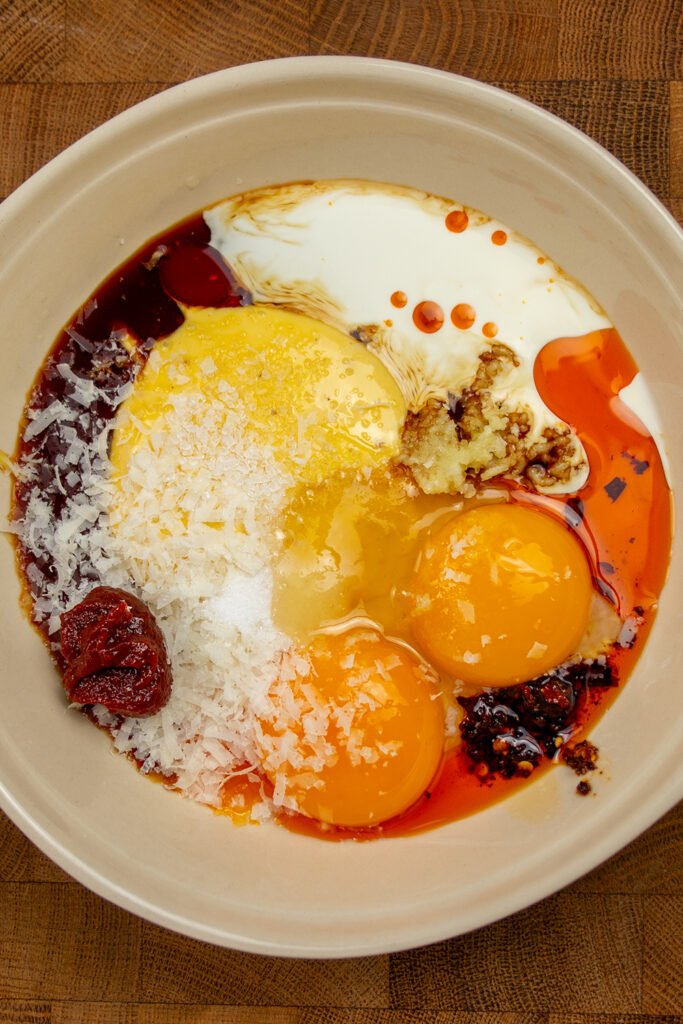
Step 1: Make the sauce base. In a medium bowl, whisk together the egg yolks, minced garlic, mayonnaise, gochujang, honey, soy sauce, cream, chili oil, salt, MSG, and grated parmesan for about 1 minute, or until smooth and creamy. Keep the bowl at room temperature while you prepare the rest so the mixture stays loose and easy to combine.
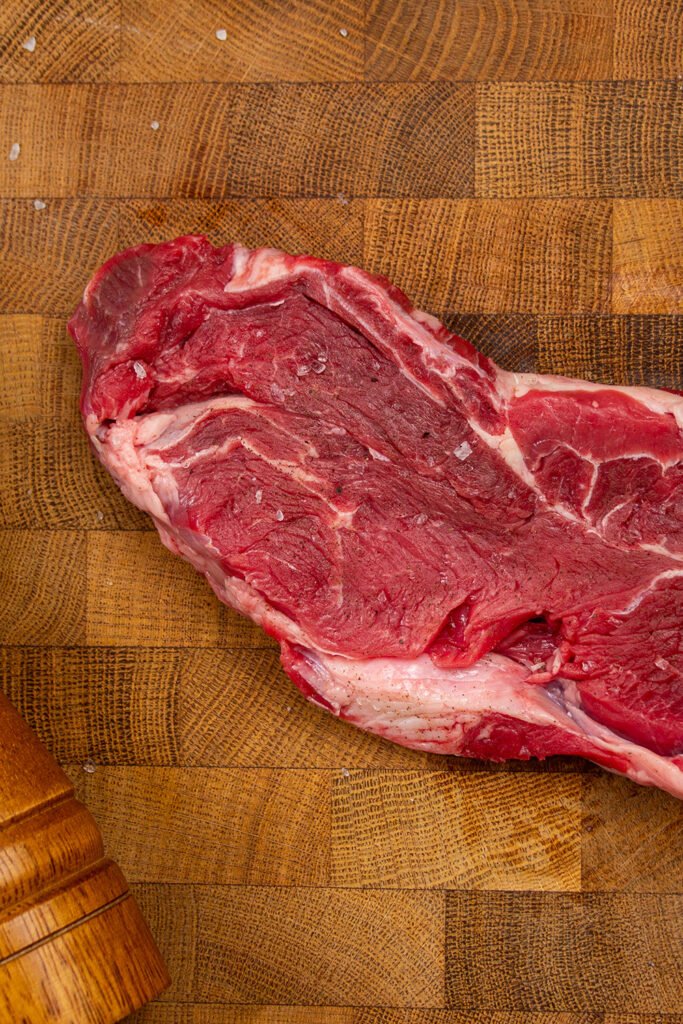
Step 2: Prep and sear the steak. Pat the steak dry, then season both sides generously with salt and pepper.
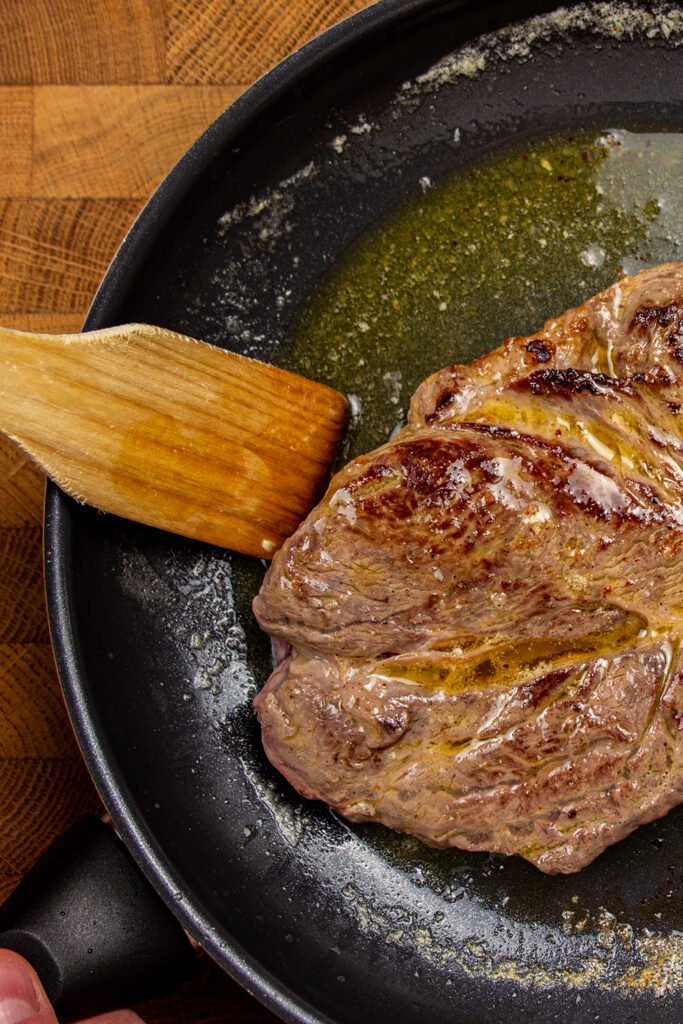
Step 3: Heat a pan over medium-high heat until very hot, then melt the butter. Sear the steak for 2 to 4 minutes per side depending on thickness, until deeply browned on the outside, then briefly sear the edges. Transfer to a board and let it rest until slightly cooled before slicing so the juices stay in the meat.
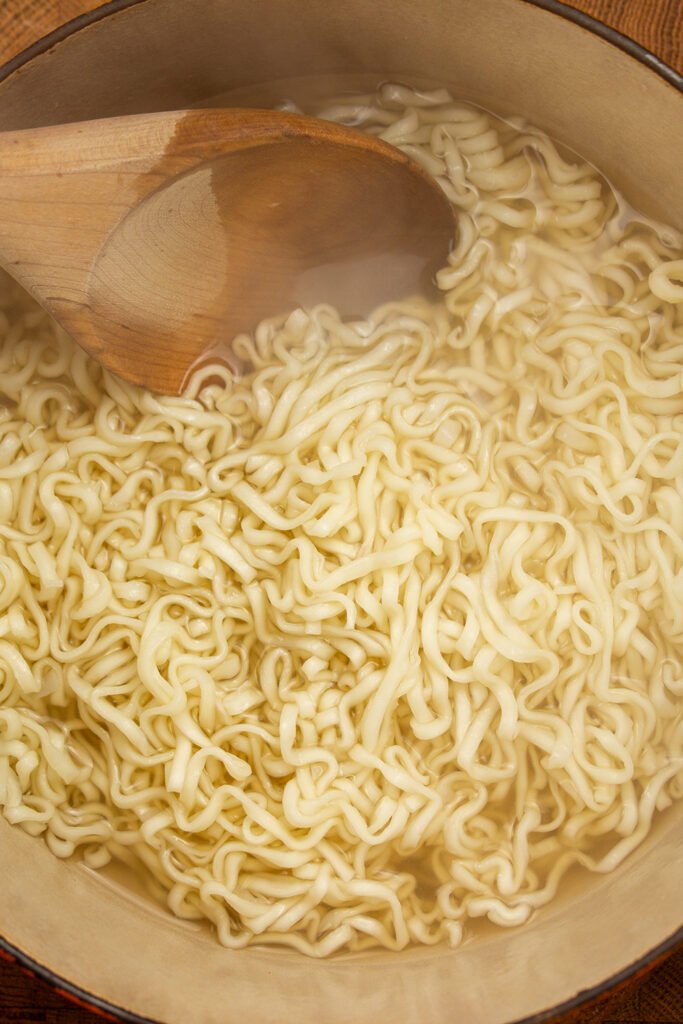
Step 4: Boil the eggs and noodles. Bring the water and beef stock to a boil over high heat. Soft boil the eggs for 6 minutes, adding the ramen halfway through if needed, and cook the noodles according to the package instructions until just tender. Cool the eggs in cold water, then peel them. Reserve 500 ml of the noodle broth before straining the noodles.
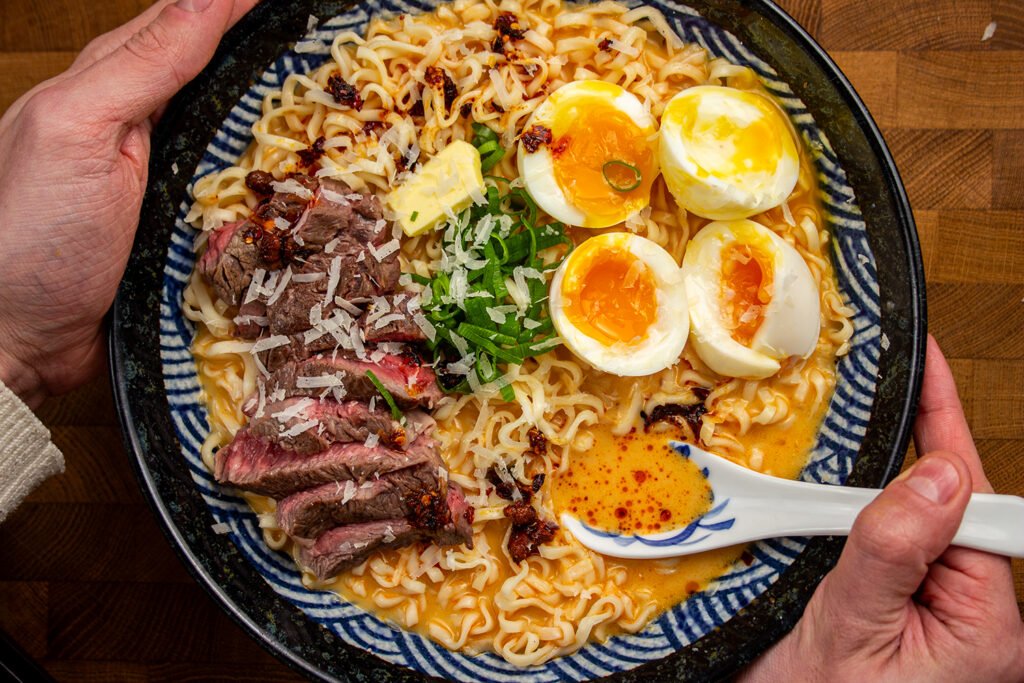
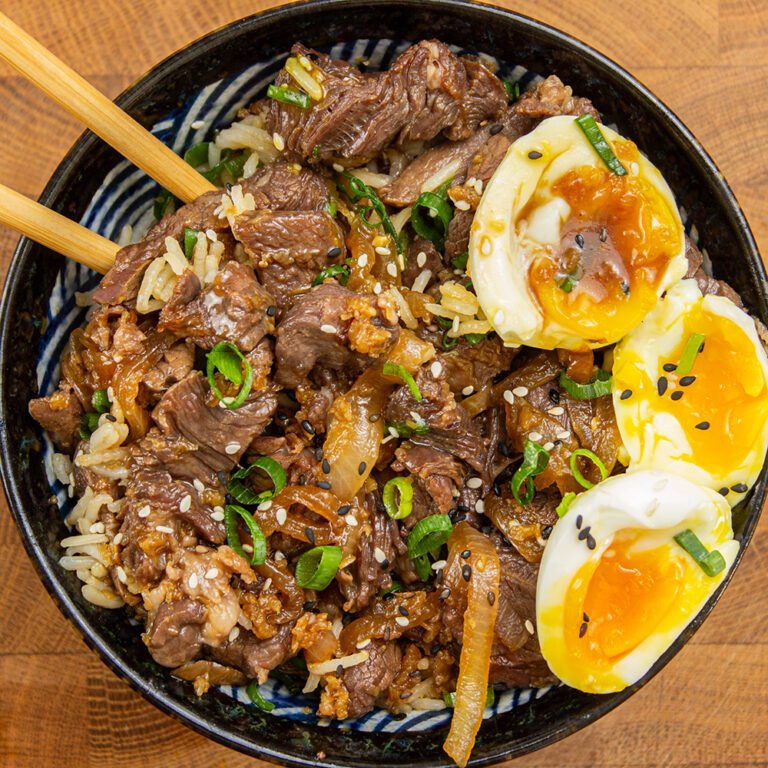
Step 5: Assemble the bowls. Divide the sauce base over 2 serving bowls, then pour the hot reserved broth over it and stir until smooth. Add the noodles, then top with sliced steak, halved eggs, green onion, chili crunch, extra parmesan, sesame seeds if using, extra chili oil if using, and a small knob of butter. Serve right away while everything is hot and glossy.
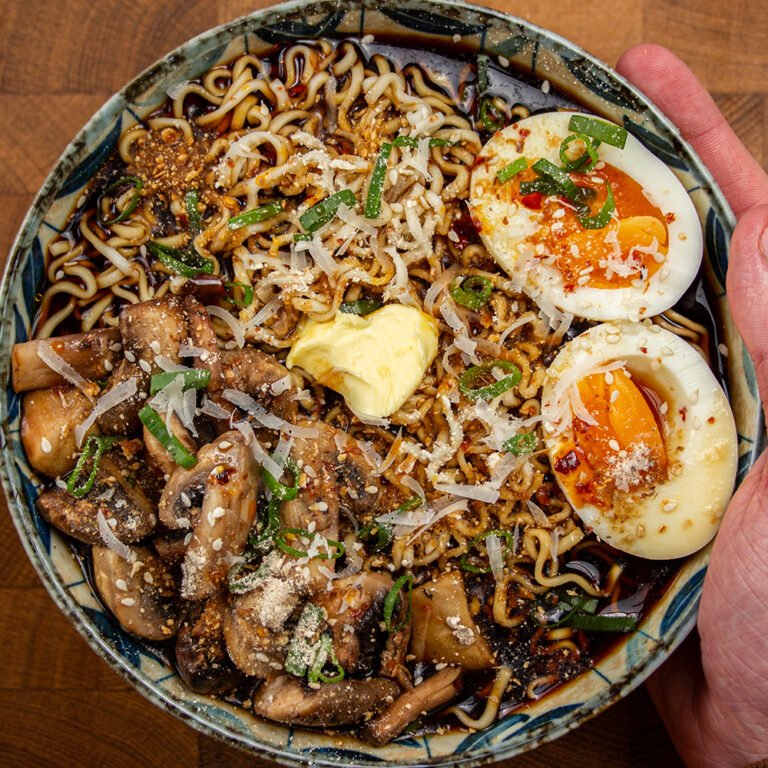
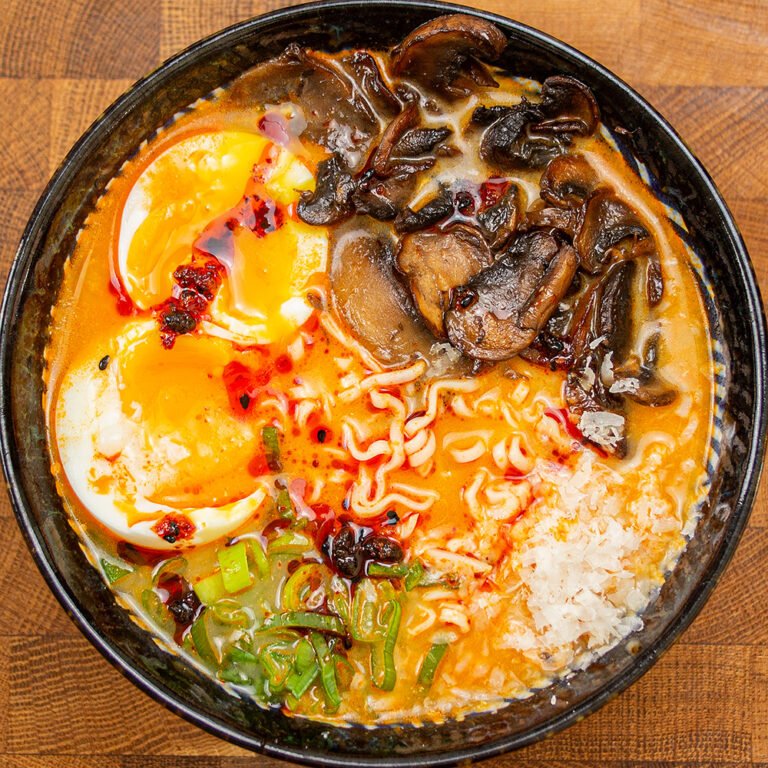
Substitute Steak with Mushrooms
Steak is the most central ingredient here after the ramen itself, so it makes the most sense as the key swap. Thick slices of oyster mushrooms or king oyster mushrooms work especially well because they brown nicely and keep a satisfying bite. Sear them in butter over medium-high heat until deeply golden and tender. The final bowl will be a little lighter and less rich than the steak version, but still savory, cozy, and full of texture.
Tips for Making Korean-Style Steak Ramen
Tip 1: Use freshly grated parmesan if you can. It melts more smoothly into the sauce and helps the broth stay silky instead of clumpy.
Tip 2: Let the steak rest before slicing. Even a few minutes makes a difference and keeps it juicy instead of losing all that flavor onto the cutting board.
Tip 3: Add the hot broth gradually to the sauce base while stirring. This helps everything loosen evenly and keeps the texture creamy and smooth.
Make-Ahead Instructions
You can make the sauce base up to 1 day in advance and keep it covered in the refrigerator. The flavor deepens slightly as the garlic, chili oil, and gochujang sit together, which makes the final broth taste more rounded. The steak is best cooked fresh, but it can also be seared a few hours ahead and sliced just before serving.
Storing Leftovers
Store leftovers in an airtight container in the refrigerator for up to 2 days. For the best texture, keep the broth, noodles, and toppings separate if possible. The noodles will continue to absorb liquid as they sit, so expect them to become softer and the broth to thicken a little by the next day.
Freezing Instructions
Freezing is not ideal for the fully assembled ramen because the noodles, steak and eggs change texture after thawing. If needed, freeze only the broth base in a freezer-safe container for up to 2 months. Thawed broth may separate slightly, but a gentle stir while reheating should bring it back together. The eggs, steak and noodles are best made fresh.
Reheating Instructions
Reheat the broth gently in a saucepan over medium-low heat until hot but not boiling hard. Add the noodles at the end just long enough to warm through. If the broth has thickened in the fridge, add a small splash of water or stock to loosen it. For the steak, warm it briefly and gently so it stays tender.
Serving Suggestions
This bowl is rich enough to stand on its own, but it pairs really nicely with simple sides like cucumber salad, kimchi, or lightly dressed greens. A little extra green onion, chili oil, or parmesan on top makes it feel finished without much effort. It is especially good for cozy weeknights, low-key dinner dates at home, or any night you want something comforting but still a little special.
Print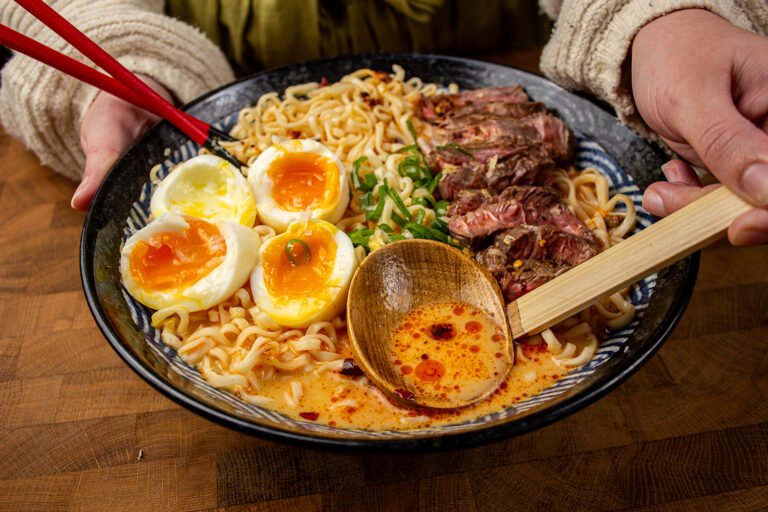
Korean-Style Steak Ramen
There was a solid month where buldak steak ramen was everywhere on my feed. Every scroll, another glossy, spicy, buttery bowl. I loved the idea of it. The richness, the heat, the silky noodles. But every time I looked at the seasoning packet, I just knew I wanted something a little more balanced. Something I could feel good about eating on a random Tuesday night.
So I started testing… I tweaked the sauce. I adjusting the salt. Playing with the ratios until it hit that perfect cozy, spicy, umami moment without being overwhelming. It took a few tries, but this version is the one! It’s creamy from the egg yolks and mayo, spicy from the chili oil and gochujang, savory from the beef stock and parmesan, and finished with buttery steak and jammy eggs. Honestly… I think I like it even more than the original.
- Total Time: 30 minutes
- Yield: 2 bowls 1x
Ingredients
- 500 ml boiling water
- 100 ml dark unsalted beef stock
- 2 egg yolks
- 1/2 tsp salt
- 2 tbsp mayonnaise
- 2 tsp soy sauce
- 2 tsp chili oil
- 1 tsp gochujang
- 1 tsp honey
- 1 tsp cream
- 1/4 to 1/2 tsp MSG
- 1 garlic clove, minced
- 1 tbsp grated parmesan
- 2 instant ramen cakes
- 300 g ribeye or short loin steak
- salt and pepper, for seasoning
- 30 g butter
- 2 eggs
- chili crunch
- sliced green onion
- extra parmesan
- small knob of butter
- sesame seeds, optional
- extra chili oil, optional
Instructions
- Make the sauce base: In a bowl, whisk together egg yolks, minced garlic, mayonnaise, gochujang, honey, soy sauce, cream, chili oil, salt, MSG, and grated parmesan. Set aside.
- Prep the steak: Pat the steak dry and season both sides generously with salt and pepper.
- Sear the steak: Heat a pan over medium high until very hot. Melt the butter, then sear the steak for 2 to 4 minutes per side depending on thickness. Briefly sear the edges. Let rest before slicing.
- Boil eggs and noodles: Bring water and beef stock to a boil. Soft boil the eggs for 6 minutes. Add ramen halfway through if needed and cook according to package instructions. Cool eggs in cold water, then peel. Reserve the noodle broth before straining.
- Assemble: Add a generous spoon of sauce to your bowl, pour over broth, then add noodles. Top with sliced steak, halved eggs, scallions, chili crunch, parmesan, sesame seeds, extra chili oil, and a small knob of butter.
- Prep Time: 15 minutes
- Cook Time: 15 minutes