Gochujang Butter Noodles with Caramelized Onion
A little note: this post contains affiliate links. If you buy through them, we may earn a small commission at no extra cost to you. As an Amazon Associate we earn from qualifying purchases. More about that.
After making fresh butter for the first time in our lives, we immediately felt like we needed to make something worthy of it. Something glossy, cozy, a little spicy, a little sweet, and just deeply satisfying in a bowl-on-the-couch kind of way.
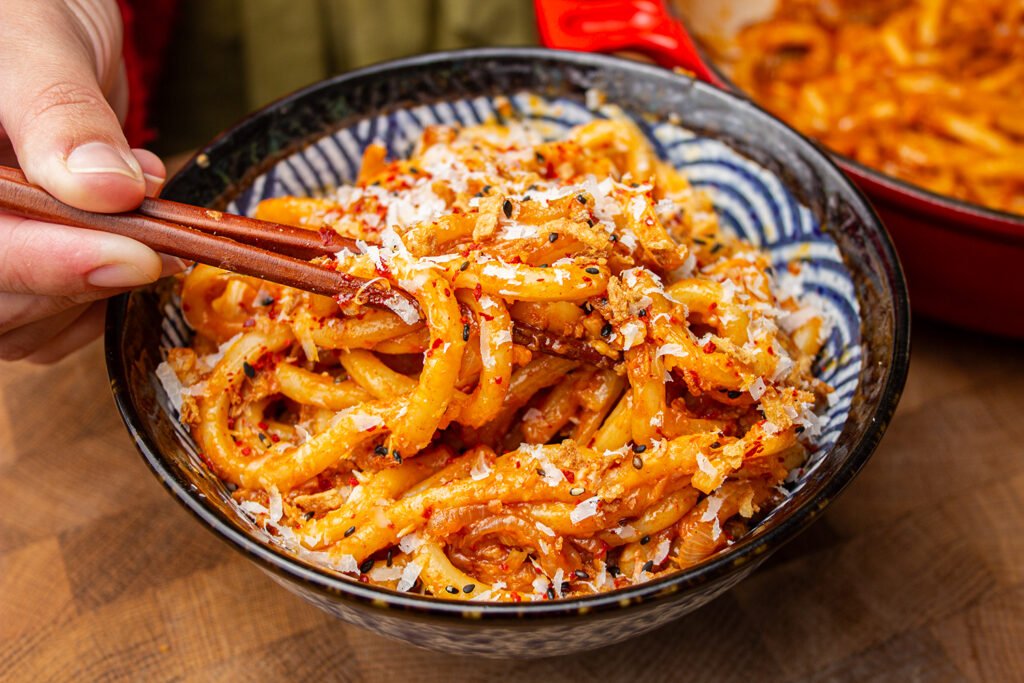
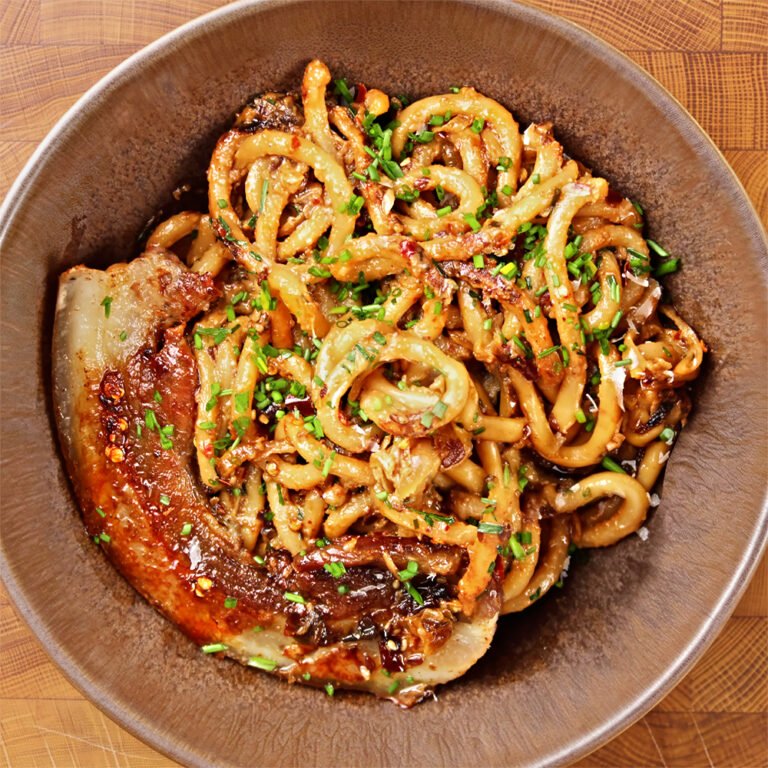
These gochujang butter noodles became that dish so fast. The onions slowly melt down until they’re golden and sweet, the gochujang brings that fermented heat, and the butter makes everything rich and silky. Then the chewy udon catches all of it so every bite is saucy, savory, and honestly kind of addictive.
The parmesan, fried onions, sesame, and gochugaru on top make it feel extra special without making it complicated.
Watch Our Gochujang Butter Noodles with Caramelized Onions Video Recipe
Prefer to watch the recipe on YouTube instead or just want something to follow along to?
Here is our step-by-step video recipe:
Easy Gochujang Butter Noodles with Caramelized Onions Recipe
This cozy gochujang butter noodles with caramelized onions recipe is surprisingly approachable and perfect for a low-key dinner that still feels a little special. After slowly caramelizing onions, building a buttery gochujang sauce, and tossing it through chewy udon, the result is a glossy, savory-sweet dish with gentle heat, deep umami, and a soft richness that feels restaurant-quality but is made entirely at home.
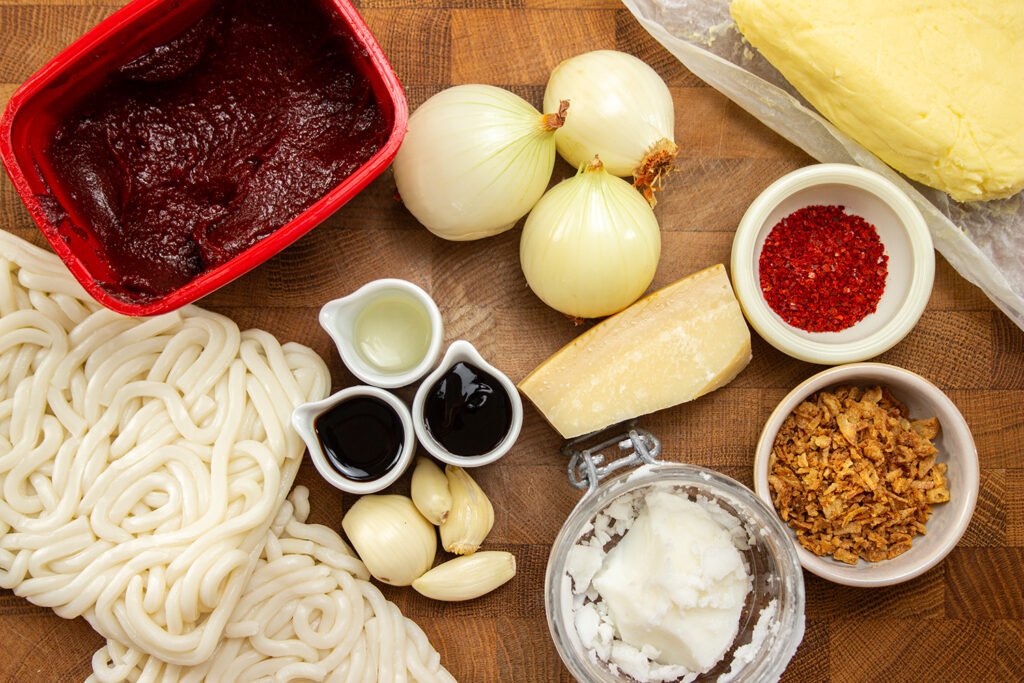
Ingredients for Gochujang Butter Noodles with Caramelized Onions
- Yellow onions: Add sweetness, softness, and depth once slowly caramelized. You can substitute white onions because they caramelize well and bring a similar mellow sweetness.
- Beef tallow: Helps the onions cook down with savory richness. You can substitute lard or butter for a vegetarian option because both add fat and help the onions soften and brown.
- Garlic: Adds warmth and a savory base that balances the sweetness of the onions.
- Unsalted butter: Makes the sauce rich, glossy, and smooth.
- Light soy sauce: Adds saltiness and umami without making the sauce too heavy.
- Oyster sauce: Adds deep, slightly sweet umami and helps round out the gochujang. You can substitute vegetarian oyster sauce because it keeps a similar thick texture and savory-sweet flavor.
- Gochujang: Brings fermented chili flavor, gentle sweetness, and a little heat. You can substitute 1 tbsp doubanjiang + 1 tsp honey because it has a similar fermented base, though the flavor will be different but still delicious.
- Rice vinegar: Adds brightness so the buttery sauce does not feel too heavy. You can substitute apple cider vinegar because it has a mild acidity that can lift the sauce in a similar way.
- Wet udon noodles: Give the dish its chewy, bouncy texture and hold the sauce beautifully. You can substitute linguine because they can carry the sauce well, though the flavor will be different.
- Starchy noodle water: Helps loosen and emulsify the sauce so it clings to the noodles.
- Black sesame seeds: Add a nutty finish and a little visual contrast. You can substitute white sesame seeds because they add a similar contrast on top.
- Gochugaru: Adds color, warmth, and a soft chili flake texture on top. You can substitute chili flakes or even smoked paprika powder for a milder smoky finish.
- Parmesan Cheese: Adds salty richness and a delicate savory finish. You can substitute pecorino Romano because it has a similar grated texture though the dish may turn saltier.
- Fried onions: Add crunch and echo the sweet onion flavor in the sauce. You can substitute crispy shallots because they bring a similar savory crispness.
How to Make Gochujang Butter Noodles with Caramelized Onions
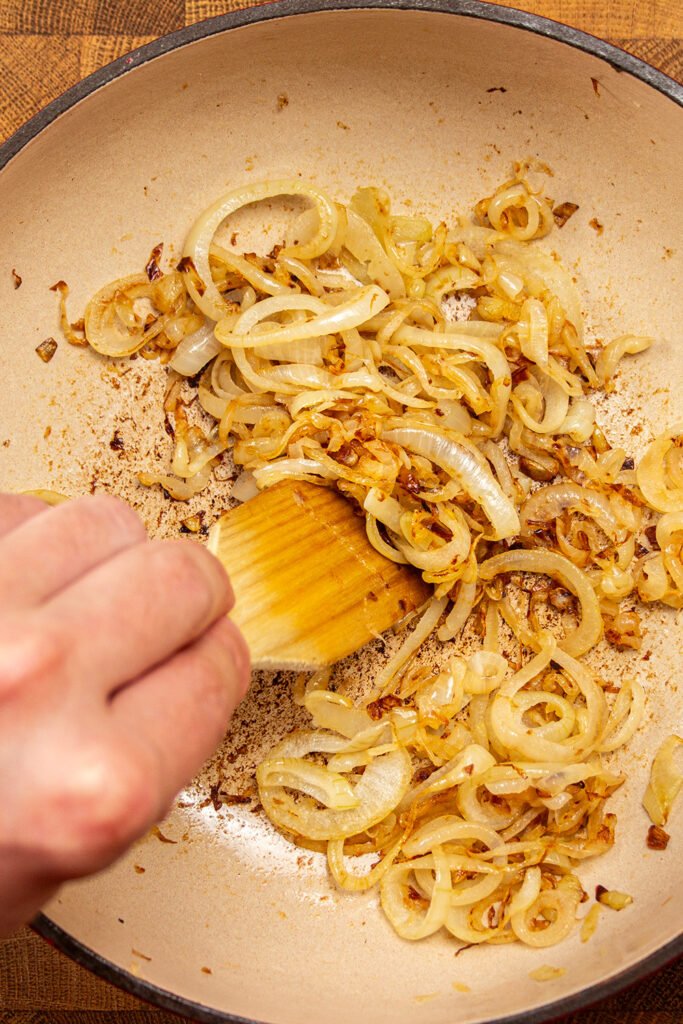
Step 1: Slice the onions into thin slices and separate the rings. Add the beef tallow to a small pan over medium heat (setting 5 on my stove), then cook the onions slowly for 30 minutes. Stir every minute or so until they look mellow, soft, and golden with sweet caramelized edges.
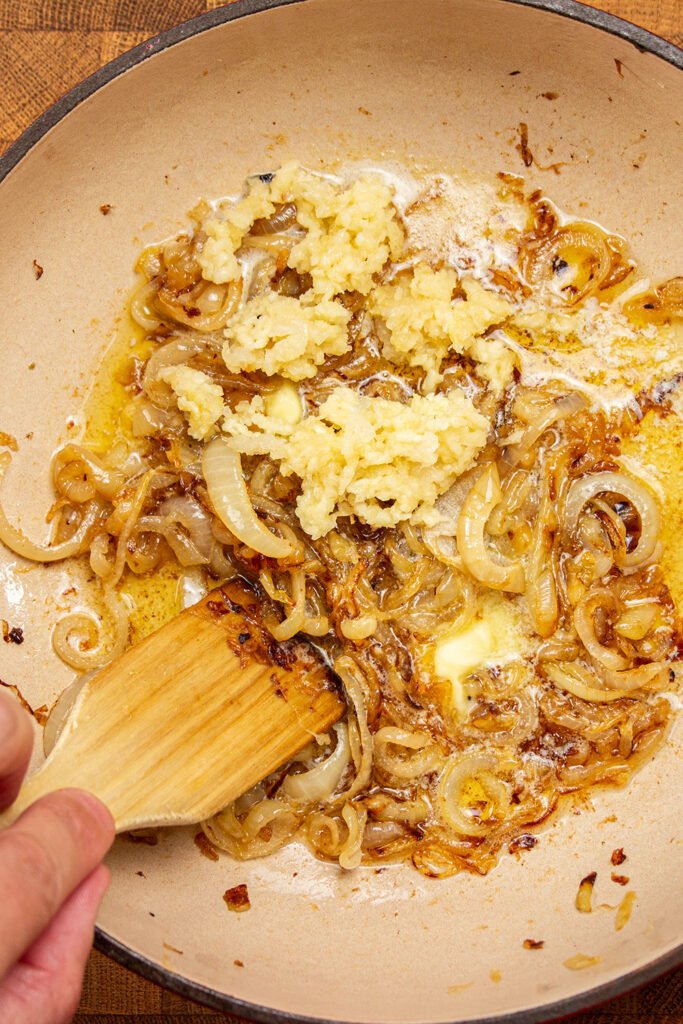
Step 2: Add the unsalted butter and minced garlic to the pan over medium heat. Continue frying for 1 to 2 minutes, just until the butter melts into the onions and the garlic smells fragrant without browning too hard.
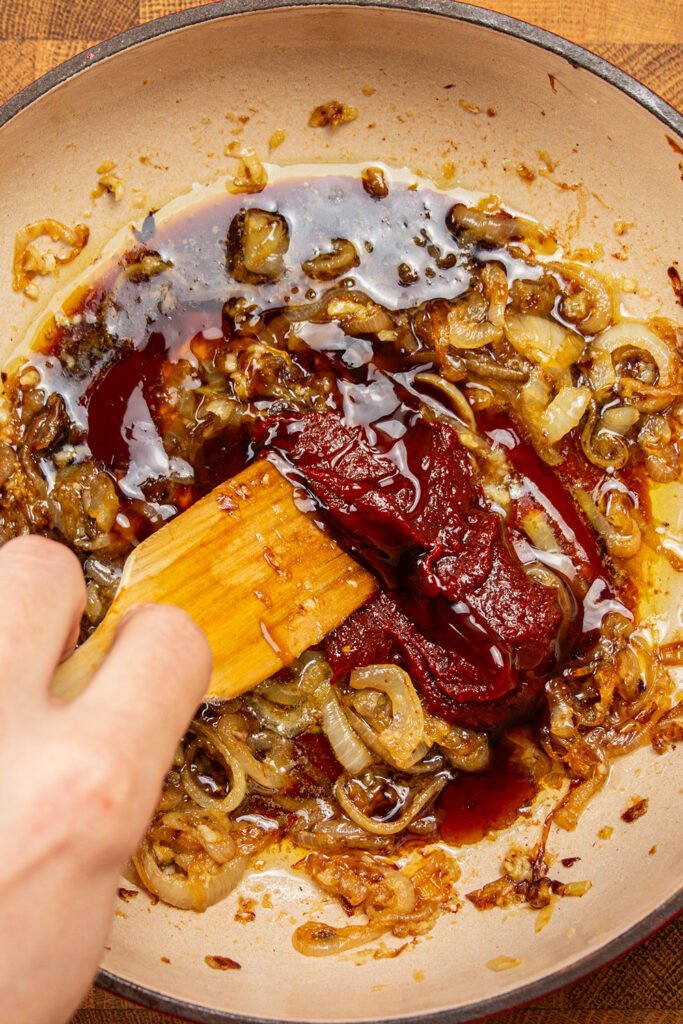
Step 3: Add the gochujang, light soy sauce, oyster sauce, and rice vinegar to the pan over medium heat. Stir until the sauce looks smooth, red-orange, and glossy, and the gochujang is fully worked into the buttery onions.
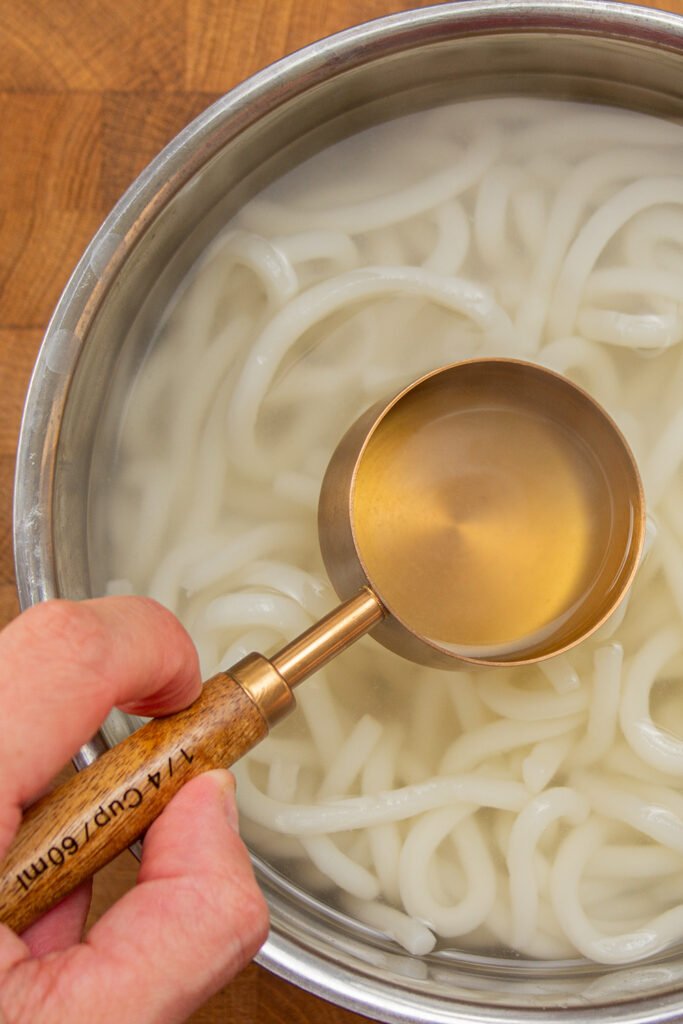
Step 4: Meanwhile, bring another pot of water to a boil and cook the wet udon noodles according to the package instructions. When the noodles are tender and chewy, collect 2 tbsp of the starchy noodle water, then strain the noodles.
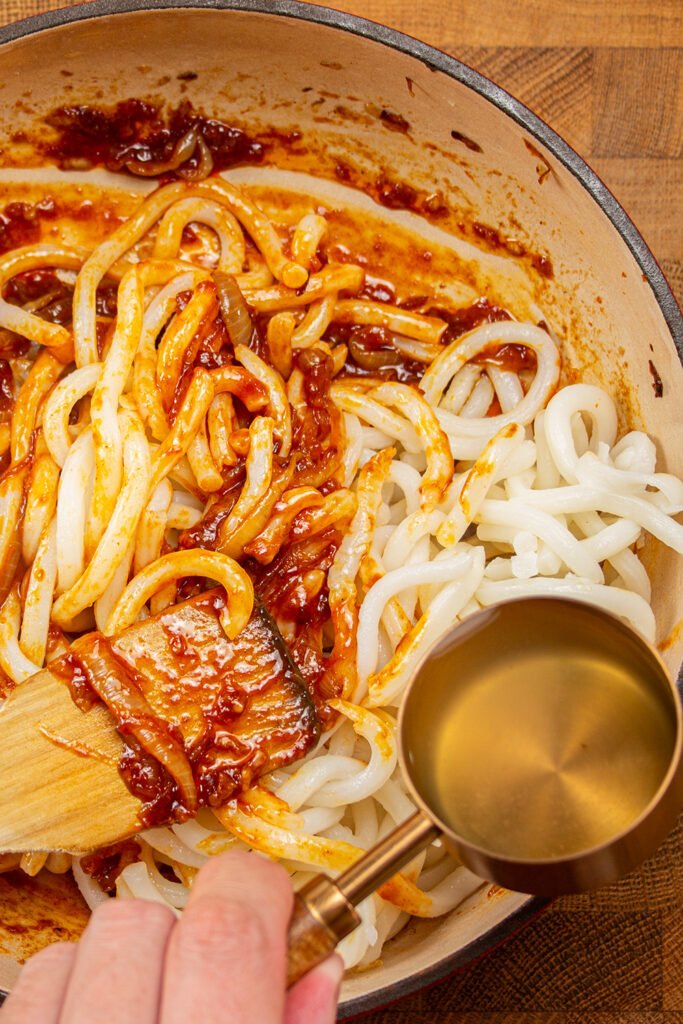
Step 5: Add the strained noodles to the sauce over low to medium heat. Toss well, then add 2 tbsp reserved noodle water to emulsify the sauce. Keep tossing until the noodles look glossy and the sauce clings to each noodle.
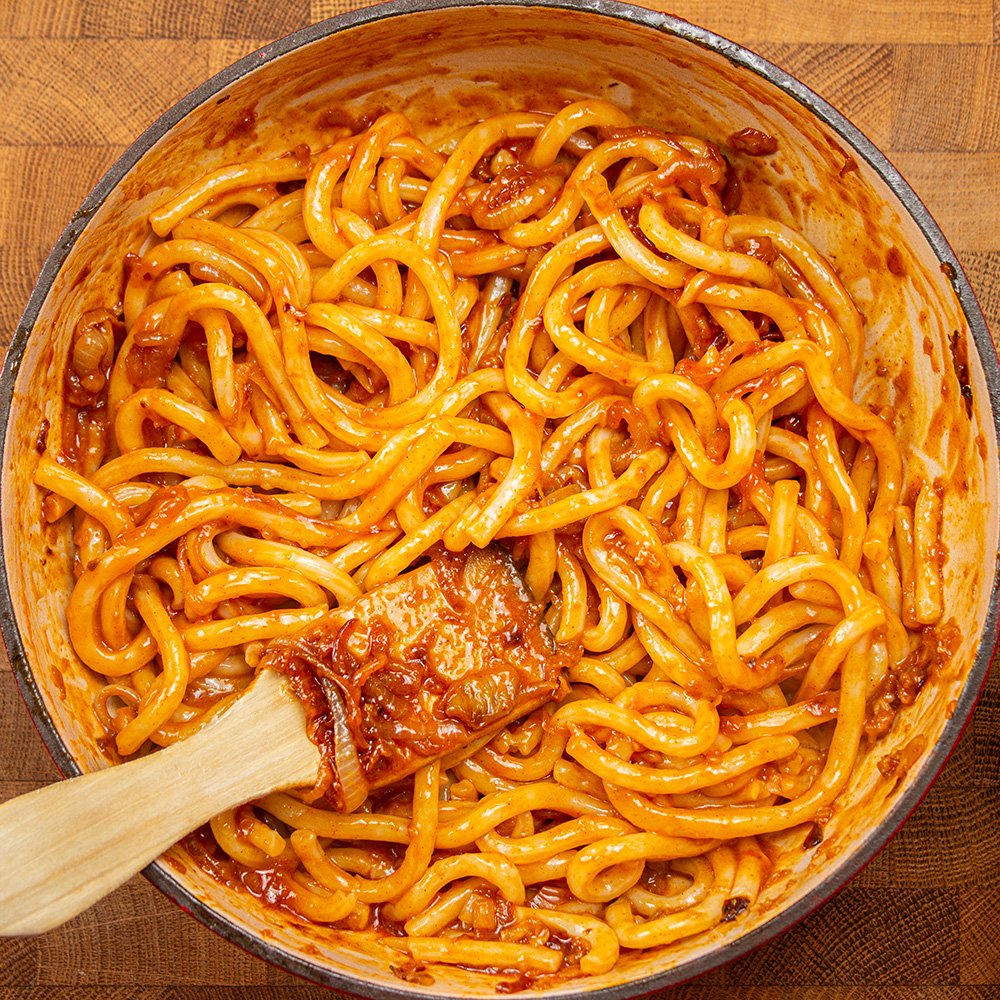
Step 6: Serve the noodles right away while warm. Top with freshly grated parmesan, fried onions, gochugaru, and black sesame seeds.
Substitute Gochujang with Doubanjiang
Doubanjiang, also called chili bean paste, works as a substitute because it also brings fermented chili flavor and deep savory complexity. To use it, swap in a smaller amount at first, about 1 tbsp doubanjiang + 1 tsp honey for the 2 tbsp gochujang, then taste before adding more. Doubanjiang is saltier, funkier, and less sweet than gochujang, so the sauce will taste sharper, more savory, and more chili-bean forward. Since it does not have the same sweetness or smooth texture, stir it well into the butter and caramelized onions, then use the reserved noodle water to loosen the sauce until it clings to the udon.
Tips for Making Gochujang Butter Noodles with Caramelized Onions
Tip 1: Take the onions seriously. The 30-minute cook is where the sweetness and depth come from, otherwise the dish will be out of balance. So keep the heat at medium and let them soften slowly while stirring every minute (especially towards the end) instead of rushing them.
Tip 2: Use the noodle water while it’s still hot. It helps the butter, gochujang, and sauces come together into a smoother coating instead of sitting separately in the pan.
Make-Ahead Instructions
You can make the caramelized onion gochujang butter sauce up to 2 days in advance. Store it in an airtight container in the refrigerator, then rewarm it gently in a pan before adding freshly cooked udon.
The flavor can deepen as the onions, gochujang, soy sauce, and oyster sauce sit together, becoming a little rounder and more savory. For the best texture, cook the udon right before serving so it stays chewy.
Storing Leftovers
Store leftover noodles in an airtight container in the refrigerator for up to 3 days. The noodles will absorb more sauce as they sit, so the texture may become thicker, softer, and less glossy. The fried onions will also lose some crunch once stored with the noodles.
Freezing Instructions
Freezing is not recommended for the fully assembled noodles. Udon can become soft or slightly gummy after thawing, and the buttery sauce may separate. If needed, freeze only the sauce in an airtight freezer-safe container for up to 2 months. Thaw it in the refrigerator, then reheat gently and toss with freshly cooked udon.
Reheating Instructions
Reheat leftovers in a pan over low to medium-low heat. Add a small splash of water to loosen the sauce, then toss gently until the noodles are warm and glossy again. If reheating in the microwave, use lower heat so the sauce warms evenly. Add fresh fried onions and other toppings after reheating if you want to bring back a little crunch.
Serving Suggestions
Serve these noodles in warm bowls with extra parmesan, a small pinch of gochugaru, and more sesame seeds on top. The bowl is delicious as is, but it also pairs well with a crisp cucumber salad, simple sautéed greens, or quick pickled vegetables to balance the buttery sauce.
They are especially nice for a quiet weeknight dinner, a cozy weekend lunch, or a small dinner at home when you want something savory, chewy, and a little comforting.
Print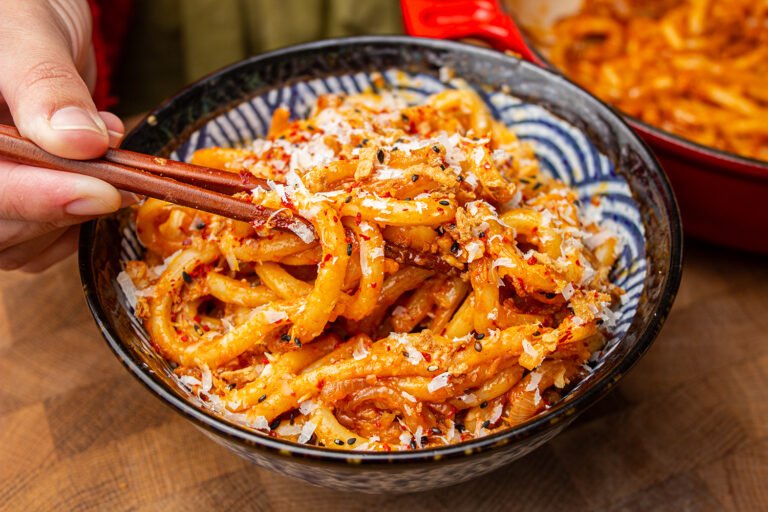
Gochujang Butter Noodles with Caramelized Onion
After making fresh butter for the first time in our lives, we immediately felt like we needed to make something worthy of it. Something glossy, cozy, a little spicy, a little sweet, and just deeply satisfying in that quiet, bowl-on-the-couch kind of way.
These gochujang butter noodles became that dish so fast. The onions slowly melt down until they’re golden and sweet, the gochujang brings that fermented heat, and the butter makes everything rich and silky. Then the chewy udon catches all of it so every bite is saucy, savory, and honestly kind of addictive.
The parmesan, fried onions, sesame, and gochugaru on top make it feel extra special without making it complicated.
- Total Time: 45 minutes
- Yield: 2 bowls 1x
Ingredients
- 3 small white onions, sliced into thin rings
- 1 tbsp beef tallow, or lard/butter
- 4 cloves garlic, minced
- 3 tbsp unsalted butter
- 1 tbsp light soy sauce
- 1 tbsp oyster sauce
- 2 tbsp gochujang
- 1 tsp rice vinegar
- 2 packs wet udon noodles
- Black sesame seeds, for garnish
- 1/4 tsp gochugaru, for garnish
- 1 tbsp parmesan, for garnish
- 2 tbsp fried onions, for garnish
Instructions
- Slice the onions into thin slices and separate the rings. In a small pan over medium heat, setting 5 for me, caramelize the onions for 30 minutes until mellow and golden.
- Add the unsalted butter and garlic, then continue frying for 1 to 2 minutes.
- Add the gochujang, light soy sauce, oyster sauce, and rice vinegar. Stir until combined.
- Meanwhile, cook the udon noodles in another pot according to package instructions. Reserve 2 tbsp starchy noodle water, then strain the noodles.
- Toss the noodles in the sauce and add the noodle water to emulsify the sauce and help it cling to the noodles.
- Serve topped with freshly grated parmesan, fried onions, gochugaru, and black sesame seeds.
- Prep Time: 10 minutes
- Cook Time: 35 minutes