Black Bean Tantanmen
A little note: this post contains affiliate links. If you buy through them, we may earn a small commission at no extra cost to you. As an Amazon Associate we earn from qualifying purchases. More about that.
This bowl came out of one of those very specific kitchen situations where you buy a big jar of something for one recipe, use a tiny bit of it, and then just stand there like… okay, now what? I originally bought black bean paste for jajangmyeon, but once I realized how much I had left, I started playing around with it and somehow ended up here. And honestly, I’m so happy I did.
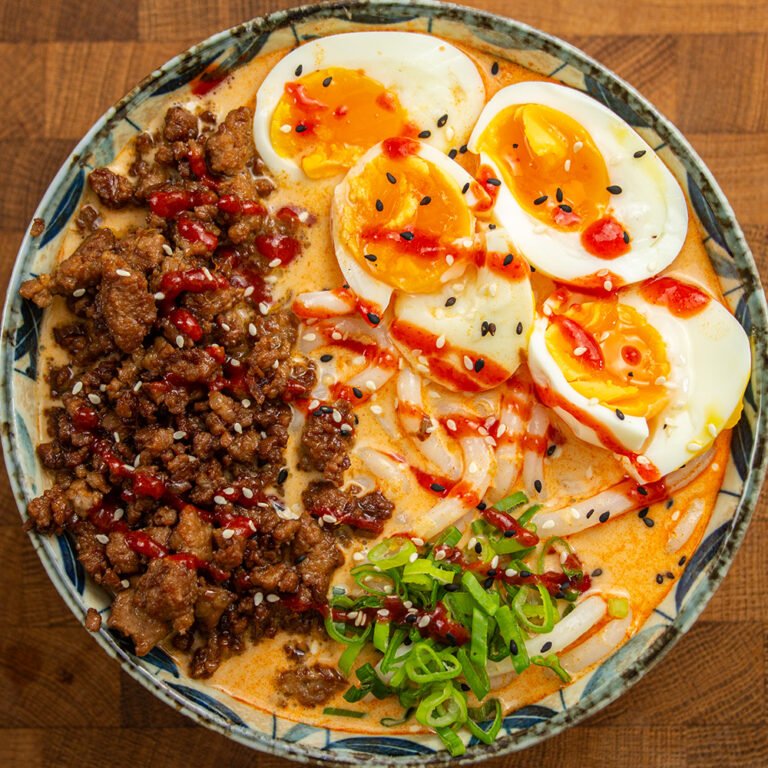
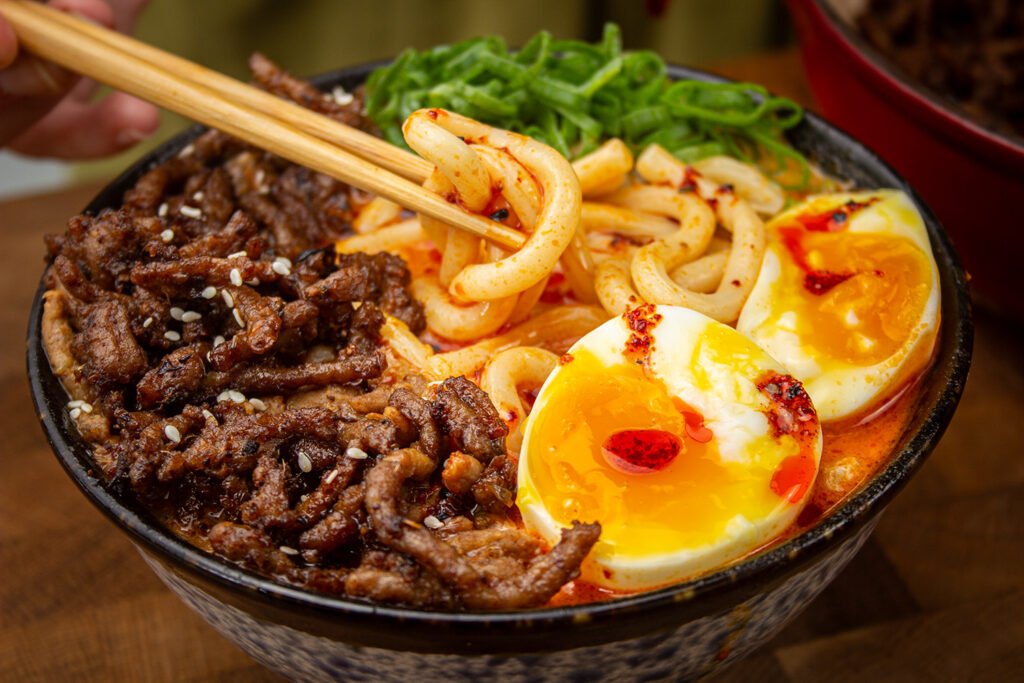
This creamy, savory garlic pork mince ramen has that rich, cozy, slurpable vibe going on, but with a deep savory black bean twist that makes it feel a little extra special. The pork gets glossy and sticky in black bean garlic sauce, the broth turns creamy from coconut milk, and the black bean rayu brings this warm, spicy finish that ties everything together. It’s comforting, savory, a little nutty, and so good when you want something that feels homemade but still kind of restaurant-y.
Watch Our Black Bean Tantanmen Video Recipe
Prefer to watch the recipe on YouTube instead or just want something to follow along to?
Here is our step-by-step video recipe:
Easy Black Bean Tantanmen Recipe
This creamy garlic pork mince ramen is surprisingly approachable and perfect for a cozy dinner at home. After browning the pork, stirring together a savory sauce base, and finishing everything with a hot coconut broth, the result is a silky, savory-spicy dish with chewy noodles and rich, glossy pork that feels restaurant-quality but is made entirely at home.
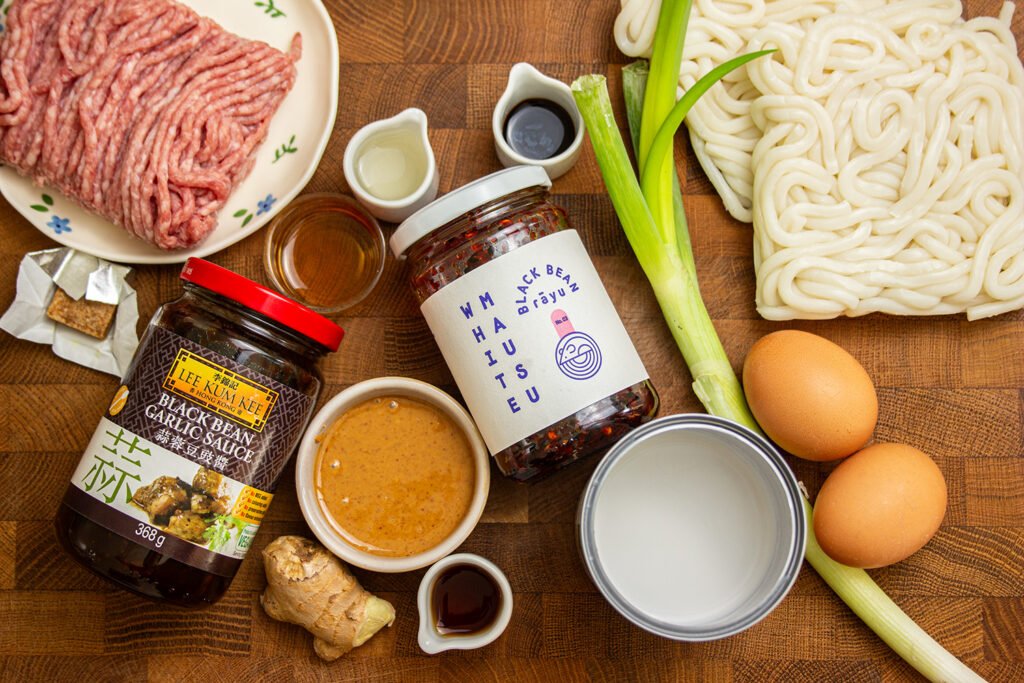
Ingredients for Black Bean Tantanmen
- Minced pork: Adds richness and a savory, meaty bite that makes the bowl feel substantial. You can substitute ground chicken if you want something a little lighter.
- Lee Kum Kee Black Bean Garlic Sauce: Brings salty umami depth, garlic flavor, and a sticky glaze that coats the pork. You can substitute plain black bean paste + 2 minced garlic cloves.
- Ginger: Adds warmth and a fresh sharpness that cuts through the richness of the pork and broth.
- Scallion whites: Gives the pork topping a mild onion flavor and a little sweetness as it cooks down. You can substitute finely sliced shallot because it softens nicely and gives a similar aromatic note.
- Light soy sauce: Adds salt and umami without making the dish too heavy.
- Shaoxing wine: Adds a subtle sweetness and complexity that lifts the pork topping. You can substitute mirin or sake because it brings a similarly rounded cooking wine flavor.
- Peanut butter: Gives the sauce base body, creaminess, and a gentle nutty depth that helps the broth cling to the noodles. You can substitute tahini for a slightly more savory twist.
- Rice vinegar: Brightens the broth and keeps the richer ingredients balanced. You can substitute lemon juice for similar brightness.
- White Mausu Black Bean Rayu: Adds heat, texture, and deep savory flavor from the black beans and chili oil. You can substitute chili oil or chili crisp for a different, but equally delicious flavor.
- Maple syrup: Softens the sharper salty and acidic edges with a light sweetness. You can substitute honey for a similar balancing effect.
- Hot water: Helps loosen the sauce base so it blends smoothly into the broth.
- Stock cube: Adds concentrated savory flavor to the broth with very little effort. You can substitute fresh stock if you have some for a more complex taste.
- Coconut milk: Makes the broth creamy and mellow, with a soft richness that works especially well with the spicy black bean flavors. You can substitute cream for a more dairy-forward richness.
- Wet udon noodles: Bring a chewy, satisfying texture that holds up well in the creamy broth. You can substitute ramen noodles if you love that more.
- Soft-boiled eggs: Adds comfort and a creamy center that settles into the broth.
- Scallion greens: Add freshness and a clean onion bite right at the end. You can substitute chives for a softer but still fresh garnish.
- Sesame seeds: Add a light crunch and a nutty finish over the bowl. You can substitute crushed roasted peanuts for another subtle crunchy topping.
How to Make Black Bean Tantanmen
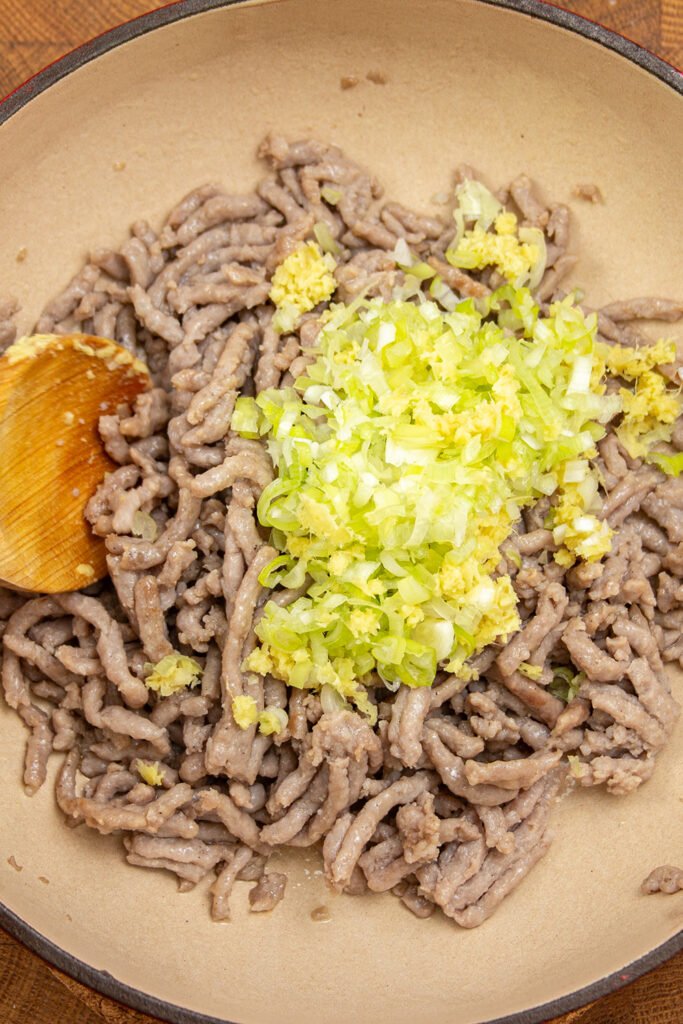
Step 1: Heat a skillet over medium-high heat and brown the minced pork for about 4 to 5 minutes, breaking it up as it cooks. Once the pork is no longer pink, add the grated ginger and sliced scallion whites and continue frying for 2 to 3 minutes, until fragrant and lightly softened.
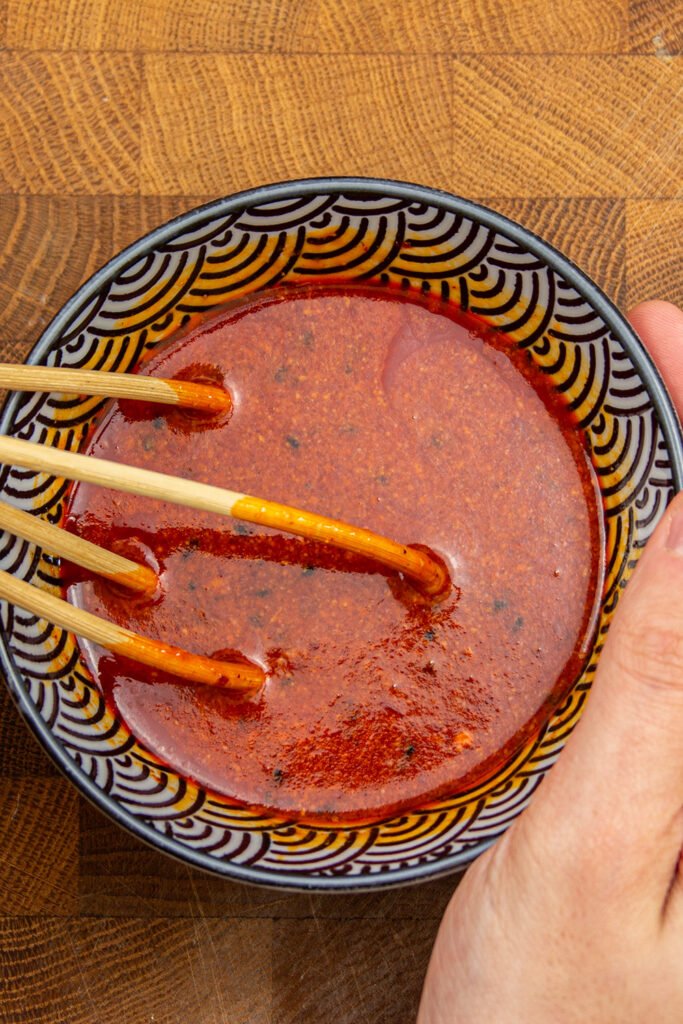
Step 2: While the pork cooks, stir together the peanut butter, 1.5 tbsp light soy sauce, rice vinegar, black bean rayu, maple syrup, and hot water in a bowl. Mix until smooth and loosened, with no thick clumps remaining.
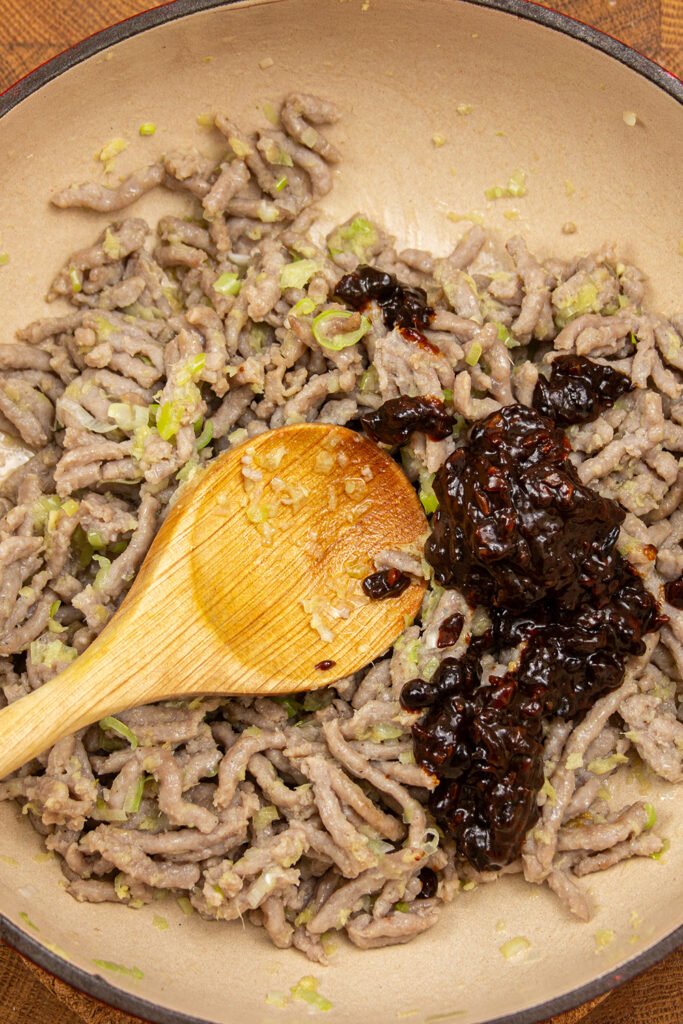
Step 3: Keep the skillet over medium heat and add the black bean garlic sauce to the pork. Stir-fry for 1 to 2 minutes until the pork looks glossy and smells deeply savory, then deglaze with the Shaoxing wine and cook for 1 more minute until the sharpness cooks off slightly.

Step 4: Bring a pot of water to a gentle boil over medium-high heat and soft-boil the eggs for 6 minutes, then cool and peel them. Cook the wet udon noodles according to package instructions, then strain and cool so they do not overcook or clump too much.
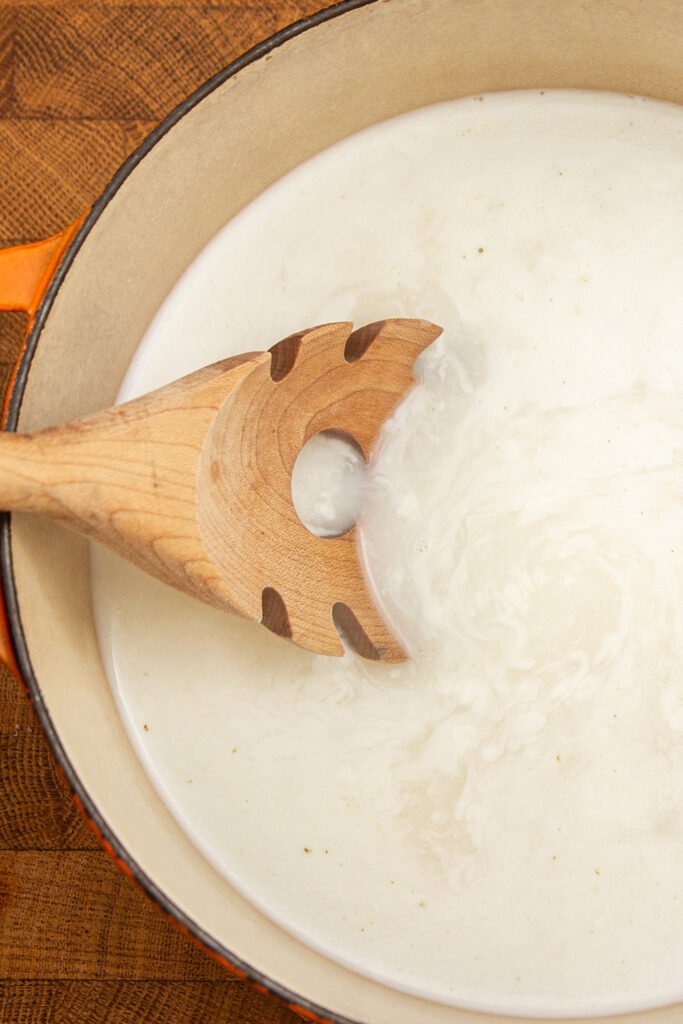
Step 5: In a saucepan over medium-low heat, bring the water, stock cube, and coconut milk to a bare simmer. Stir until the stock cube dissolves fully and the broth is hot, smooth, and lightly steaming without reaching a full boil.
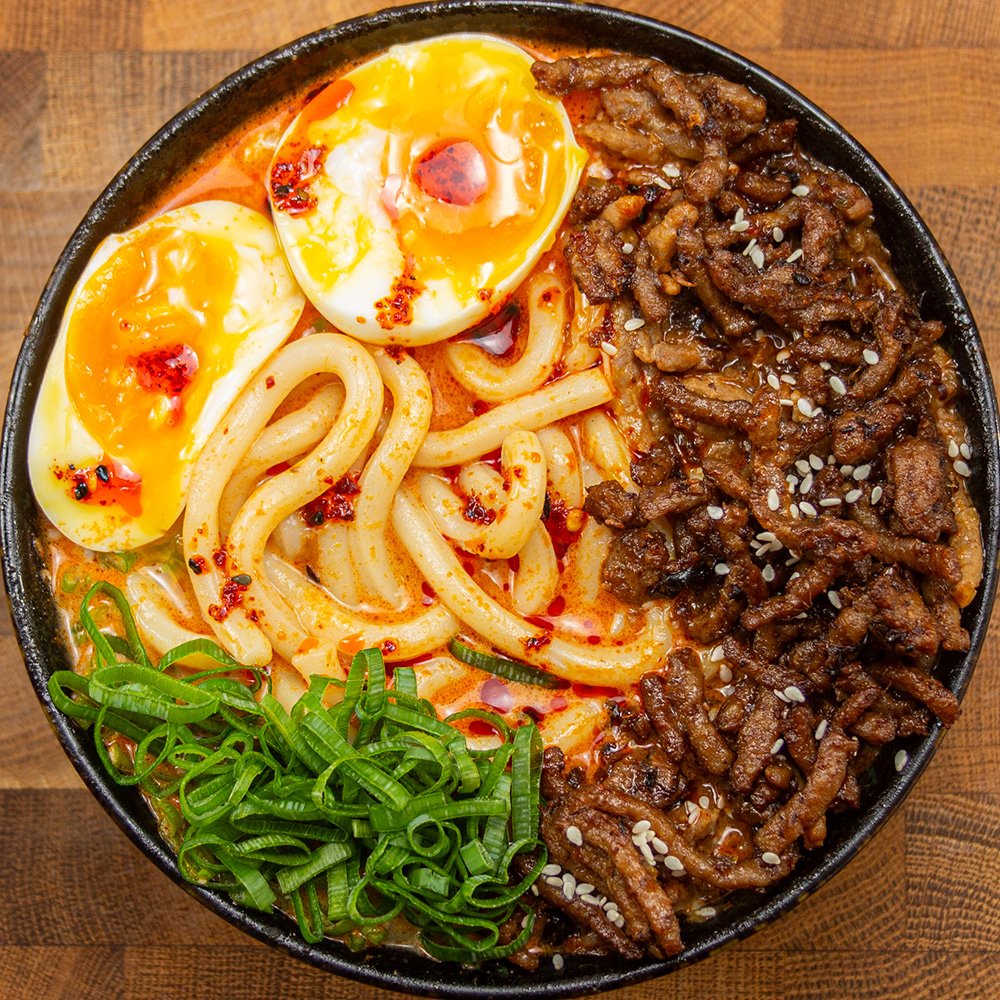
Step 6: Divide the sauce base between 2 bowls. Pour in the hot broth while stirring, filling each bowl about three-quarters full, then add the noodles. Top with the pork mince, egg halves, sliced scallion greens, sesame seeds, and extra black bean rayu, then serve while hot.
Substitute Minced Pork with Ground Chicken
Ground chicken works well here because it still browns quickly and takes on the black bean garlic sauce nicely. To prepare it, cook it the same way as the pork, breaking it up in the skillet until fully browned and no longer pink. The final bowl will taste a little lighter and slightly less rich, and the texture will be a bit softer, but the broth and sauce still carry plenty of flavor.
Tips for Making Black Bean Tantanmen
Tip 1: Stir the sauce base until completely smooth before adding the broth. That helps the peanut butter blend in evenly and keeps the broth silky.
Tip 2: Keep the broth at a bare simmer rather than a boil. Coconut milk stays smoother this way and the flavor feels a little more settled.
Tip 3: Cool the noodles after cooking so they keep their chewy texture in the hot broth instead of turning too soft too quickly.
Make-Ahead Instructions
You can make the pork topping and the sauce base up to 2 days in advance and keep them separately in the refrigerator. Store both in sealed containers, then reheat the pork gently and whisk the sauce base before building the bowls. The flavor gets a little deeper over time, especially in the pork, as the black bean garlic sauce and aromatics settle in.
Storing Leftovers
Store leftovers in airtight containers in the refrigerator for up to 2 days. It is best to keep the broth, noodles, and toppings separate if possible. The noodles will soften as they sit, and the broth may thicken slightly from the peanut butter and coconut milk.
Freezing Instructions
Freezing is not ideal for the fully assembled bowls, but the pork topping can be frozen well. Let it cool completely, then transfer it to a freezer-safe container or bag and freeze for up to 2 months. After thawing, the texture may be slightly less tender, but the flavor should still hold up nicely. The broth is best made fresh since coconut milk can separate a bit after freezing.
Reheating Instructions
Reheat the broth gently in a saucepan over medium-low heat until hot but not boiling, stirring to bring it back together if it has thickened or separated slightly. Reheat the pork in a skillet or microwave until warmed through. If the broth feels too thick, add a small splash of hot water to loosen it before serving.
Serving Suggestions
Serve this ramen as a full dinner on its own, or with a simple side of cucumber salad or lightly dressed greens if you want something cool alongside it. A few extra scallions, more black bean rayu, or a small pinch of sesame seeds on top make it feel finished without much effort. It fits especially well for an easy weekend lunch, a quiet dinner, or any night when you want something warm and deeply savory.
Print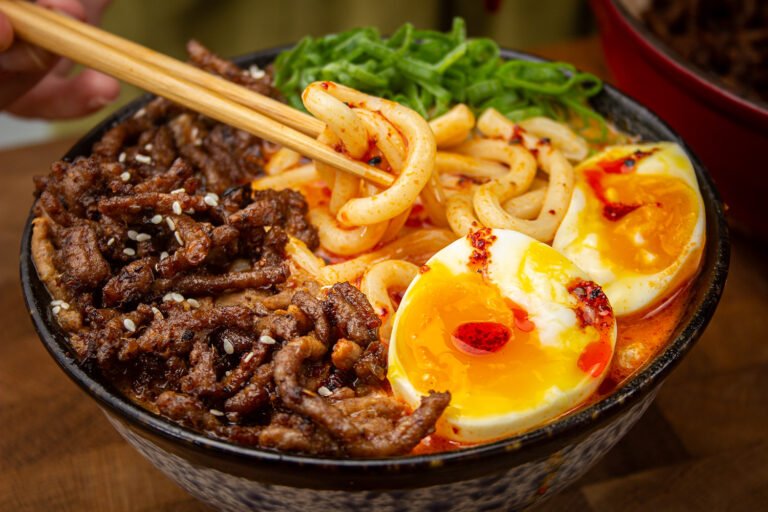
Black Bean Tantanmen
This bowl came out of one of those very specific kitchen situations where you buy a big jar of something for one recipe, use a tiny bit of it, and then just stand there like… okay, now what? I originally bought black bean paste for jajangmyeon, but once I realized how much I had left, I started playing around with it and somehow ended up here. And honestly, I’m so happy I did.
This creamy, savory garlic pork mince ramen has that rich, cozy, slurpable vibe going on, but with a deep savory black bean twist that makes it feel a little extra special. The pork gets glossy and sticky in black bean garlic sauce, the broth turns creamy from coconut milk, and the black bean rayu brings this warm, spicy finish that ties everything together. It’s comforting, savory, a little nutty, and so good when you want something that feels homemade but still kind of restaurant-y.
- Total Time: 20 minutes
- Yield: 2 bowls 1x
Ingredients
- 250 g minced pork
- 2 tbsp Lee Kum Kee Black Bean Garlic Sauce
- 1 inch ginger, grated
- 1 scallion white, sliced
- 1 tbsp Shaoxing wine
- 2 tbsp peanut butter
- 1.5 tbsp light soy sauce
- 1 tbsp rice vinegar
- 1.5 tbsp White Mausu black bean rayu
- 1 tsp maple syrup
- 2 tbsp hot water
- 500 ml water
- 1/2 stock cube
- 200 ml coconut milk
- 2 packs wet udon noodles
- 2 soft-boiled eggs
- Scallion greens, sliced
- Extra White Mausu black bean rayu
- Sesame seeds
Instructions
- Brown the minced pork in a skillet, then add the ginger and scallion whites and fry for 2 to 3 minutes.
- Mix the peanut butter, soy sauce, rice vinegar, black bean rayu, maple syrup, and hot water into a smooth sauce base.
- Add the black bean garlic sauce and light soy sauce to the pork, stir-fry until glossy, then deglaze with Shaoxing wine for 1 minute.
- Soft-boil the eggs for 6 minutes. Cook the noodles according to package instructions, then strain and cool.
- Heat the water, stock cube, and coconut milk at a bare simmer until dissolved and smooth.
- Divide the sauce base between 2 bowls, stir in the hot broth, add the noodles, and top with pork mince, egg halves, scallion greens, sesame seeds, and extra black bean rayu.
- Prep Time: 5 minutes
- Cook Time: 15 minutes