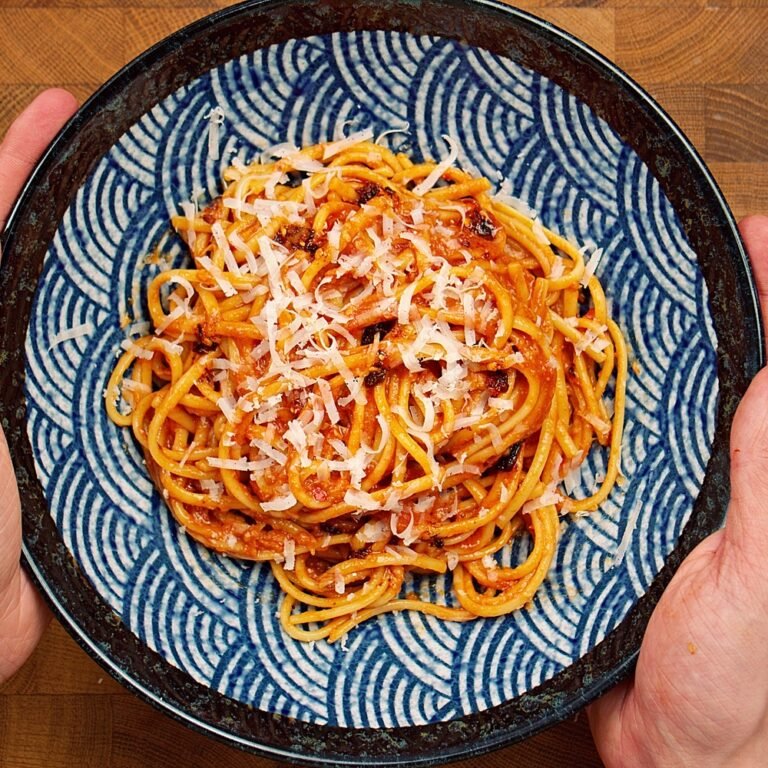
4-Ingredient Asian Cacio e Pepe
A little note: this post contains affiliate links. If you buy through them, we may earn a small commission at no extra cost to you. As an Amazon Associate we earn from qualifying purchases. More about that.
This cacio e pepe is our go-to comfort dish when the fridge is empty, the clock is ticking, or we’re about to leave for a trip.
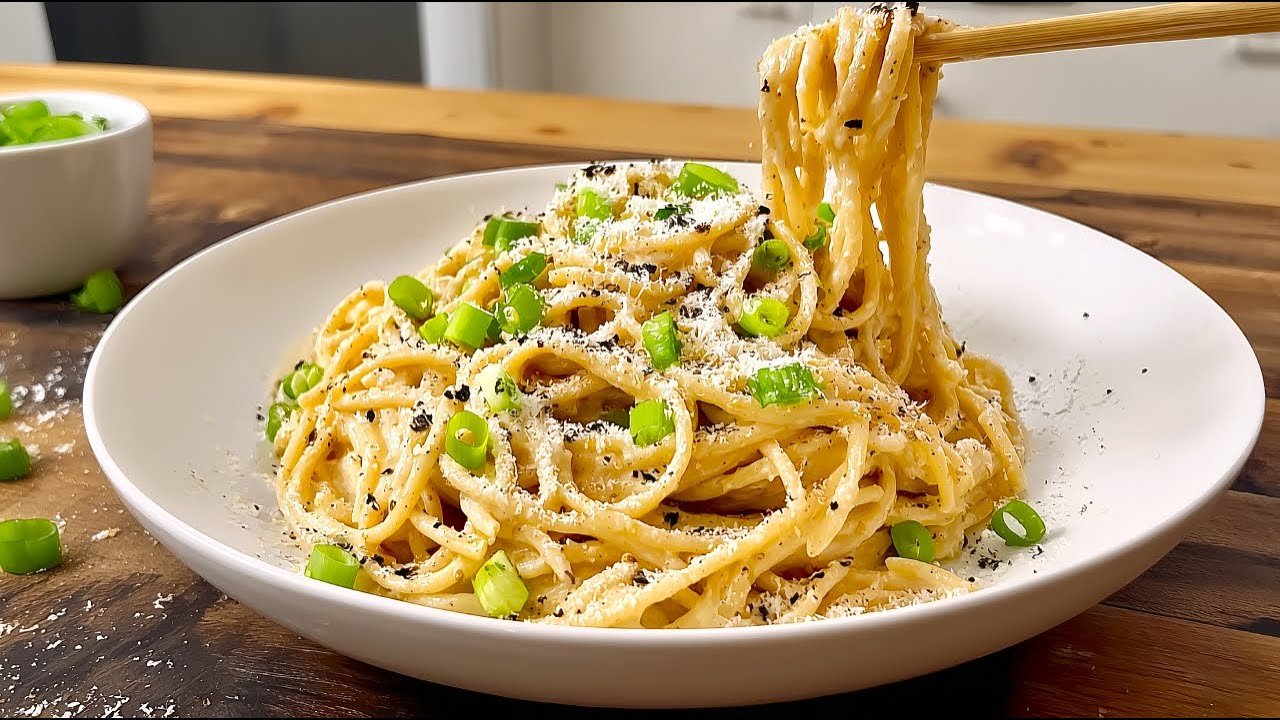
It only takes 4 ingredients, pasta and black pepper included, so there are never any leftover ingredients to worry about. And it’s fast: from boiling water to a creamy, peppery bowl in under 15 minutes.
I love how such a simple recipe can feel so fancy without even trying. And that little twist of scallion greens on top? It adds a tiny Asian touch that makes the whole bowl feel so refreshing.
Watch Our Asian Cacio e Pepe Video Recipe
Prefer to watch the recipe on YouTube instead or just want something to follow along to?
Here is our step-by-step video recipe:
Easy Asian Cacio e Pepe Recipe
This creamy Asian cacio e pepe is surprisingly easy, super quick and perfect for nights when the fridge is empty or you’re short on time. After toasting black pepper, emulsifying Pecorino with starchy pasta water and tossing it all with linguine, the result is a glossy, peppery, cheesy pasta with a fresh scallion finish that feels restaurant-quality but is made entirely at home.

Ingredients for Asian Cacio e Pepe
- Linguine: Releases plenty of starch into the cooking water, which is key for a creamy sauce. Tonnarelli is the traditional choice if you can find it, and thick wet udon noodles also work for an extra Asian twist.
- Pecorino Romano: Salty, sharp and nutty, it’s the “cacio” in cacio e pepe. Grate it as finely as possible so it melts smoothly. Parmesan works, but the sauce will be a little milder and sweeter.
- Black pepper: The “pepe”. Freshly ground and toasted, it gives the dish its warm, fragrant bite. Pre-ground pepper works, but it’s much less aromatic. Whenever pepper is the star of a dish, we like to take the extra minute to grind it ourselves for that fuller peppery flavor, so that’s what we always do for this one.
- Scallion greens: Our little Asian twist. They add a fresh, mild onion flavor and a pop of green on top.
How to Make Asian Cacio e Pepe
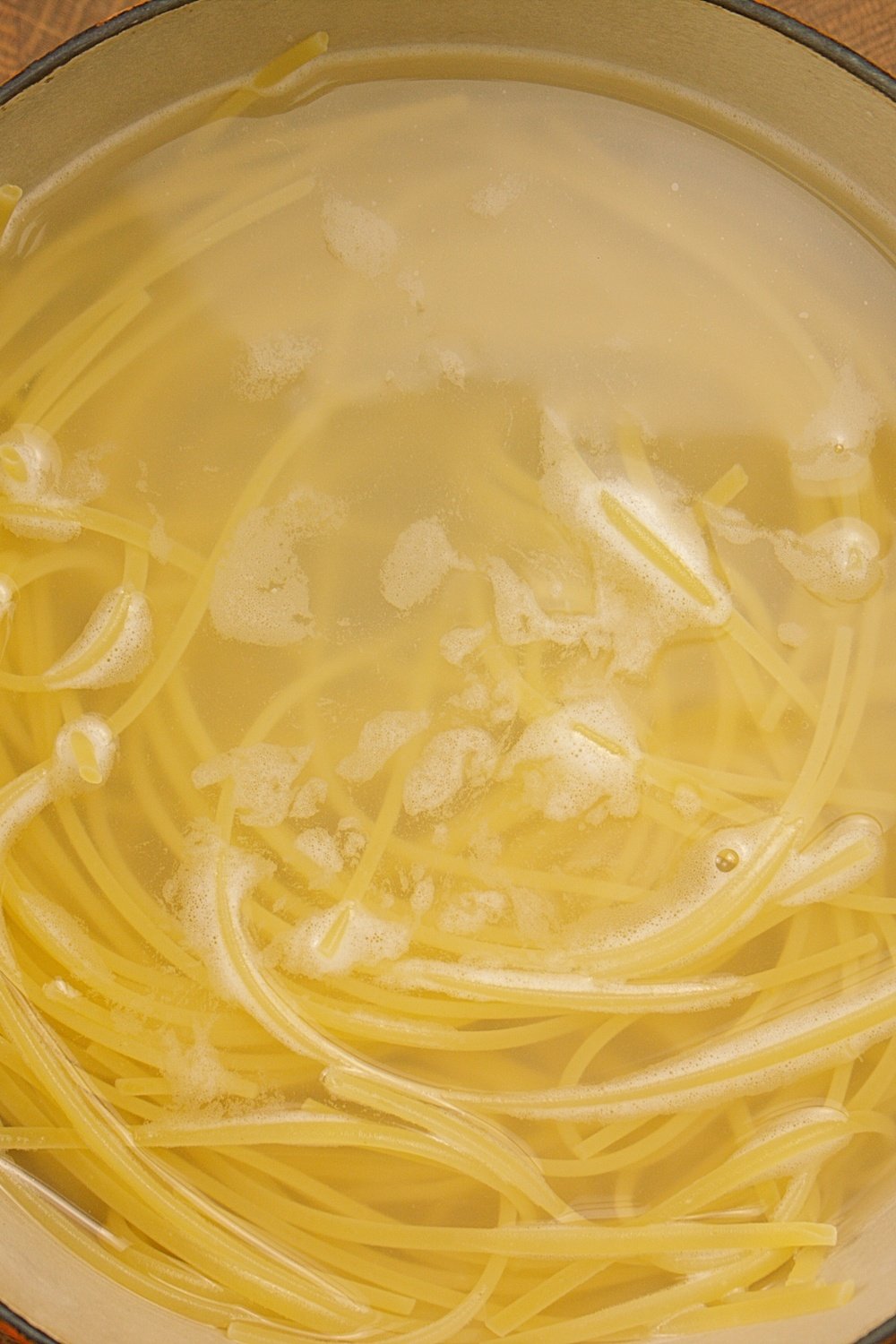
Step 1: Bring a large pot of salted water to a boil and cook the pasta until just under al dente. Reserve 1 1/2 cups of the starchy pasta water, then drain.
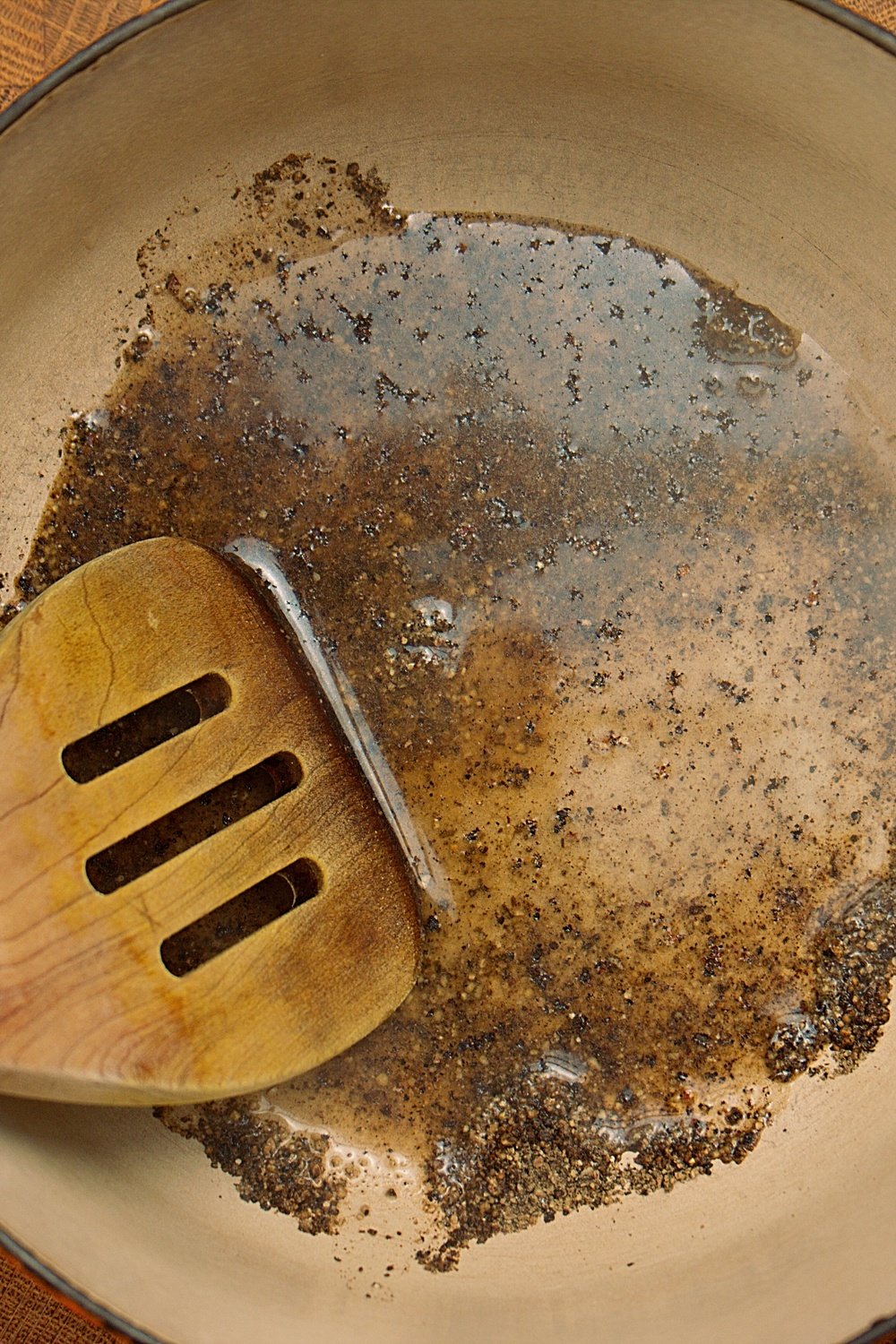
Step 2: Toast the freshly ground black pepper in a dry pan over medium heat (5–6 of 9 on our electric stove) for about 1 minute, until fragrant. Then add about 1/2 cup of the pasta water and let it sizzle.
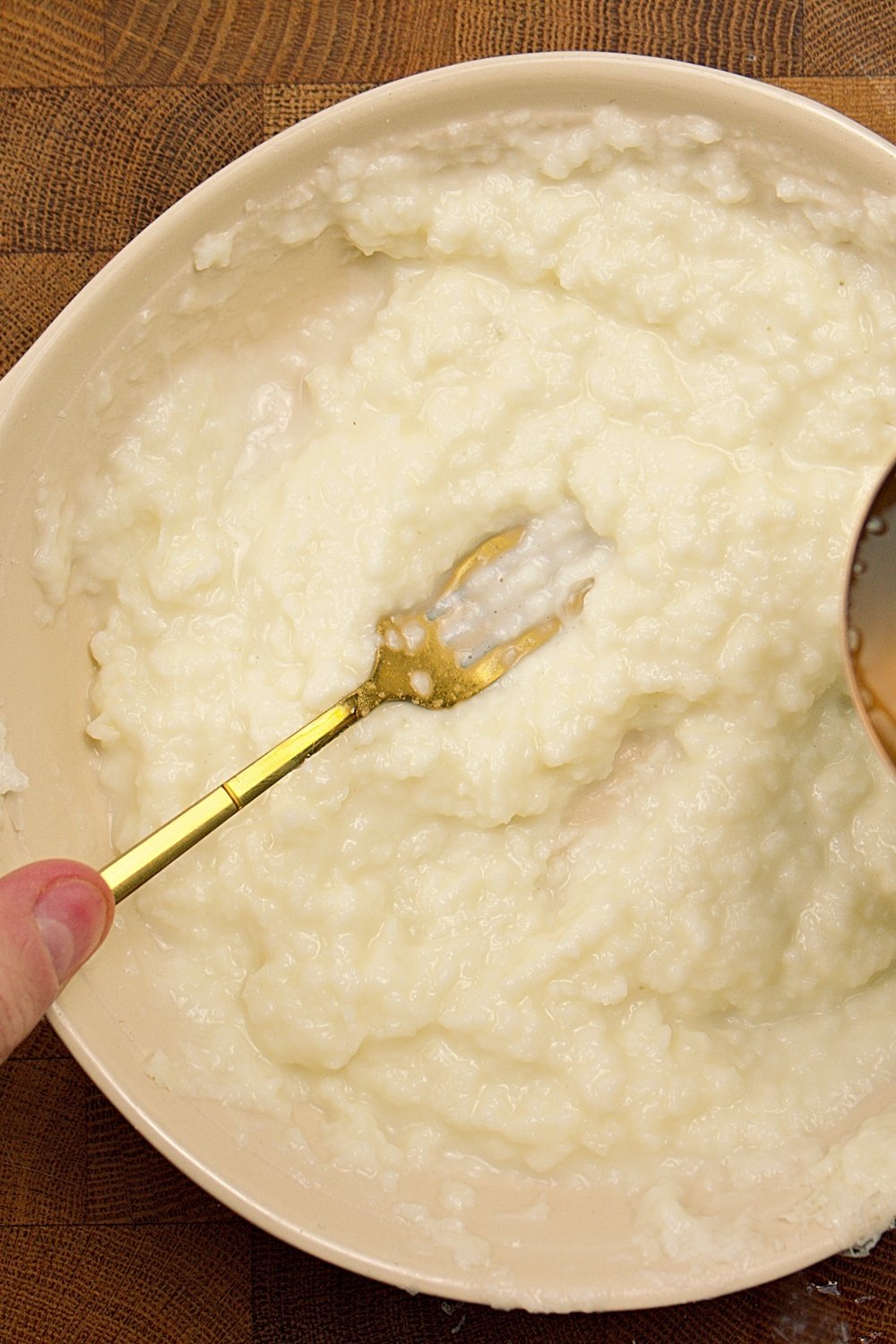
Step 3: In a bowl, mix the grated Pecorino with a splash of warm pasta water until you get a creamy, slushy paste. This step is what keeps the cheese from clumping later.
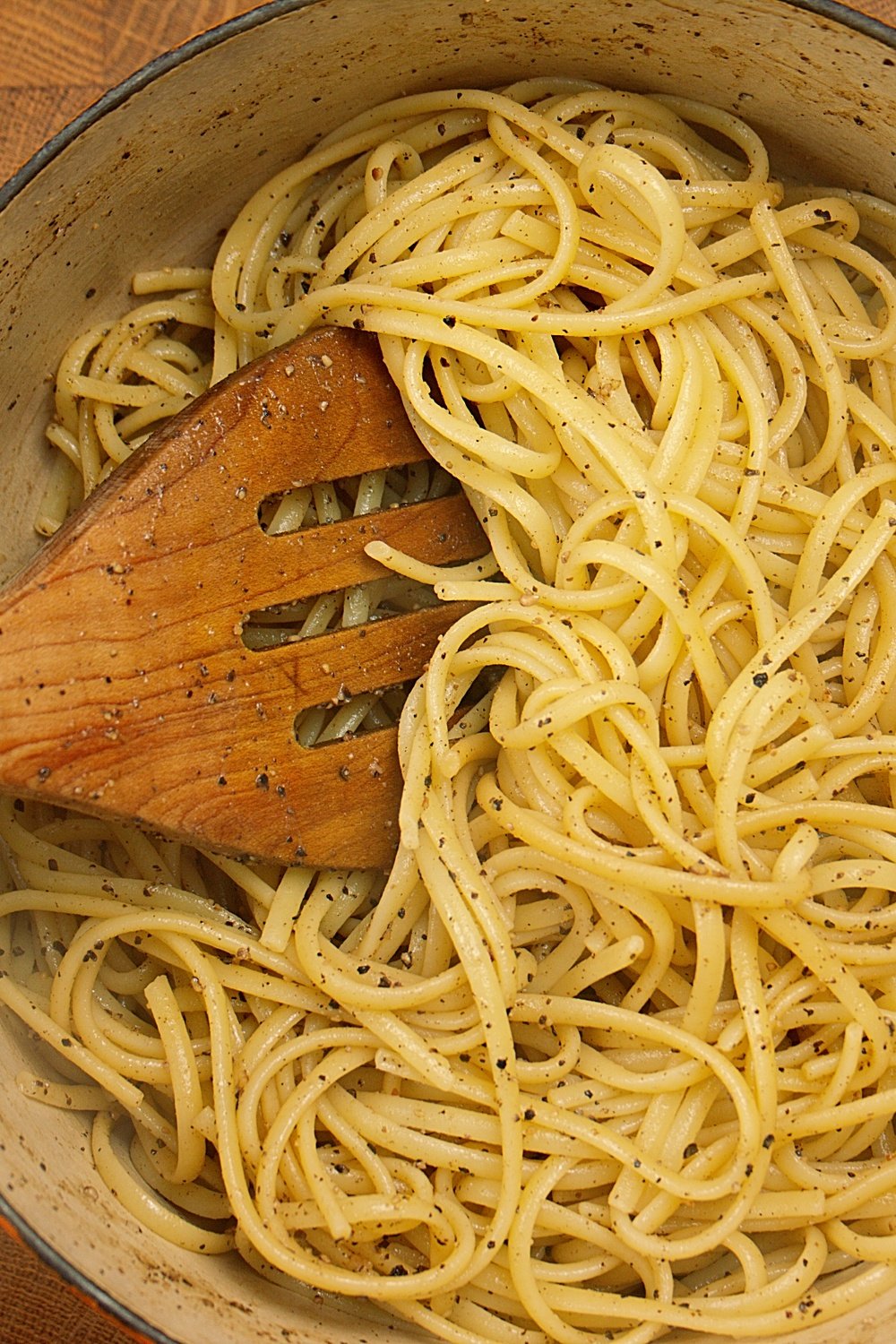
Step 4: Add the pasta to the peppery water, then turn off the heat and toss well so every strand picks up the pepper.
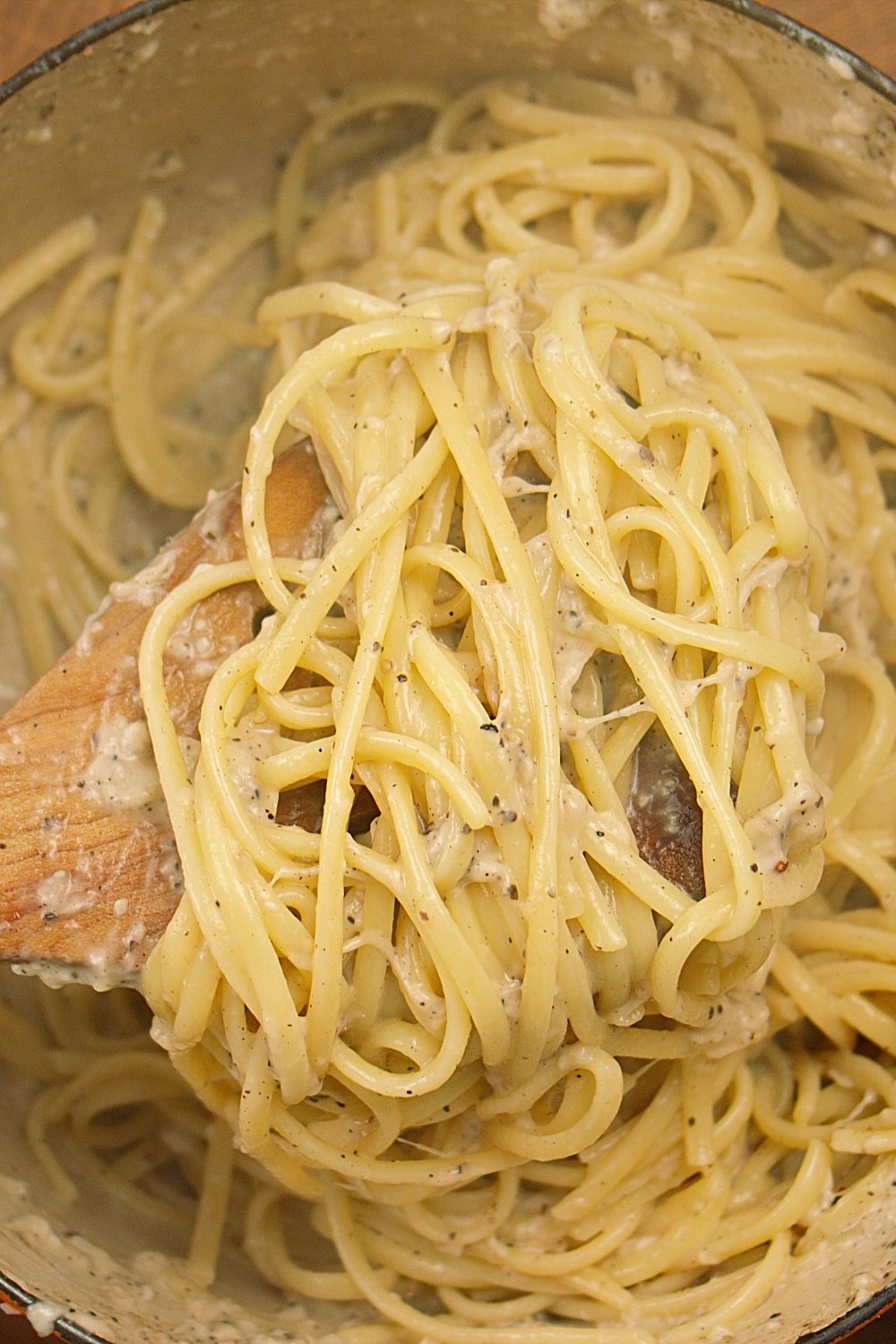
Step 5: With the heat still off, gradually add the cheese paste, stirring continuously until the sauce turns glossy and silky. Keeping the heat off is what stops the cheese from clumping. Add more pasta water a splash at a time if it needs loosening.
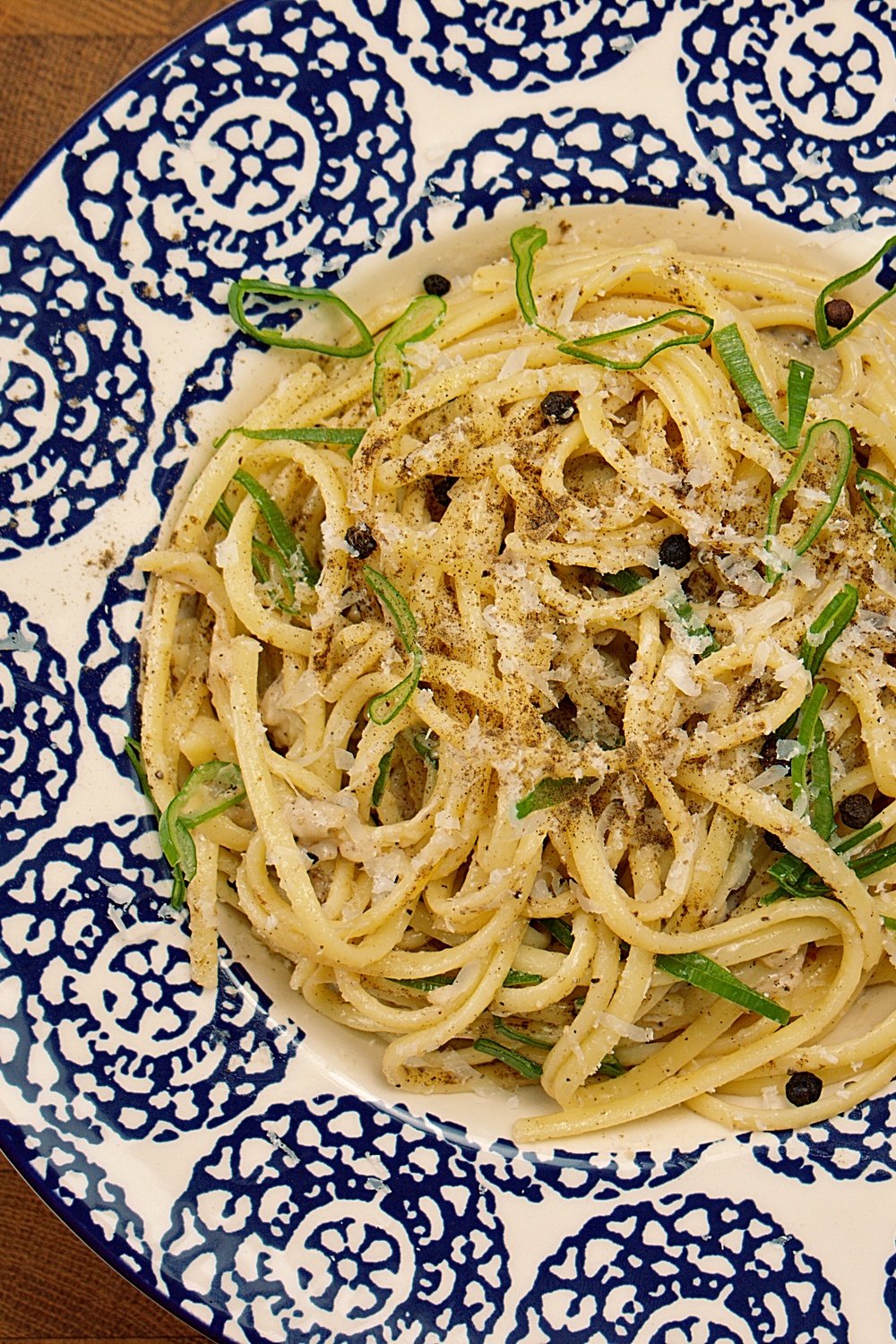
Step 6: Twirl the pasta onto a spoon or fork and plate it for that classic Italian look. Top with extra Pecorino, black pepper (we even love whole peppercorns on top, but that’s completely optional, we just really love pepper) and sliced scallion greens.
Substitute Linguine with Udon
Want to lean even further into the Asian side? Thick, chewy udon works beautifully here. Cook it according to the package, keeping back some of the cooking water, and follow the same steps. Udon water is a little less starchy than pasta water, so add the cheese paste slowly and give it a bit more tossing to get the sauce glossy.
Tips for Making Asian Cacio e Pepe
Tip 1: Grate the Pecorino as finely as you can. Coarse cheese melts unevenly and can turn stringy.
Tip 2: Turn off the heat before the cheese goes in. Too much heat makes the sauce clump.
Tip 3: Use less water than you think when cooking the pasta. A more starchy cooking water makes for a creamier sauce.
Make-Ahead Instructions
Cacio e pepe is really best made fresh, right before eating, since the sauce is just cheese and pasta water. You can grate the cheese and slice the scallions ahead to make dinner even quicker.
Storing Leftovers
Store leftovers in an airtight container in the fridge for up to 2 days. The sauce will firm up as it cools, so expect it to be less creamy than fresh.
Freezing Instructions
We don’t recommend freezing cacio e pepe. The cheese sauce separates and turns grainy after thawing.
Reheating Instructions
Reheat in a pan over low heat (4 of 9 on our stove) with a few tablespoons of water, tossing constantly until the sauce loosens up and turns glossy again. The microwave works too: add a splash of water, heat it in short bursts and stir in between. Either way, grate some fresh Pecorino over the top once it’s warmed up.
Serving Suggestions
Serve straight away with extra Pecorino, cracked black pepper and scallion greens. A crisp green salad with a light vinaigrette is the perfect fresh contrast to the rich, peppery pasta.
Print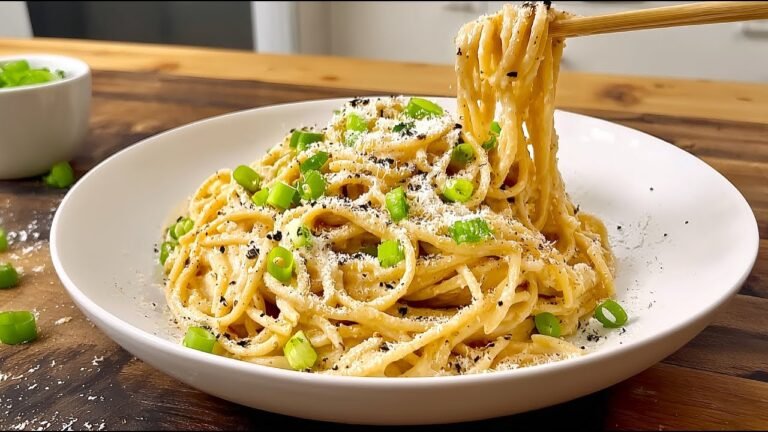
Asian Cacio e Pepe
Our go-to empty-fridge comfort dish: creamy, peppery cacio e pepe with just 4 ingredients, finished with scallion greens for a fresh little Asian twist. Ready in under 15 minutes.
- Total Time: 15 minutes
- Yield: 2 servings 1x
Ingredients
- 200 g linguine (or tonnarelli if you can find it)
- 1 cup (100 g) Pecorino Romano, finely grated
- 2 tsp freshly ground black pepper
- Salt, for the pasta water
- Scallion greens, thinly sliced, for topping
Instructions
- Bring a large pot of salted water to a boil and cook the pasta until just under al dente. Reserve 1 1/2 cups of pasta water, then drain.
- Toast the ground black pepper in a dry pan over medium heat (5–6 of 9 on our stove) for about 1 minute, until fragrant.
- Add about 1/2 cup of the pasta water to the pan and let it sizzle.
- In a bowl, mix the grated Pecorino with a splash of warm pasta water until you get a creamy, slushy paste.
- Add the pasta to the pepper water, turn off the heat and toss well.
- With the heat still off, gradually add the cheese paste, stirring continuously until the sauce turns glossy and silky. Add more pasta water if needed.
- Twirl onto plates and top with extra Pecorino, black pepper and scallion greens.
- Prep Time: 2 minutes
- Cook Time: 12 minutes